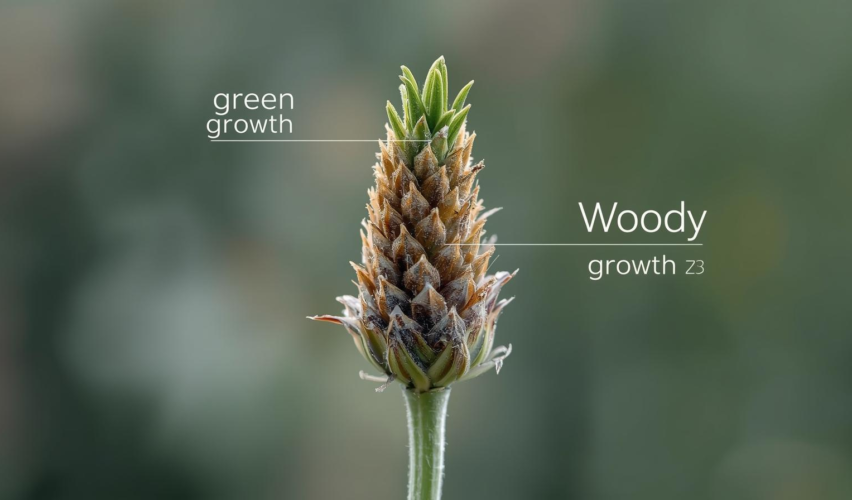
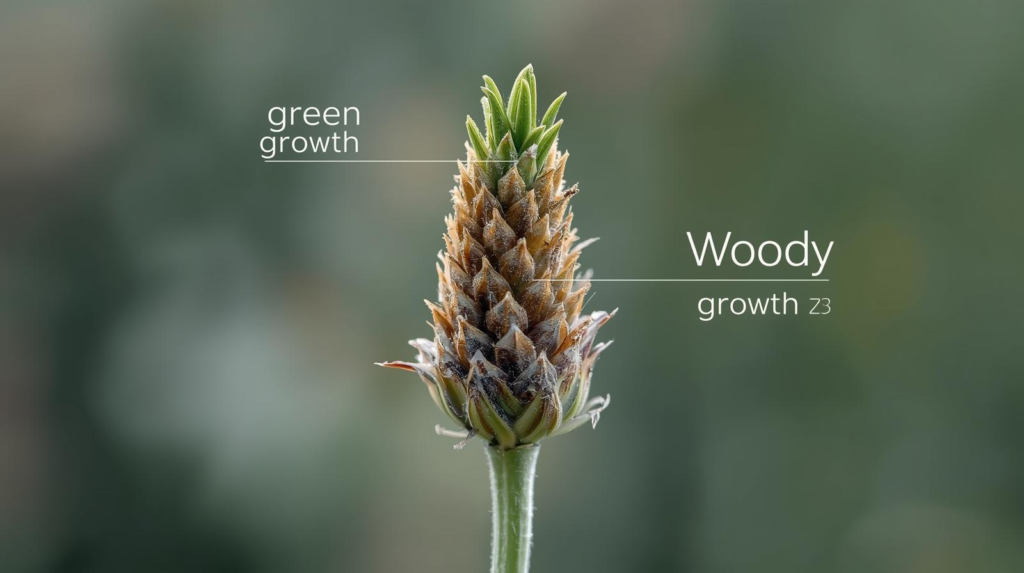
Lavender is a “subshrub,” meaning it stays leafy at the tips but becomes woody at the base over time. The goal of pruning is to keep plenty of soft green growth each year, so the plant stays compact instead of turning into a leggy, split-open mound. The single biggest rule: don’t cut into bare, leafless wood—most lavenders won’t reliably resprout from it. (RHS)
Know your lavender type (it changes how hard you prune)
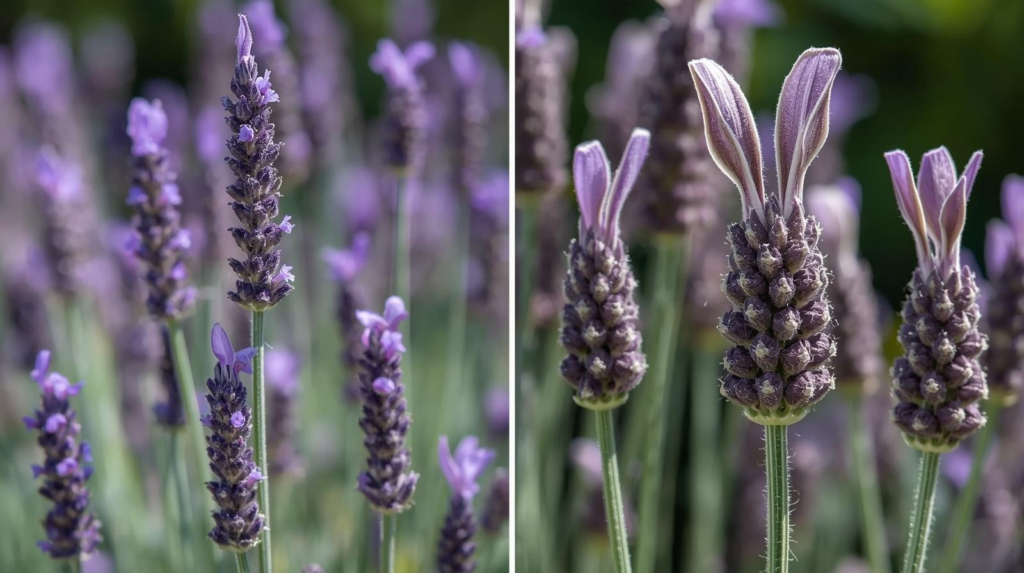
If you’re not sure which kind you have, use this quick guide:
- English lavender (Lavandula angustifolia): classic scent, usually the hardiest; tolerates a bit more pruning.
- Lavandin (L. × intermedia): larger plants, long flower spikes; prune similarly to English.
- Spanish/French-type lavenders (often L. stoechas / L. dentata): showier flowers, generally less cold-hardy; prune more lightly. (UC Agriculture and Natural Resources)
When to prune lavender
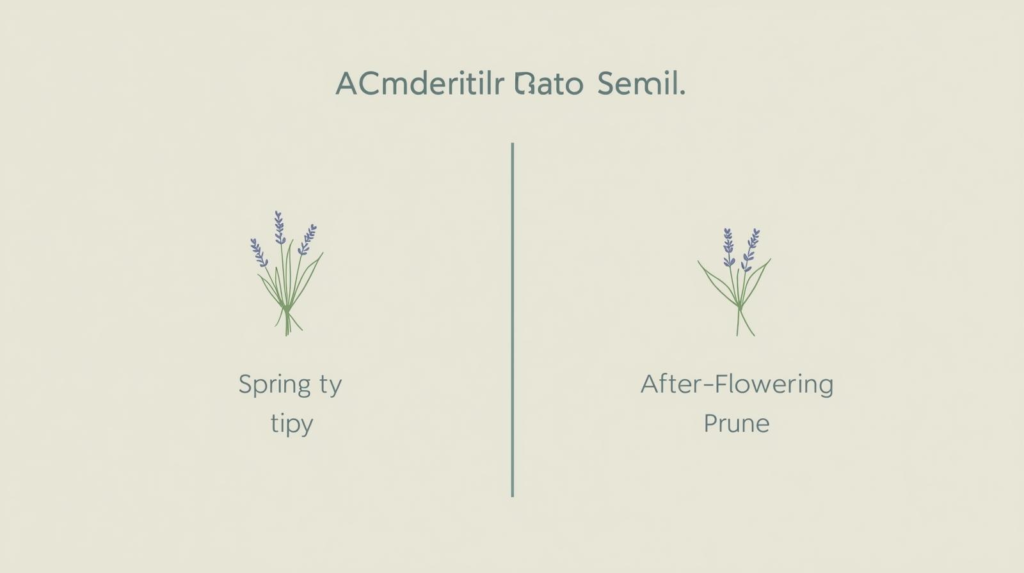
Most home gardeners get the best results with two moments:
- Main prune: right after flowering finishes (late summer in many climates). This keeps the plant compact and reduces the chance it becomes woody and misshapen. (RHS)
- Optional spring tidy: after frost risk has passed and you can see new growth. This is mainly to remove winter damage and reshape lightly—especially helpful in colder zones. (OSU Extension Service)
Avoid heavy pruning too late in the season. Many extension resources recommend stopping by mid- to late-summer or giving the plant weeks before first frost so new growth can harden off. (University of Maryland Extension)
Tools and prep (takes 2 minutes, prevents problems)
- Sharp hand pruners for most plants; hedge shears can work for shaping if you stay in green growth.
- Clean blades (wipe with disinfectant) to reduce disease spread.
- Prune on a dry day so cuts dry quickly. (Ask Extension)
Tip: If your plant is huge, plan to reduce it over 2–3 seasons rather than “fixing” it in one aggressive cut. That’s safer because lavender struggles to regrow from old wood. (RHS)
The core method: prune in green, shape a mound
Use this approach whether your lavender is in the ground or in a pot.
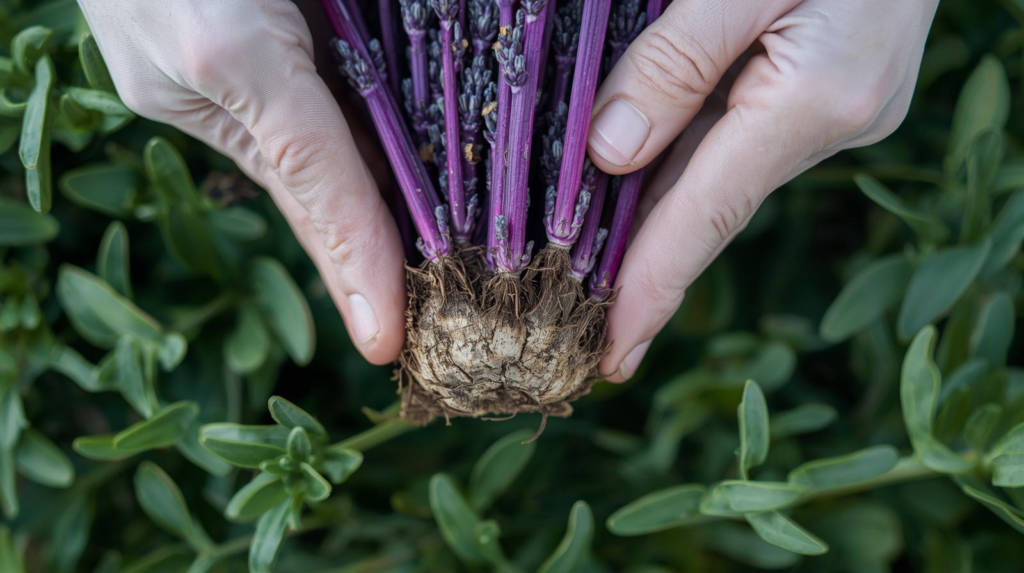
Step 1: Find the “no-go” zone (woody base)
Look for where stems turn brown, thick, and leafless. That’s the woody framework.
- Make your cuts above that zone, where you still see green leaves or green buds/nodes. (RHS)
Step 2: Remove spent flower stalks first
Snip off the finished flower stems down into the leafy mound (but still above wood). This alone often improves shape fast. (RHS)
Step 3: Reduce the green growth by the right amount
A reliable target for routine maintenance is:
- English lavender / lavandin: remove about ⅓ (sometimes up to ½) of the current season’s green growth to keep it dense. (Illinois Extension)
- Spanish/French-type lavenders: keep it lighter (often closer to ⅓ or less) because they’re generally less hardy and less forgiving. (UC Agriculture and Natural Resources)
Step 4: Shape it into a rounded “dome”
Aim for a tidy mound that’s:
- Slightly wider at the base than the top (so light reaches lower growth)
- Evenly trimmed all around (reduces splitting) (RHS)
Step 5: Spring cleanup (optional but helpful)
In spring, after frost danger:
- Remove dead tips and any winter damage back to the first healthy green growth.
- Take out truly dead stems down to the base. (Illinois Extension)
What to do if your lavender is already big and woody
If you have a thick, bare “trunk” with very little green growth:
- Don’t cut it down into leafless wood expecting it to rebound. Many guides warn it may not regrow. (UC Agriculture and Natural Resources)
- Try a gradual reset: each year, prune back to the lowest points where you still see green shoots/buds, reducing size slowly over multiple seasons. (UC Agriculture and Natural Resources)
- If it’s very old and misshapen, replacement is sometimes the most reliable way to get a neat look again. (RHS)
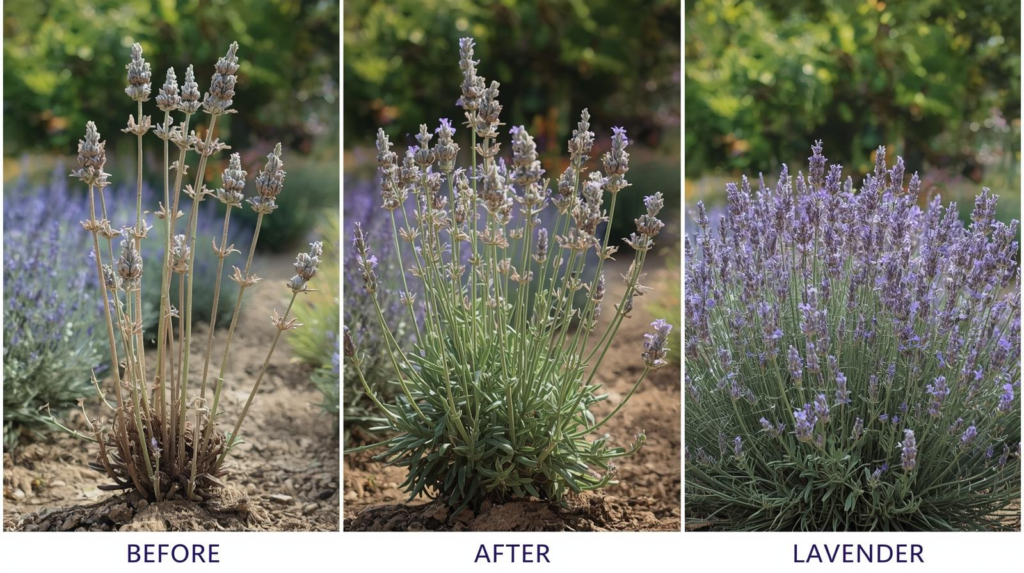
Common pruning mistakes (and how to avoid them)
- Cutting into bare wood: often leads to dead sections that never leaf out again. (RHS)
- Pruning too late before cold weather: tender regrowth can be damaged by frost. (University of Maryland Extension)
- Skipping pruning for years: encourages a woody, gappy plant that’s harder to renovate. (RHS)
Quick checklist you can follow every year
- Prune after flowering (main trim) and optionally in spring after frost risk. (RHS)
- Stay above leafless wood; leave green growth/nodes. (UC Agriculture and Natural Resources)
- Remove spent flower stems, then cut back about ⅓ of green growth (lighter for Spanish/French types). (Illinois Extension)
- Shape into a rounded mound. (RHS)
Summary
Prune lavender to keep it leafy and compact: do your main prune right after flowering, optionally tidy in spring after frost, and never cut deep into bare, woody stems. If a plant is already very woody, renovate it slowly (or replace it) rather than risking a hard cut that it can’t recover from.