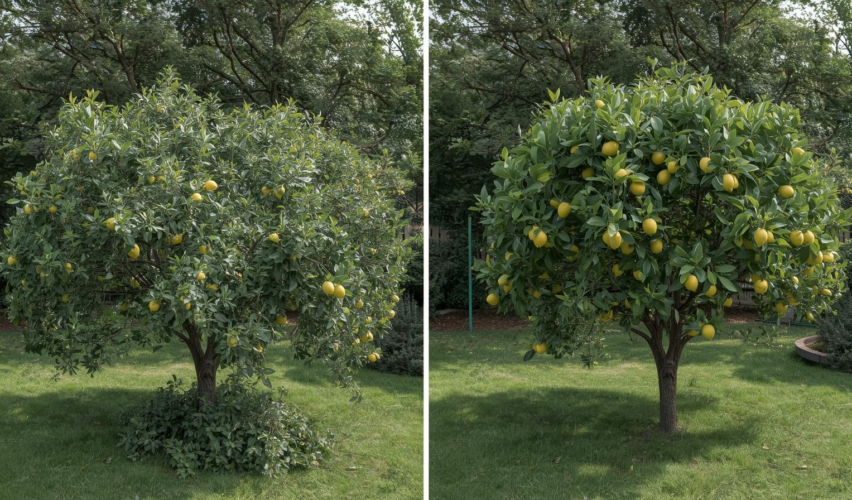
Lemon trees (citrus) are evergreen and usually need less pruning than many deciduous fruit trees. The goal isn’t to “open it up like an apple tree”—it’s to remove unproductive growth, prevent rubbing/crowding, keep fruit off the ground, and maintain a size you can manage, all while leaving enough canopy to protect branches from sunburn. (UC Agriculture and Natural Resources)
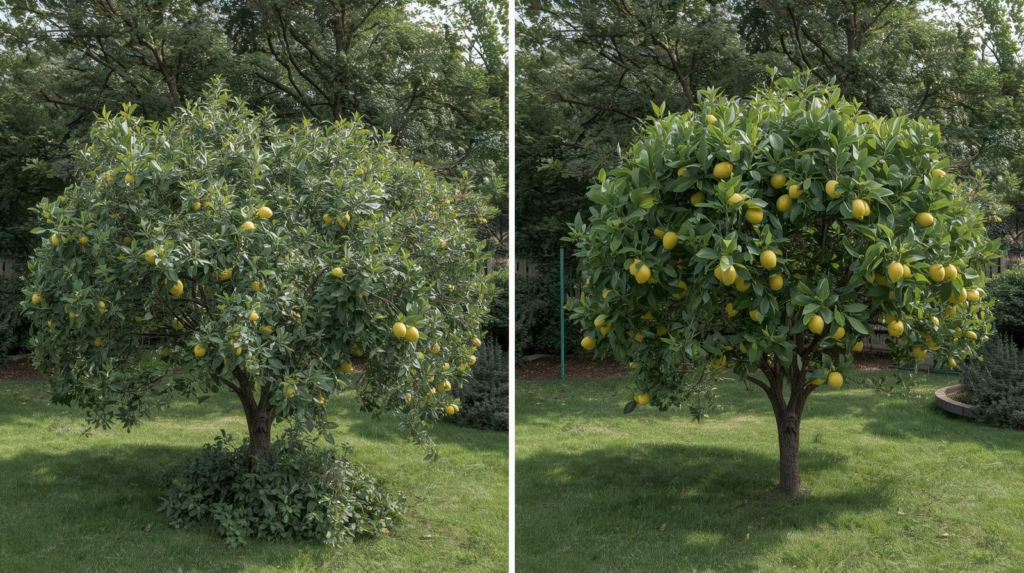
When to prune a lemon tree
For most home lemon trees, aim for light pruning at the right time:
- Best window: just before bloom or just after fruit set (often late winter through spring in many climates). This timing is recommended in UC guidance and helps the tree adjust its fruit load. (UC IPM)
- You can do minor pruning anytime, but avoid late-season pruning because it can push tender new growth that’s more likely to be damaged by frost. (UC IPM)
- If your area gets frost: wait until the risk of hard frost is low before doing larger cuts. (UC IPM)
Tools and quick prep
- Hand pruners for small stems, loppers for medium branches, and a pruning saw for larger limbs.
- Sanitize blades—especially if you’re removing diseased wood—using 70% isopropyl alcohol (wipe or dip; no long soak needed). (Integrated Pest Management)

Step-by-step: the lemon-tree pruning order that works
Think “clean up, then shape”—and keep it light.
Step 1: Remove rootstock suckers (below the graft)
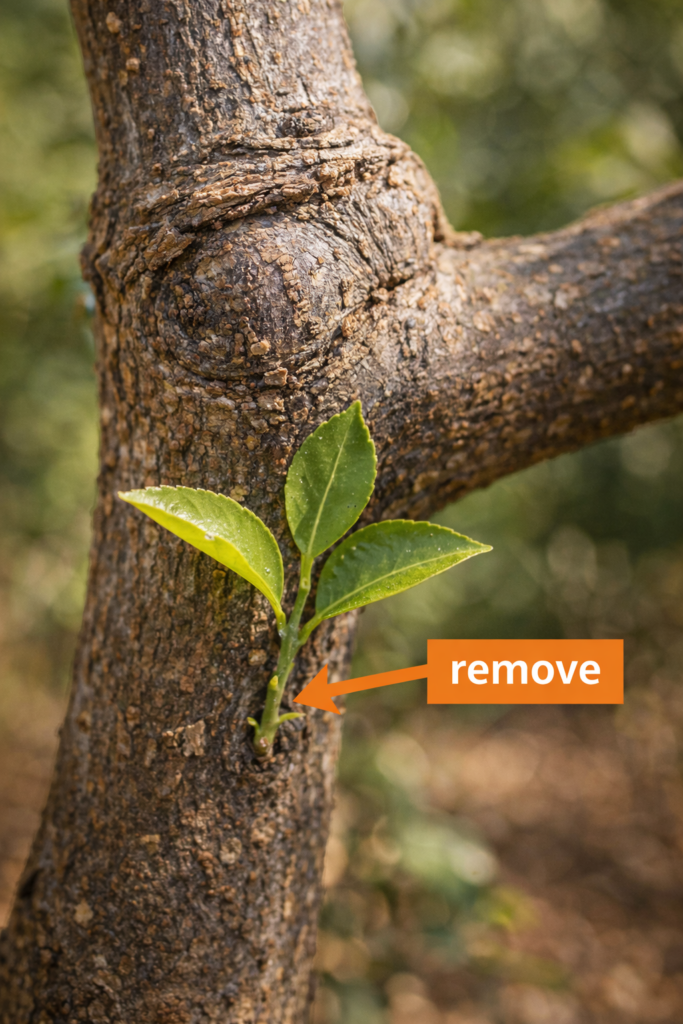
Most backyard lemon trees are grafted. Any shoots coming from below the graft union are rootstock and should be removed as soon as you see them (they can outgrow and take over the tree). (UC Agriculture and Natural Resources)
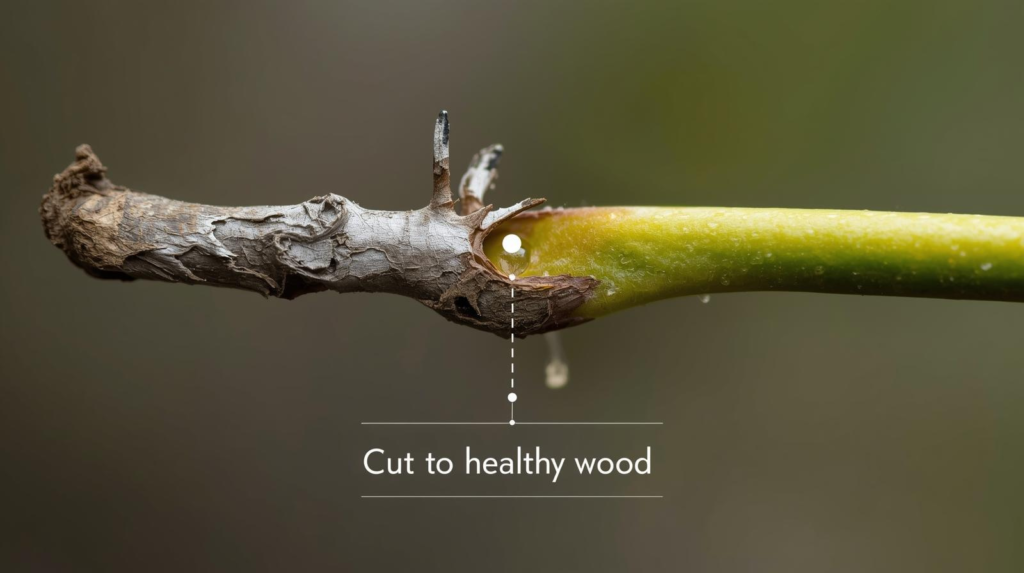
Step 2: Cut out dead, damaged, or diseased wood
- Remove dead or broken branches first so you can see the true structure.
- If you suspect cold damage, some extension guidance recommends waiting until new growth reveals what’s truly dead, then cutting back into healthy green wood. (UA Cooperative Extension)
Step 3: Remove water sprouts and “straight-up” shoots
Citrus commonly throws vigorous vertical shoots (often called water sprouts/gourmands). These tend to be less productive and can crowd the canopy; pruning them can improve light and sometimes yields. (UC Agriculture and Natural Resources)
Step 4: Fix crossing and rubbing branches
Look for branches that:
- Cross through the middle
- Rub against other branches
- Grow strongly inward
Choose the better-placed branch and remove the other with a clean cut back to a larger limb. This reduces wounds from rubbing and improves airflow/light. (UC IPM)

Step 5: Thin lightly for “dappled light,” not an open bowl
University guidance emphasizes that citrus pruning can improve fruit quality by increasing light in the canopy—but citrus also benefits from a protective canopy, so think light thinning, not heavy hollowing-out. (UC Agriculture and Natural Resources)
A good visual target is speckled sunlight reaching inner leaves and fruit without exposing big scaffolds.
Step 6: Manage size with “drop-crotch” cuts (avoid topping)
If your lemon is too tall or wide:
- Reduce height by cutting a tall branch back to a lower side branch (a drop-crotch reduction), rather than chopping the top off.
- Heavy topping creates lots of vigorous, upright regrowth and can increase sunburn risk. (UC IPM)
Step 7: Decide whether to “skirt” the bottom
Many gardeners remove the lowest limbs so fruit doesn’t rest on soil and to make watering/harvesting easier. If you do this, do it gradually and avoid stripping too much lower canopy at once. (UC IPM)
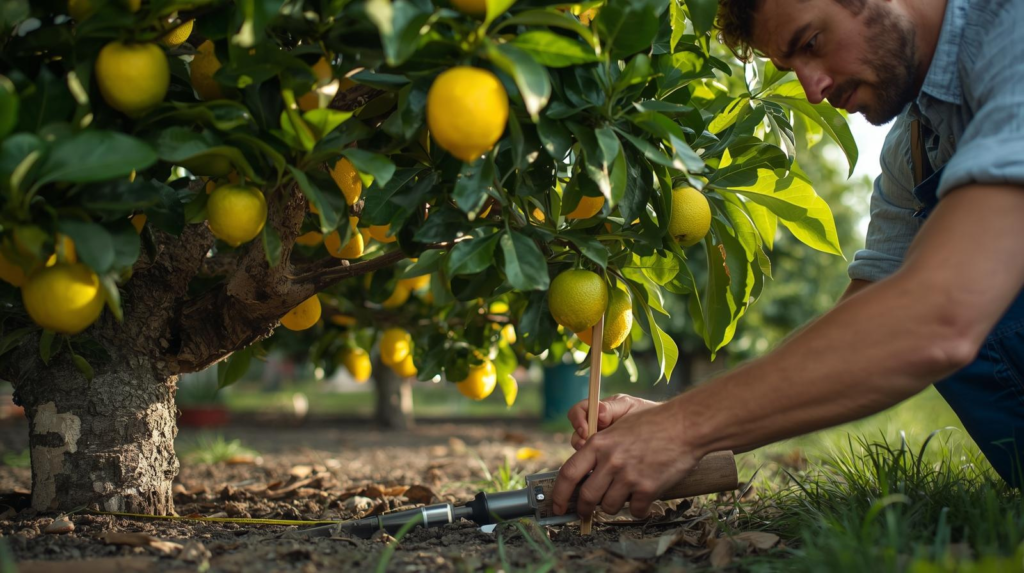
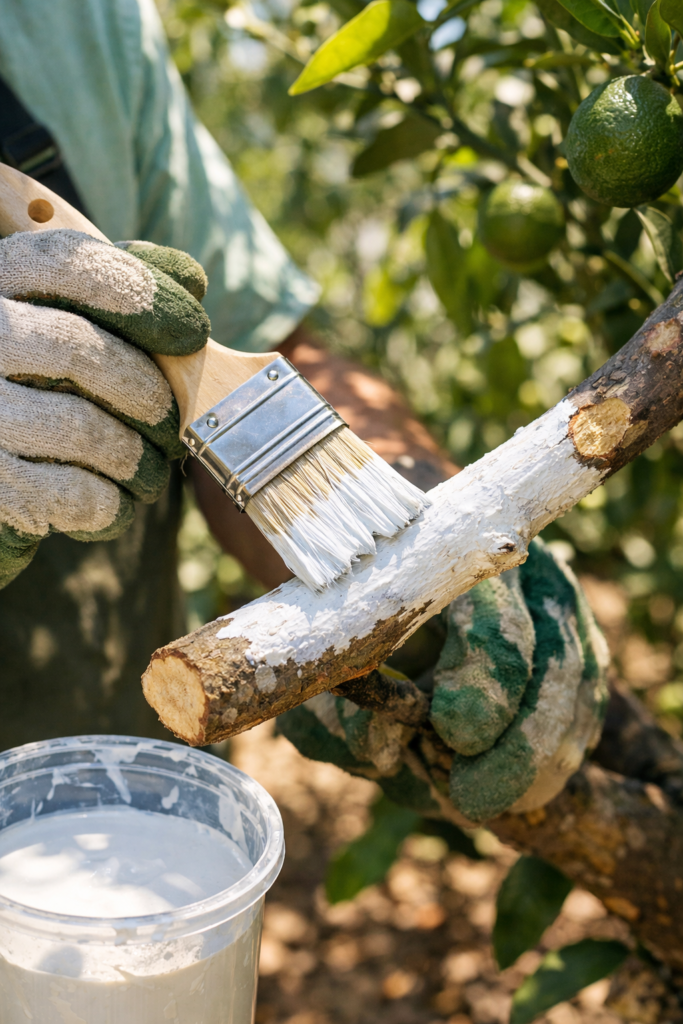
Step 8: Protect newly exposed wood from sunburn
After pruning, citrus bark that suddenly gets full sun can sunburn (sunscald). UC guidance recommends protecting exposed limbs by painting with a 50:50 mix of white interior latex paint and water. (UC IPM)
How much should you prune?
With lemons, it’s usually best to prune lightly and regularly rather than doing a major cutback. Severe pruning can trigger lots of vigorous thorny shoots and set the tree back. (UC Agriculture and Natural Resources)
Special situations
If your lemon is in a pot (patio/indoors)
Container citrus is often pruned mainly for shape and size control:
- RHS guidance suggests thinning overcrowded or wayward shoots in late winter and shortening strong summer shoots to encourage branching, while also removing shoots arising below the crown. (RHS)
If you’re pruning after freeze damage
Wait until you can clearly see what’s alive, then remove dead wood back into healthy tissue and protect exposed limbs afterward. (UA Cooperative Extension)
If you’re worried about losing fruit
Some lemon fruiting occurs on older wood, so avoid stripping lots of productive branches at once; prioritize removing suckers, dead wood, and crossing/water sprouts first. (UC Agriculture and Natural Resources)
Common pruning mistakes to avoid
- Pruning late in the season in frost-prone areas (tender regrowth gets damaged). (UC IPM)
- Leaving big limbs suddenly exposed without sunburn protection. (UC IPM)
- Letting rootstock suckers grow below the graft union. (UC Agriculture and Natural Resources)
Summary
Prune lemon trees with a light touch: do your main pruning just before bloom or just after fruit set, remove rootstock suckers, dead/damaged wood, water sprouts, and crossing branches, then thin only enough for dappled light. If pruning exposes major limbs, protect them from sunburn with a 50:50 white interior latex paint and water mix. (UC IPM)