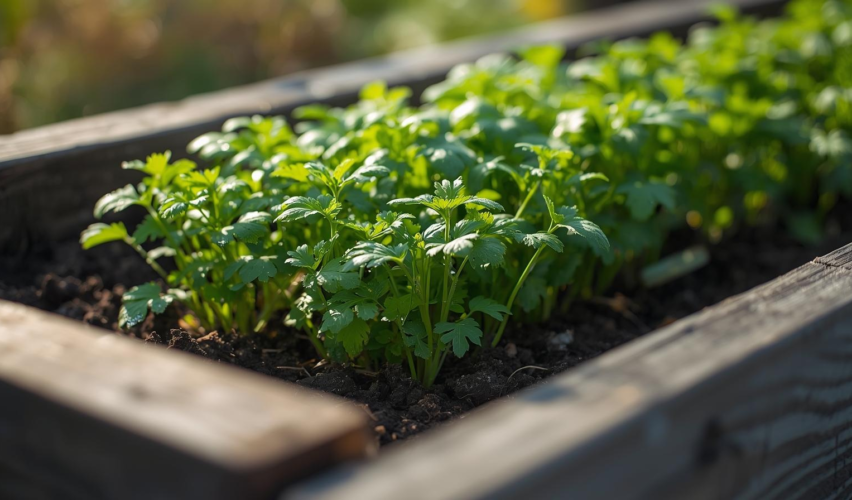
Cilantro (Coriandrum sativum) is a cool-season herb that grows fast, tastes best when it’s tender, and often “bolts” (flowers early) once weather turns hot—so the trick is planting at the right time and keeping growth steady. Both Michigan State University Extension and Texas A&M AgriLife Extension note that heat triggers bolting and reduces leafy harvest.
What cilantro wants (at a glance)
Cilantro thrives in cool conditions and shifts quickly to flowering in heat, as explained by MSU Extension and reinforced by Texas A&M AgriLife.
- Light: Full sun in mild weather, but “hot microclimates” do better with light shade, per the UC Master Gardener Program (UC ANR) and University of Maryland Extension.
- Soil: Well-drained soil with moderate fertility; compost is helpful in reasonable amounts, per Utah State University Extension.
- Temperature: Cilantro does best roughly between 50–85°F, and tends to bolt when it’s consistently hotter than that, according to Texas A&M AgriLife.
Step 1: Plant at the right time (this matters most)
If you want lots of leaves, aim for cooler windows—early spring and again in late summer/fall—because bolting is much more likely during hot stretches, as described by Oregon State University Extension and MSU Extension. In warmer areas, fall sowing can be especially productive, per Utah State University Extension.
Tip: For a steady supply, “succession sow” cilantro every couple of weeks—recommendations like planting every 2–3 weeks appear in both the University of Maryland Extension and the University of Wisconsin Extension.
Step 2: Prep the soil (or pot) for steady moisture and drainage
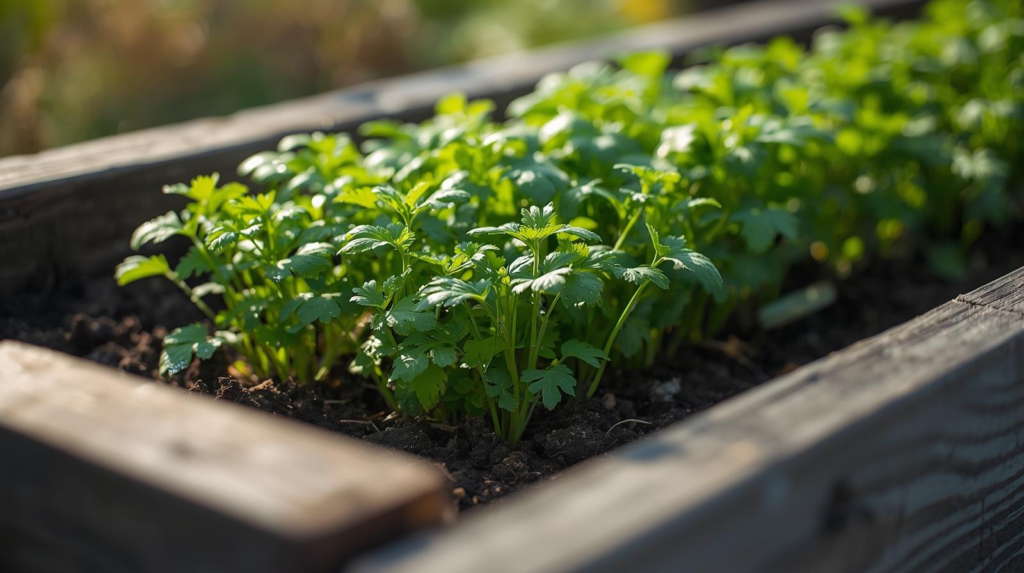
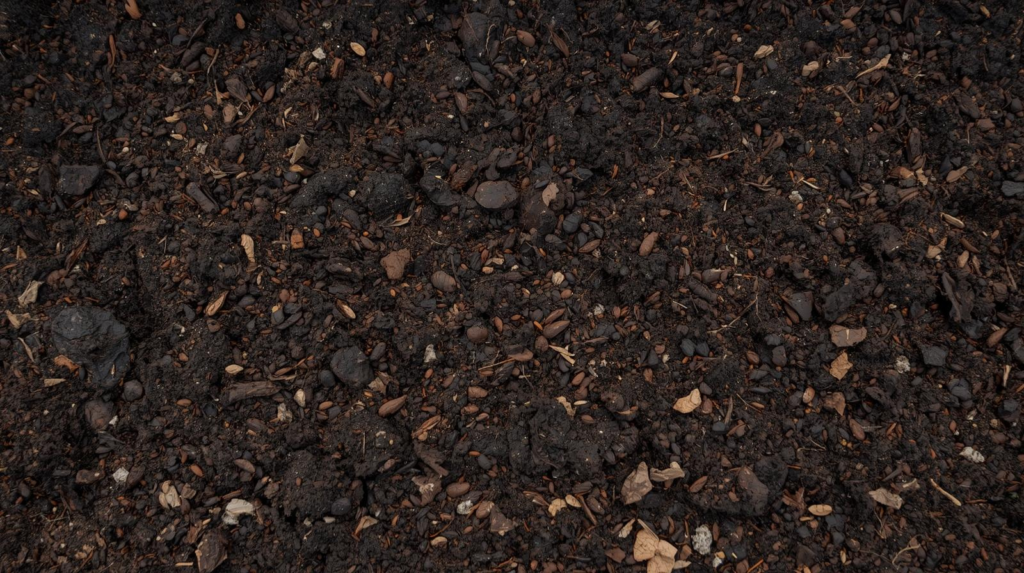
Cilantro prefers soil that drains well but stays evenly moist, and compost can improve structure and water-holding ability, as outlined by Utah State University Extension. A light mulch can help keep root-zone conditions cooler and more consistent—an approach commonly recommended for reducing stress in herbs like cilantro by sources such as the University of Maryland Extension.
Step 3: Direct-sow seeds (cilantro dislikes transplanting)
Cilantro seedlings develop a taproot and don’t transplant readily, so direct seeding is usually easiest, according to the UC Master Gardener Program (UC ANR) and the University of Wisconsin Extension. Plant seeds about ¼–½ inch deep, which is the depth range recommended by both UC ANR and Johnny’s Selected Seeds (production guide PDF).
Spacing options (pick your goal):
- For leaf harvest, you can sow fairly thickly and harvest in bunches, which the Johnny’s production guide specifically notes can work well.
- For seed (coriander), give plants more space; for example, Utah State University Extension suggests wider thinning for seed production than for leaves.
Step 4: Water consistently—especially early on
Keep the seedbed evenly moist until sprouts appear; depending on temperature, emergence can be around 7–10 days under ideal conditions per the Johnny’s production guide, but can be longer in cooler conditions as described by Utah State University Extension. After plants are established, aim for steady moisture—stress from drying out can push cilantro toward bolting, a pattern discussed by the University of Maryland Extension and MSU Extension.
Step 5: Slow bolting with shade + harvesting
If your days get hot, give cilantro afternoon shade; both the UC Master Gardener Program (UC ANR) and the University of Maryland Extension recommend light shade in hotter locations. Harvest regularly to keep plants producing leaves longer, and snip off early flower stems if your goal is foliage—an approach supported by guidance like the RHS coriander care notes.
Step 6: Harvest leaves the right way
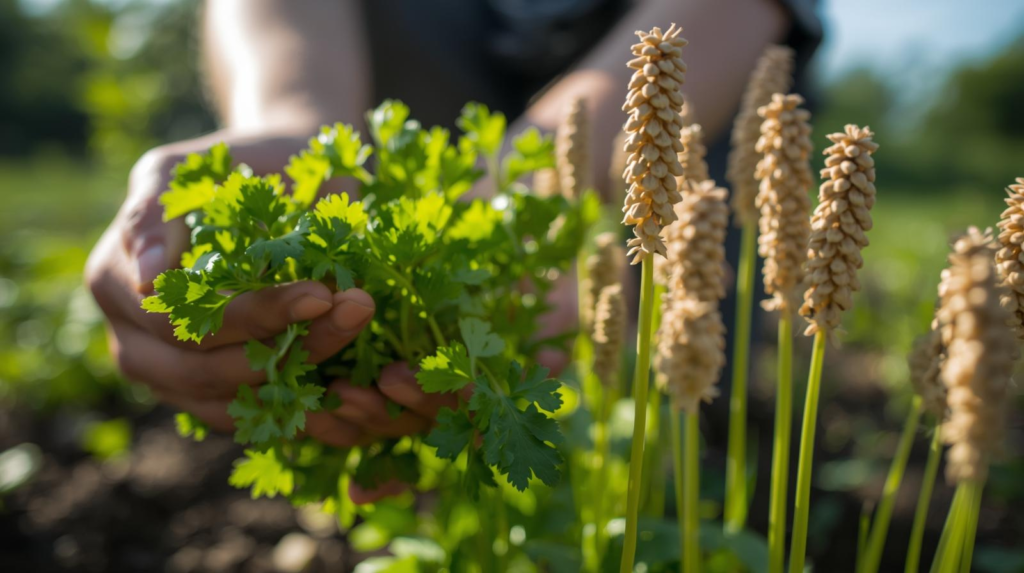
Start harvesting once plants are big enough to spare—then cut outer stems or small bunches and let the center keep growing. Regular picking helps maintain production and can slow the shift to flowering, which aligns with advice to “pick as required” for continued harvest from organizations like the Royal Horticultural Society and harvesting-focused production guidance such as the Johnny’s cilantro guide.
Step 7: Let some plants flower if you want coriander seed
Bolting isn’t “bad” if you want seeds: cilantro flowers produce coriander, and you can let seed heads mature and dry for harvest, as described by Oregon State University Extension. Cilantro also readily self-seeds if allowed to mature, which the University of Maryland Extension notes can happen in home gardens.
Growing cilantro in containers (simple and very effective)
Containers are great because you can move plants into cooler light and protect them from afternoon heat. General container guidance from the University of Maryland Extension’s container fact sheet notes many herbs (including cilantro) can grow in relatively shallow setups, but cilantro’s taproot means a deeper pot often performs better—this is a practical takeaway from the taproot/transplant cautions in the UC Master Gardener Program (UC ANR) and the Johnny’s production guide.
Practical container setup: Use a pot with drainage and aim for at least 8 inches deep if you can—especially in warm weather—so moisture stays steadier.
Quick troubleshooting
- Plants bolt fast: Shift planting to cooler seasons and add afternoon shade, as recommended by the University of Maryland Extension and the UC Master Gardener Program (UC ANR).
- Germination is slow: Keep soil consistently moist and target moderate temps; the Johnny’s production guide highlights 65–70°F for strong germination, while Utah State University Extension notes emergence can take longer in less-than-ideal conditions.
- Leaves are pale/weak: Improve soil structure with modest compost rather than heavy feeding, aligning with soil guidance from Utah State University Extension.
Summary
To grow cilantro successfully, plant during cool stretches, direct-sow (don’t rely on transplanting), keep moisture consistent, and sow new seeds every couple of weeks for continuous harvest—an approach recommended by sources like MSU Extension, the University of Maryland Extension, and the University of Wisconsin Extension.