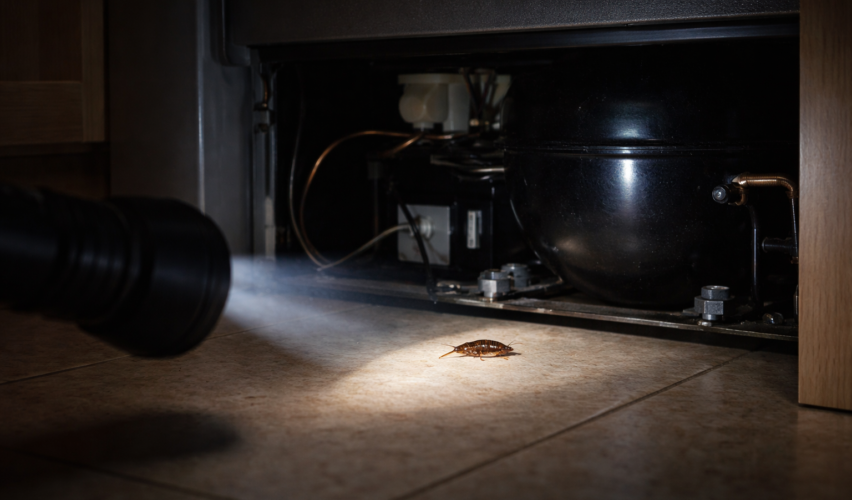
Cockroaches aren’t just unpleasant—they can worsen asthma and allergies, and their droppings and body parts are common indoor triggers for people who are sensitive. (EPA)
The most reliable way to eliminate them is Integrated Pest Management (IPM): inspect, remove what they need to survive, block where they hide and travel, then use targeted products (mainly baits) instead of “spray everything and hope.” (Purdue Agriculture)
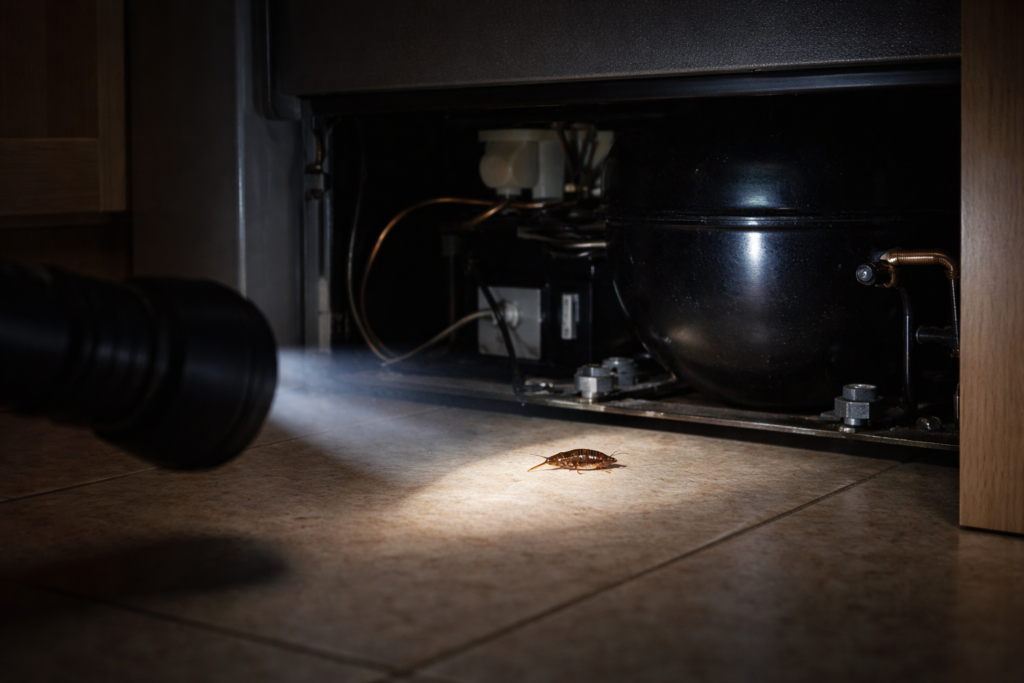
Know Your Enemy: Which Cockroach Is It?
Most indoor infestations are German cockroaches (small, tan, often with two dark stripes behind the head). Larger roaches (like American or smokybrown) may indicate moisture or entry from outdoors/sewers rather than a breeding population in your cabinets. (NC State Extension)
If you’re seeing roaches during the day, that often means the population is large enough that hiding spots are overcrowded. (NC State Extension)
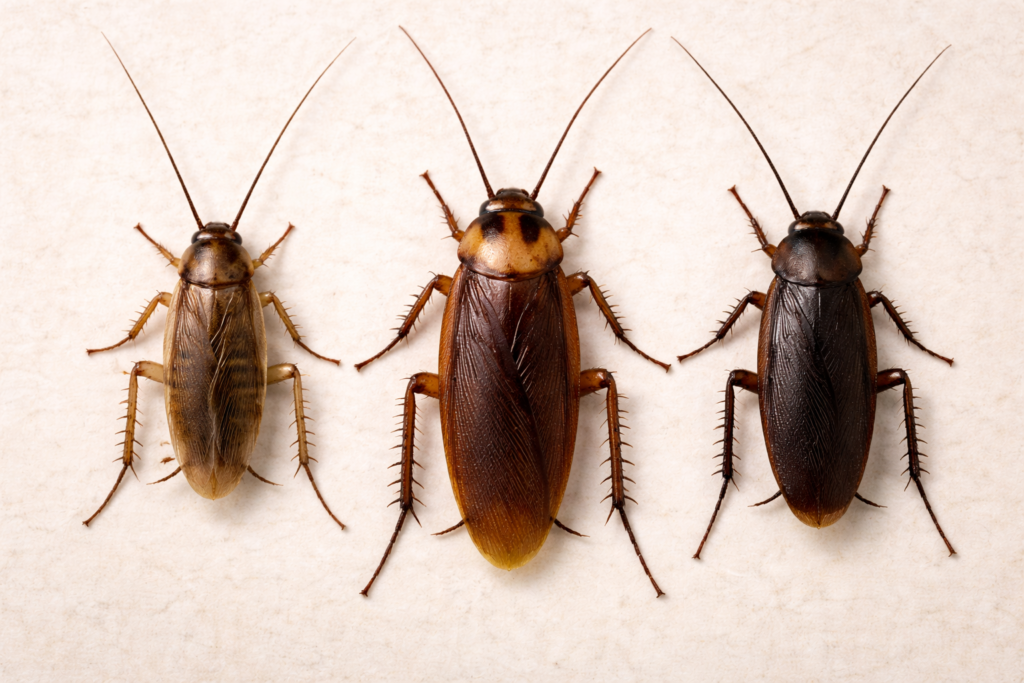
What You’ll Need
- Flashlight + a notepad (or phone notes) for mapping sightings
- Sticky traps (glue traps) for monitoring
- Cleaning supplies + vacuum (ideally with HEPA if you have allergies) (IPM Institute of North America)
- Caulk + steel wool/mesh for gaps around pipes
- Gel bait or bait stations (your main “kill tool”) (NC State Extension)
- Optional: insecticidal dust (boric acid, silica gel, or diatomaceous earth labeled for insects) for wall voids and inaccessible areas (NC State Extension)
Step 1: Inspect and Monitor (Don’t Guess)
Start by finding where they’re active, not just where you notice them.
- Do a quick night check (kitchen and bathrooms first) with a flashlight—look under sinks, behind the fridge, around the dishwasher, and inside cabinet hinges. (NC State Extension)
- Place sticky traps along walls and in tight corners:
- Under the sink, next to the stove, near the fridge motor area, behind the toilet, and inside lower cabinets. (Purdue Agriculture)
- Check traps every 2–3 days for 2 weeks and note the “hot spots.” Sticky traps are best used to detect and track activity (and pinpoint hiding areas). (Purdue Agriculture)
Tip: If allergies/asthma are a concern, vacuuming roaches, droppings, and debris can reduce allergen reservoirs while you’re treating (use a HEPA vacuum if possible). (IPM Institute of North America)
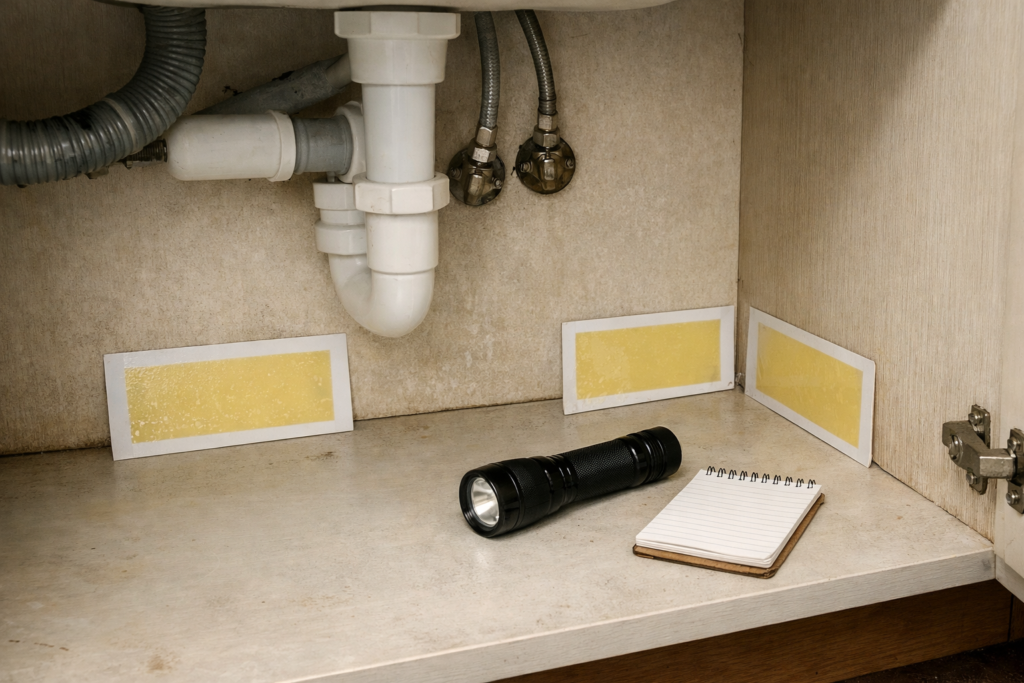
Step 2: Remove Food and Water (This Makes Baits Work Better)
Cockroaches thrive on crumbs, grease films, garbage, and moisture. Cutting these off dramatically improves control and reduces reinfestation pressure. (CDC)
Do this daily for at least 2–3 weeks:
- Wipe counters and stovetops at night; don’t leave dirty dishes out. (CDC)
- Store food (including pet food) in airtight containers. (CDC)
- Take trash out frequently; keep bins closed. (CDC)
- Fix leaks and reduce humidity (especially under sinks). (CDC)
- Reduce cardboard clutter—cockroaches hide in tight, undisturbed spaces. (NC State Extension)
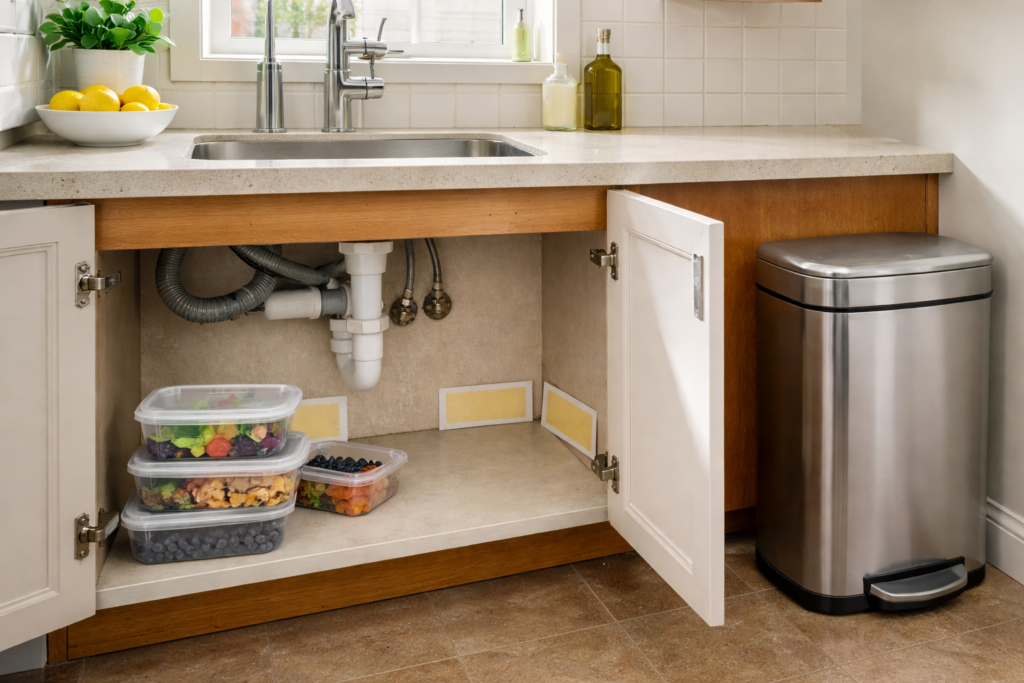
Step 3: Seal the Paths They Use
Blocking movement prevents new roaches from “replacing” the ones you kill—especially important in apartments.
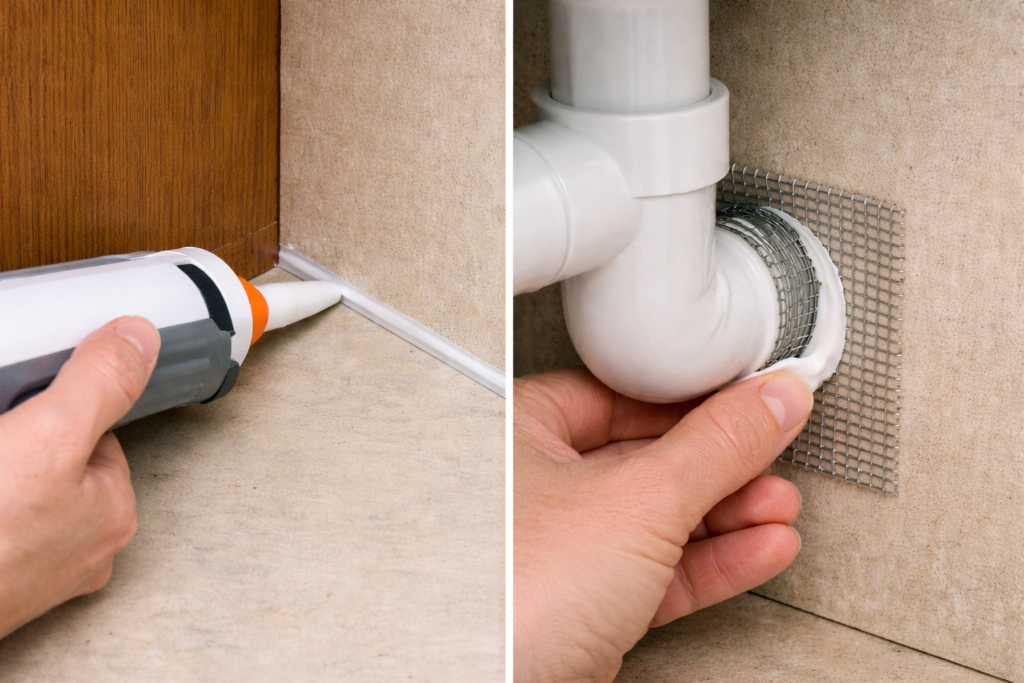
- Caulk cracks along baseboards, cabinet seams, and wall gaps. (CDC)
- Seal around plumbing penetrations with mesh/steel wool plus sealant (roaches move between units through shared plumbing chases). (Entomology)
- Add door sweeps if you suspect entry from hallways/outdoors. (CERCH)
Step 4: Use Baits as Your Primary “Kill Tool”
For most indoor infestations, baits (especially gel baits) are the workhorse because roaches feed on them in hidden areas and can spread the toxicant within the population. (NC State Extension)
How to apply gel bait correctly
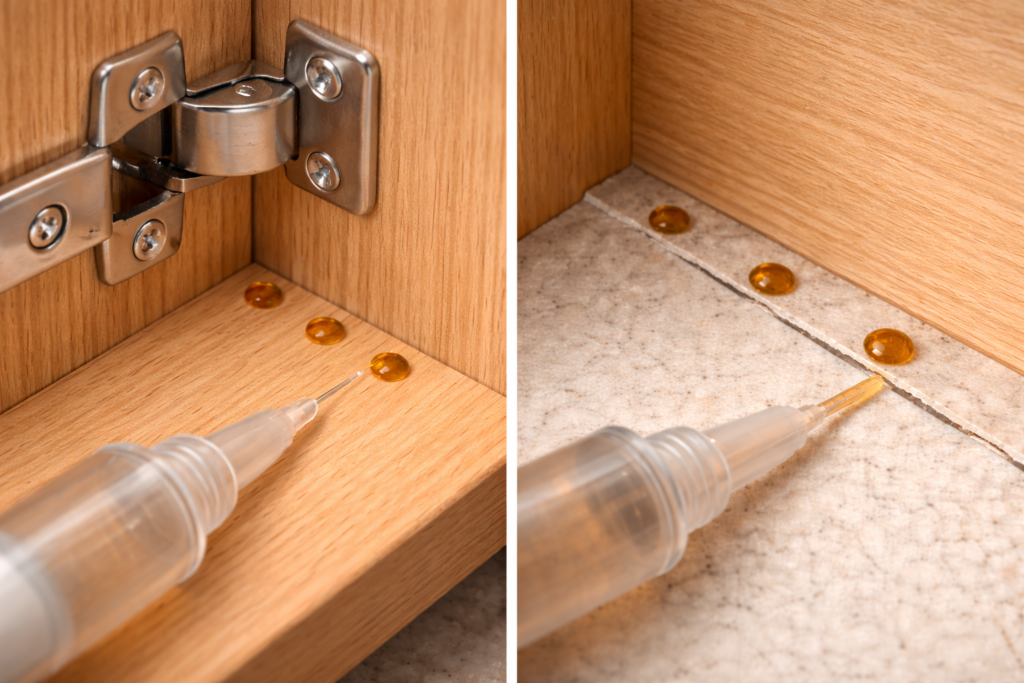
- Put small placements (think pea-sized or smaller) in many locations close to where traps show activity—cracks, crevices, hinges, under the sink lip, behind appliances. (NC State Extension)
- Re-check in about one week and reapply where bait was consumed or dried out. (NC State Extension)
- Do not spray insecticide in areas where you’ve baited—sprays can repel or scatter roaches and reduce bait feeding. (NC State Extension)
- Expect improvement over 1–2 weeks rather than overnight (that’s normal for bait-based control). (San Francisco Environment)
Consider an IGR (optional, but helpful)
An insect growth regulator (IGR) interferes with cockroach development and reproduction, helping break the life cycle—especially useful with German cockroaches. (Ask IFAS – Powered by EDIS)
IGRs are typically applied as a crack-and-crevice treatment near harborages and can be paired with bait (placed close by, not smeared together). (Ask IFAS – Powered by EDIS)
Step 5: Add Insecticidal Dust in Voids (Not Open Areas)
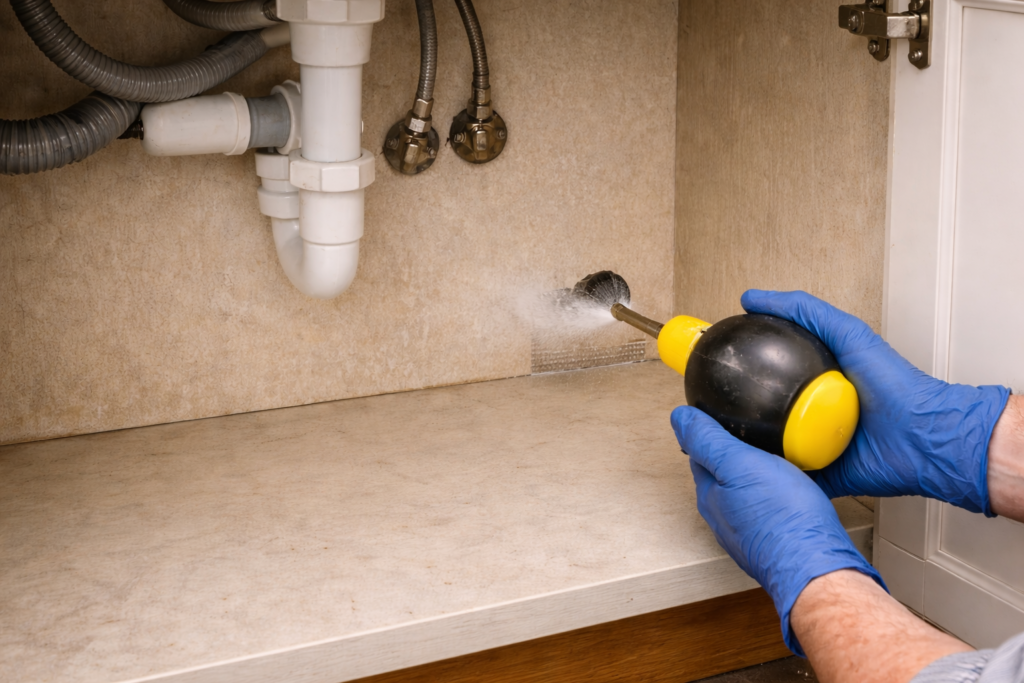
Dusts can be excellent in dry, inaccessible spaces—wall voids, under appliances, behind kick plates—where roaches hide and where sprays and cleaning won’t reach. (Mississippi State Extension Service)
Good options (choose products labeled for indoor insect control):
- Boric acid (National Pesticide Information Center)
- Silica gel (insecticidal-grade) (UC IPM)
- Diatomaceous earth (labeled for insects) (NC State Extension)
Apply dust correctly:
- Use a bulb duster and apply a very light layer—clumps can cause roaches to avoid the area. (NC State Extension)
- Keep dust out of places kids/pets can access, and don’t apply where it can become airborne or contaminate food-contact surfaces. (NC State Extension)
- Never use “pool-grade” or non-insecticidal silica products indoors due to inhalation risk—use insect-labeled products only. (NC State Extension)
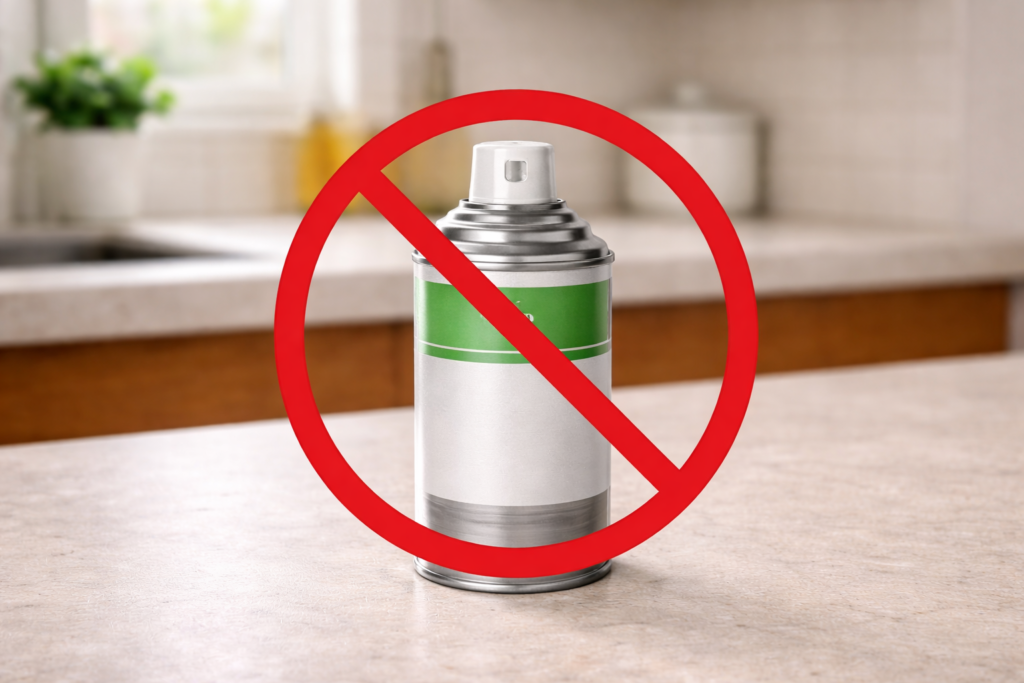
Step 6: Skip Foggers (“Bug Bombs”) and Routine Spraying
Total-release foggers are widely discouraged for roaches because they don’t penetrate the cracks and crevices where roaches hide—and they can create unnecessary exposure risks. (NC State Extension)
They can also trigger asthma attacks in some people, which is why public health guidance often recommends avoiding sprays and foggers for pest control in asthma-prone homes. (CDC)
If you must use a spray at all, keep it limited to cracks and crevices only, and treat it as a backup—not your main strategy. (NC State Extension)
Step 7: Follow Up Until Traps Stay Quiet
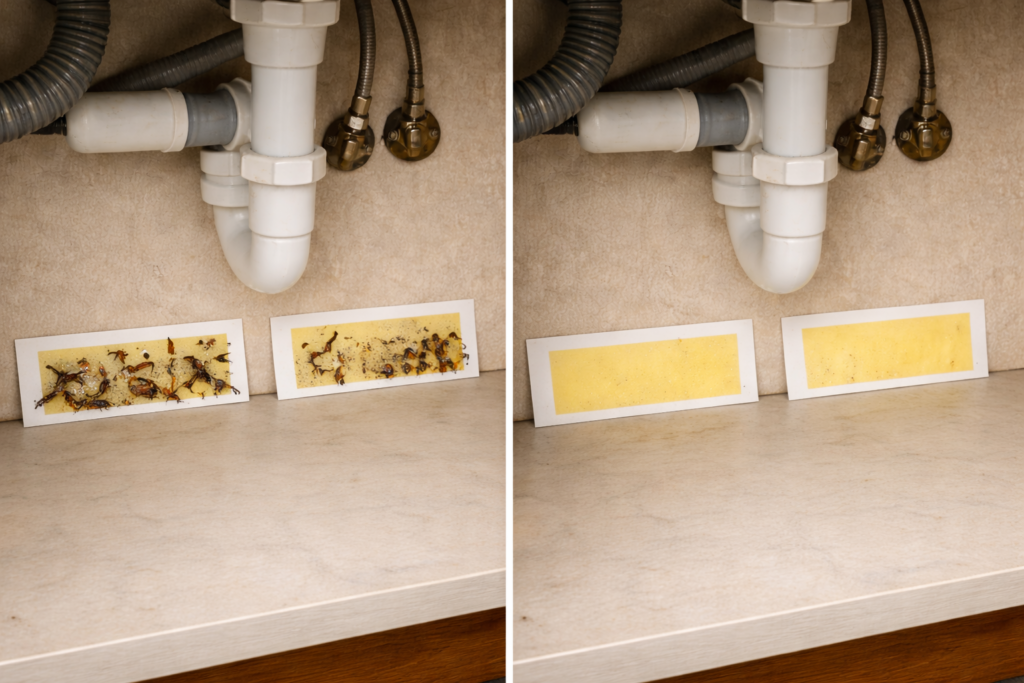
A practical “success metric” is sticky trap counts dropping week over week.
- Keep traps down for at least 3–4 weeks and replace as needed. (Penn State Extension)
- Re-bait weekly at first, then biweekly as activity drops. (NC State Extension)
- If bait isn’t being eaten, relocate closer to harborages and remove competing food sources (crumbs, grease). (NC State Extension)
- If you suspect resistance or bait aversion, switching bait active ingredients/modes of action can help. (Ask IFAS – Powered by EDIS)
Special Case: Apartments and Multi-Unit Buildings
If you share walls, roaches often move through plumbing and gaps between units, so you may need a coordinated building approach. (Entomology)
EPA guidance for housing managers emphasizes that effective IPM in multifamily housing is a team effort (residents, maintenance, and pest professionals). (EPA)
What to do:
- Document trap counts and photos.
- Ask management for building-wide inspection and baiting.
- Seal around plumbing inside your unit to reduce movement. (Entomology)
When to Call a Professional
Bring in a licensed pest management professional if:
- You’re seeing roaches daily after 2–3 weeks of baiting + sanitation. (NC State Extension)
- The infestation is heavy (daytime sightings, many traps filling fast). (NC State Extension)
- You’re in a multi-unit building and suspect spread between apartments. (EPA)
Quick Prevention Checklist (Once They’re Gone)
- Wipe kitchen surfaces nightly; don’t leave pet food out overnight. (CDC)
- Fix leaks quickly; keep under-sink areas dry. (CDC)
- Store food in sealed containers; reduce cardboard storage. (CDC)
- Keep 2–4 sticky traps down as “early warning” monitors and check monthly. (Penn State Extension)
Summary
To get rid of cockroaches for good, follow an IPM plan: monitor with sticky traps, remove food and moisture, seal gaps, then rely on baits (plus targeted dust in voids). (Purdue Agriculture)
Avoid foggers and blanket spraying—those approaches are often less effective for hidden roach harborages and can raise health risks in sensitive households. (NC State Extension)