Carpenter bees are large, mostly solitary bees that tunnel into wood to create nesting galleries. They don’t eat wood, but repeated tunneling (especially in the same boards year after year) can weaken trim, fascia, decks, pergolas, and outdoor furniture over time, as explained by University of Kentucky Entomology and University of Georgia Cooperative Extension. The most effective approach is integrated: identify the bee correctly, time your actions to the life cycle, treat galleries only when needed, and then repair and seal wood so it’s unattractive for future nesting, which aligns with prevention-first guidance from UC IPM and the principles of EPA Integrated Pest Management (IPM).
What Carpenter Bees Are and Why They Target Your Wood
Female carpenter bees excavate a short entry hole and then tunnel along the grain, creating chambers for eggs and pollen provisions, and they often reuse or expand existing tunnels, which is why the same spots get hit repeatedly, according to University of Kentucky Entomology and University of Georgia Cooperative Extension. They’re especially attracted to unpainted, weathered softwoods (commonly cedar, redwood, cypress, pine), and painted or well-finished wood is less susceptible, per University of Kentucky Entomology and UC IPM.
How to Confirm You Have Carpenter Bees (Not Bumblebees)
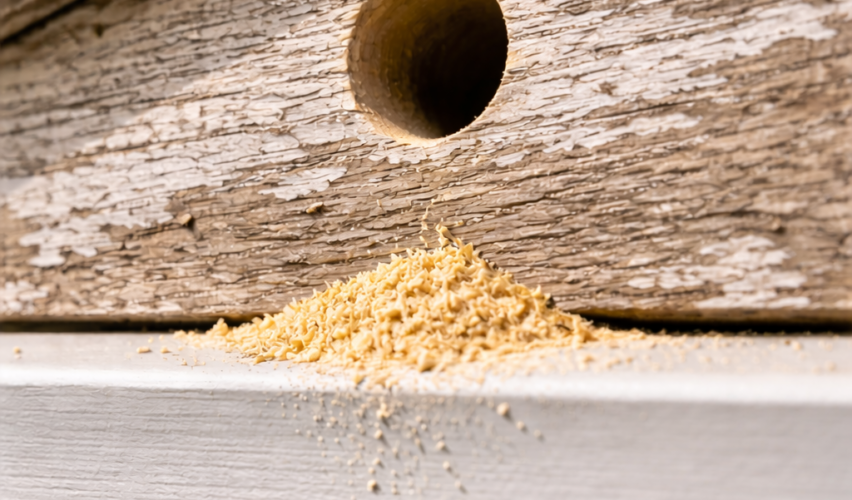
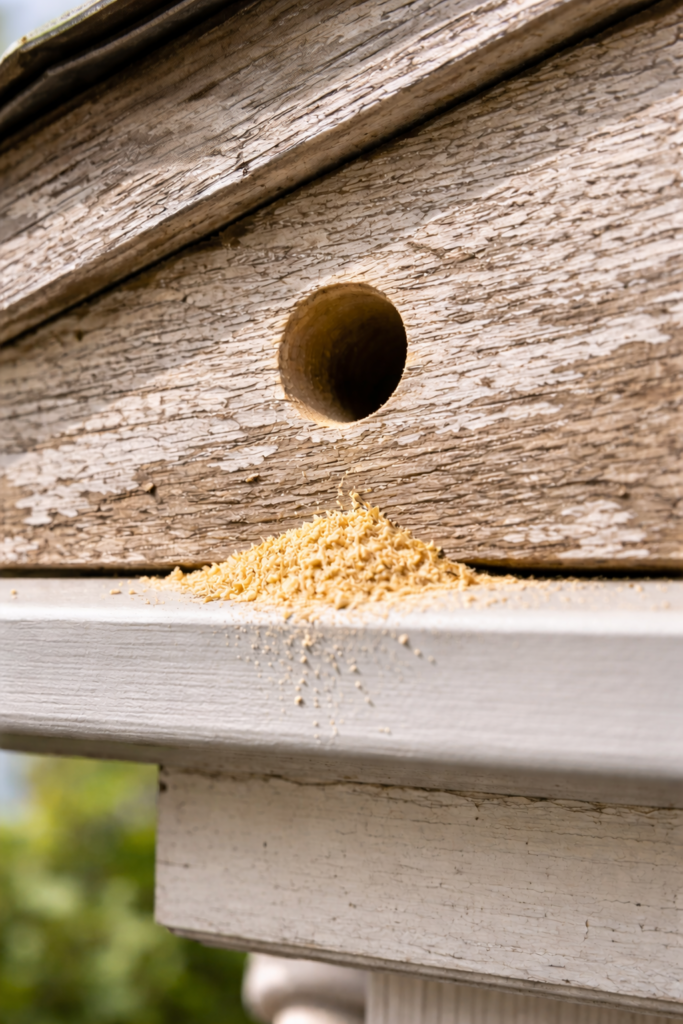
Look for these signs: perfectly round entrance holes roughly 3/8–1/2 inch wide; coarse sawdust (frass) below holes; hovering bees near eaves/railings; and occasional yellowish staining around older openings, described by University of Georgia Cooperative Extension and University of Kentucky Entomology. Carpenter bees are commonly mistaken for bumblebees, but carpenter bees typically have a shinier, less hairy abdomen, while bumblebees are fuzzier with more obvious banding, as shown by University of Kentucky Entomology and UGA Extension.
Tip: The bees that “dive-bomb” people are often males guarding territory; males don’t have stingers, and females typically sting only if handled or provoked, per UC IPM’s Carpenter Bees Pest Note (PDF) and UGA Extension.
Carpenter Bee Life-Cycle Timing (Spring Nesting vs Late-Summer Larvae)
Carpenter bees generally have one generation per year: adults overwinter in tunnels, emerge in spring to mate and start nests, larvae develop through spring and summer, and new adults emerge late summer and then return to tunnels to overwinter, as detailed by University of Kentucky Entomology and UGA Extension’s lifecycle/phenology section. Timing matters because preventive steps work best before boring begins, and tunnel treatments work best when adults are actively moving in and out of galleries, consistent with UC IPM’s prevention-first guidance and IPM principles from the EPA.
| Season | Bee Life Stage | What’s Happening | Most Effective Action | Why It Works |
| Early spring (Mar–Apr) | Overwintered adults emerge | Adults exit old tunnels, mate, and search for nesting sites | Inspect and mark holes; start prevention (paint/varnish, crack filling); place traps early if you use them | This is the best window to stop new nesting before galleries are built and eggs are laid |
| Mid–late spring (Apr–May) | Nest construction & egg laying | Females bore tunnels and provision brood cells | If you treat galleries, do so in a targeted way and follow label directions; delay sealing briefly after treatment | Leaving tunnels open for a short period helps returning bees contact and spread residue inside galleries |
| Early–mid summer (Jun–Jul) | Larval development | Larvae feed inside sealed cells; little outside activity | Focus on monitoring and planning repairs; prioritize prevention over broad spraying | External activity is lower, and prevention/repairs are usually more efficient than surface spraying |
| Late summer–fall (Aug–Sep) | New adults emerge and prepare to overwinter | New adults emerge, feed briefly, then return to tunnels to overwinter | Another strong window for targeted tunnel treatment if needed; then plug/repair after activity stops | Treating and then waiting briefly before sealing can reduce the number of adults that overwinter and return next year |
| Winter (Oct–Feb) | Adults overwinter inside tunnels | Little/no outside activity | Repair wood; fill holes/cracks; paint or varnish exposed surfaces | Prevention is the main long-term strategy and finished surfaces are less attractive for nesting |
Step-by-Step: Get Rid of Carpenter Bees
Step 1: Inspect, Mark, and Prioritize
- Walk your property and mark every hole (eaves, fascia boards, railings, deck joists, pergolas, outdoor furniture), which are common nesting sites noted by University of Kentucky Entomology and UGA Extension. 2) Look for fresh frass (new sawdust) to identify active galleries, a key sign described by UGA Extension and University of Kentucky Entomology. 3) Decide your threshold: if you have just one or two inactive holes, repairs and prevention may be enough; if you have multiple active galleries or recurring damage, consider targeted tunnel treatment plus repair, consistent with prevention-first recommendations from UC IPM and the EPA’s IPM approach.
Step 2: Use Targeted Gallery Treatment Only When Needed
If activity is heavy or damage is recurring, extension guidance commonly recommends treating the gallery entrance (not blanket-spraying the whole structure) using a product specifically labeled for carpenter bees, and always following the label for timing and protective equipment, per Purdue Extension and UGA Extension. Many guides note that treatments are often most practical when bees are more likely to be in galleries (often evening), and that dust/powder formulations are frequently used for tunnels because returning bees contact and spread material inside, per Purdue Extension and UGA Extension. Safety note: Avoid treating when children, pets, or pollinators are active nearby, and keep applications confined to the gallery opening, consistent with “least hazard” IPM guidance from the EPA and prevention-first recommendations from UC IPM.
Step 3: Don’t Seal Immediately—Then Plug and Finish
A key detail many people miss is timing: after treatment, tunnels should be left open briefly so returning bees contact the material; then holes can be plugged and finished, per Purdue Extension and UGA Extension. Once you’re confident activity has stopped, plug the entrance with a tight-fitting wooden dowel (or similar filler), seal with exterior-grade caulk/wood putty, sand smooth, and repaint or varnish to discourage reuse, as recommended by UC IPM and Purdue Extension.
Quick repair checklist: Plug the hole tightly; seal edges; sand; repaint/varnish; recheck for new frass after 7–10 days, consistent with monitoring-based IPM guidance from the EPA and prevention guidance from UC IPM.
Step 4: Use Traps as a Supplement (Optional)
Traps can reduce pressure when placed near active areas early in the season, but they work best as an add-on to repairs and wood finishing, not as a stand-alone cure, as discussed in UGA Extension’s management section and echoed by prevention-first guidance from UC IPM. If you use traps, place them under eaves/overhangs near known activity in early spring and maintain them consistently, aligning with spring activity patterns described by University of Kentucky Entomology and UGA Extension.
Long-Term Prevention (The Part That Actually Keeps Them Gone)
Prevention is the main long-term approach: paint or varnish exposed wood to reduce weathering, fill cracks and depressions so surfaces are less inviting, and repair/plug unoccupied holes after bees have emerged, all recommended by UC IPM and the UC IPM Pest Note (PDF). When building or replacing vulnerable exterior parts, consider hardwoods or non-wood materials where practical, since some hardwoods are less commonly attacked for nesting, per UC IPM and UGA Extension. Also protect rough or exposed wood ends (like timber ends) with screening or flashing where feasible, an option specifically mentioned by UC IPM and consistent with prevention-focused IPM from the EPA.
When to Call a Professional
Call a licensed pest professional if galleries are numerous across structural members, you can’t safely reach high soffits/eaves, you’re seeing ongoing damage despite repairs, or you need help choosing legal, labeled products for your area. IPM programs emphasize using life-cycle knowledge, targeted controls, and the least-hazard approach needed to protect people and property, per the EPA’s IPM principles and prevention-first guidance from UC IPM.
Summary Checklist
Identify (round holes + frass + shiny abdomen) using guidance from University of Kentucky Entomology and UGA Extension. Time your approach (spring and late summer are highest-leverage windows) based on the life-cycle details from UGA Extension and University of Kentucky Entomology. Treat galleries only when necessary and always follow the label, as emphasized by Purdue Extension and IPM guidance from the EPA. Leave tunnels open briefly after treatment, then plug, seal, and repaint/varnish to prevent reuse, per Purdue Extension and UC IPM. Prevent recurrence by keeping exposed wood finished, filling cracks, and upgrading vulnerable materials when practical, as recommended by UC IPM and the UC IPM Pest Note (PDF).