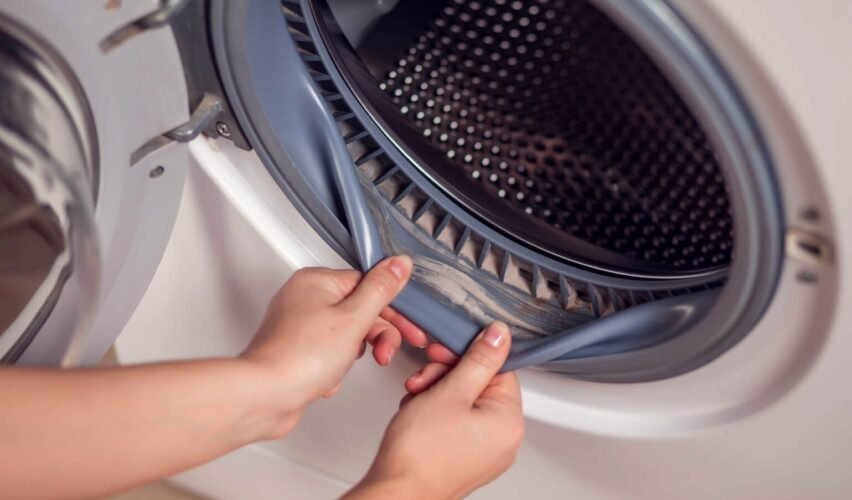
Regularly cleaning your washing machine helps remove detergent residue, mold, bacteria, and mineral buildup that can cause odors and reduce performance. With a few household supplies and about an hour, you can keep your washer running efficiently and your laundry smelling fresh.
Why Cleaning Your Washing Machine Matters
Over time, moisture, detergent, and fabric softener residue create an ideal environment for mold and bacteria. According to guidance from the U.S. Environmental Protection Agency, damp appliances can harbor mold that contributes to odors and indoor air quality issues. In addition, manufacturers such as GE Appliances and Whirlpool note that buildup can interfere with proper agitation and water flow, reducing cleaning effectiveness and increasing wear on internal components.
How often to clean:
Most experts recommend cleaning your washing machine once a month for households that do laundry regularly, or at least every 2–3 months for light use, based on manufacturer maintenance guidelines and consumer appliance studies.
What You’ll Need
- White distilled vinegar
- Baking soda
- Microfiber cloth or soft sponge
- Old toothbrush (for crevices)
- Optional: commercial washing machine cleaner (HE-compatible)
The cleaning power of vinegar comes from acetic acid, which helps dissolve mineral deposits and soap residue, as explained by Penn State Extension. Baking soda adds mild abrasiveness and deodorizing action, supported by chemistry guidance from the American Chemical Society.
How to Clean a Top-Load Washing Machine


- Run a hot water cycle (empty).
Set the washer to the largest load size and hottest water setting. Let it fill completely. - Add vinegar.
Pour 4 cups of white vinegar into the water. Let the machine agitate for a minute, then pause and soak for 30–60 minutes. Vinegar helps break down detergent residue and hard-water scale. - Resume and finish the cycle.
Allow the washer to complete the cycle to flush out loosened buildup. - Run a second cycle with baking soda.
Add 1 cup of baking soda directly into the drum and run another hot cycle. This neutralizes odors and helps remove remaining grime. - Clean the exterior and details.
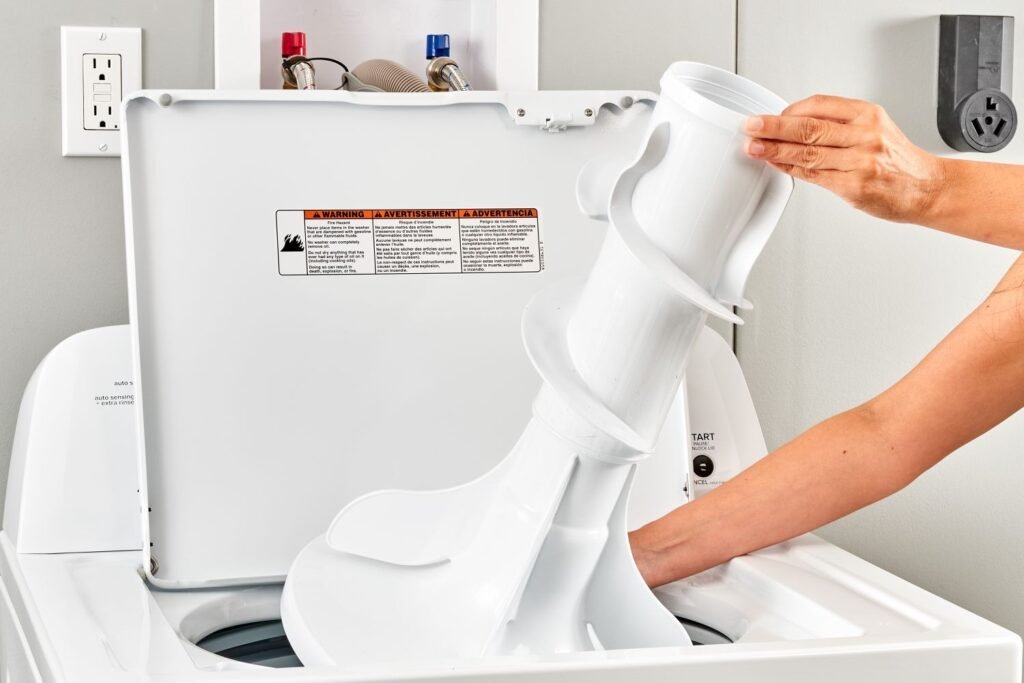
Wipe the lid, knobs, and rim with a damp cloth. Use a toothbrush to scrub around the agitator and any seams where residue collects.
Tip: If your washer has a removable lint or debris filter, clean it according to the manufacturer’s instructions to prevent drainage issues.
How to Clean a Front-Load Washing Machine
- Clean the rubber door gasket.
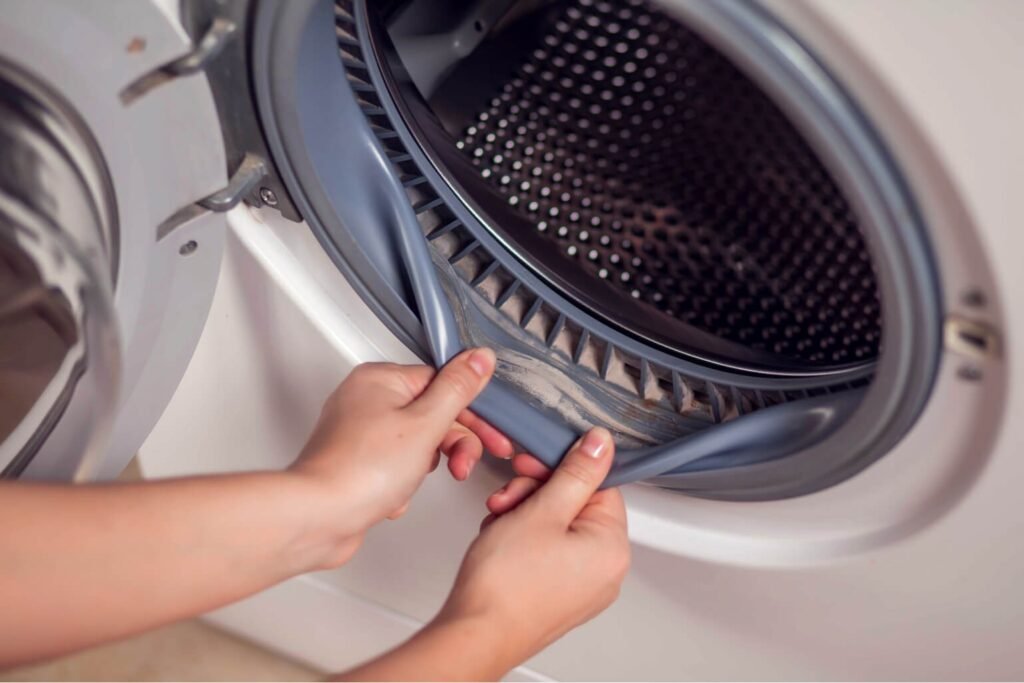
Pull back the rubber seal and wipe away moisture, lint, and mold using a cloth dampened with a 1:1 vinegar–water solution. Mold growth in gaskets is a common issue cited in appliance maintenance studies by Consumer Reports. - Wash the detergent drawer.
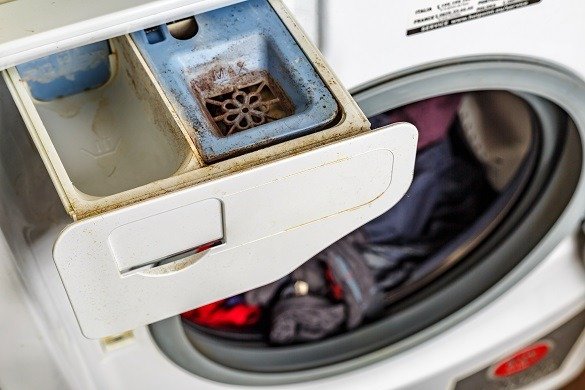
Remove the drawer and rinse it under warm water. Use a toothbrush to scrub away hardened detergent and fabric softener residue. - Run a hot cleaning cycle.
Add 2 cups of white vinegar to the detergent dispenser or drum and run the hottest, longest cycle available. Many manufacturers also recommend using a washer’s built-in “Clean Washer” cycle if available. - Optional second cycle with baking soda.
Sprinkle ½ cup of baking soda into the drum and run a short hot cycle to further deodorize. - Clean the drain filter.
Locate the drain pump filter (usually behind a small front panel), drain excess water, and remove debris. This step helps prevent odors and drainage problems, as noted in owner manuals from major appliance brands. - Dry the machine.
Leave the door open after cleaning to allow moisture to evaporate.
Using Commercial Washing Machine Cleaners
Commercial cleaners are formulated to dissolve grease, limescale, and biofilm in high-efficiency machines. Look for products labeled HE-compatible and follow the manufacturer’s directions. Independent testing organizations such as Good Housekeeping note that these cleaners can be especially helpful in areas with hard water or heavy washer use.
Preventing Odors and Buildup
- Leave the door or lid open between loads to improve airflow
- Use the recommended amount of detergent—overuse increases residue
- Avoid liquid fabric softener when possible; it leaves a waxy coating
- Run a monthly hot maintenance cycle, even if you usually wash cold
The U.S. Department of Energy also emphasizes proper detergent use and regular maintenance to extend appliance life and maintain efficiency.
Summary
Cleaning your washing machine is a simple but essential maintenance task that improves performance, prevents odors, and extends the life of the appliance. By using vinegar, baking soda, and regular hot cycles—along with monthly upkeep—you can keep both top-load and front-load washers fresh, hygienic, and working at their best.