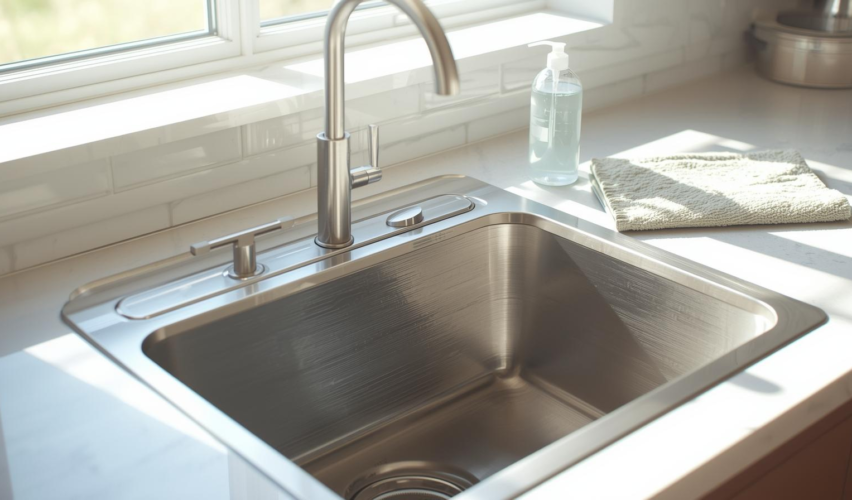
Stainless steel looks best when you clean gently, follow the grain, rinse well, and dry to prevent water spots and mineral buildup. That “clean → rinse → dry” routine is recommended by manufacturers like Franke’s stainless steel sink care instructions and Kohler’s stainless sink care tips.
What to use (and what to avoid)
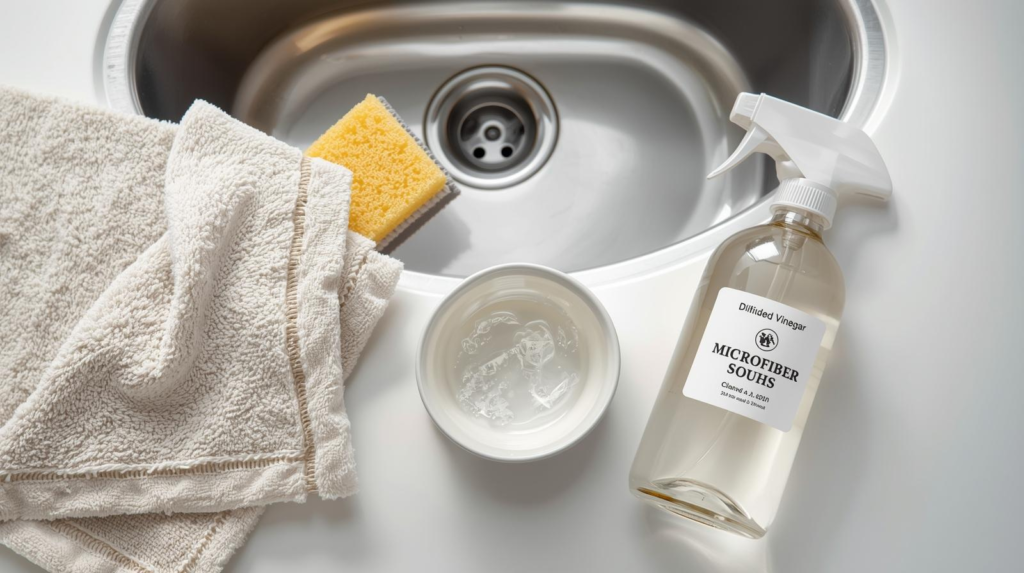
Use
- A soft sponge or microfiber cloth, as advised by Franke and Kohler.
- Mild dish soap/neutral detergent with water (manufacturer standard), per Franke and Kohler.
- Diluted vinegar for mineral film (safe when used briefly and rinsed), as noted in the stainless cleaning guidance from SSINA’s “Care and Cleaning of Stainless Steel” PDF.
Avoid
- Steel wool / carbon-steel brushes, because they can leave iron particles that later rust and stain stainless steel—called out by SSINA and reinforced by Kohler.
- Chloride/bleach cleaners unless the brand explicitly allows them, because chlorides can contribute to staining/pitting if not rinsed off promptly; this is warned about directly by Franke and Kohler’s sink care guidance.
Daily clean (2 minutes)
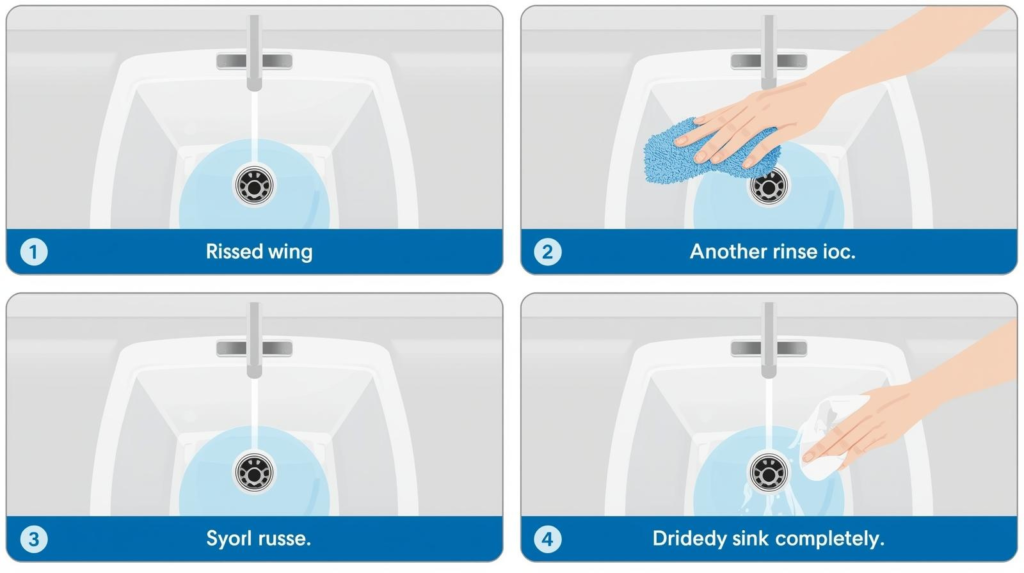
- Rinse away grit/food so you don’t rub particles into the finish (a basic practice in manufacturer routines like Franke’s cleaning steps).
- Wipe with mild soap + water using a soft cloth/sponge, as recommended by Franke and Kohler.
- Rinse thoroughly, per Franke’s instructions.
- Dry completely to prevent water deposits, which both Franke and Kohler specifically recommend.
Weekly deep clean (for a brighter shine)
- Do the daily clean first (soap → rinse).
- Apply a small amount of non-scratch stainless cleaner/cream and scrub gently.
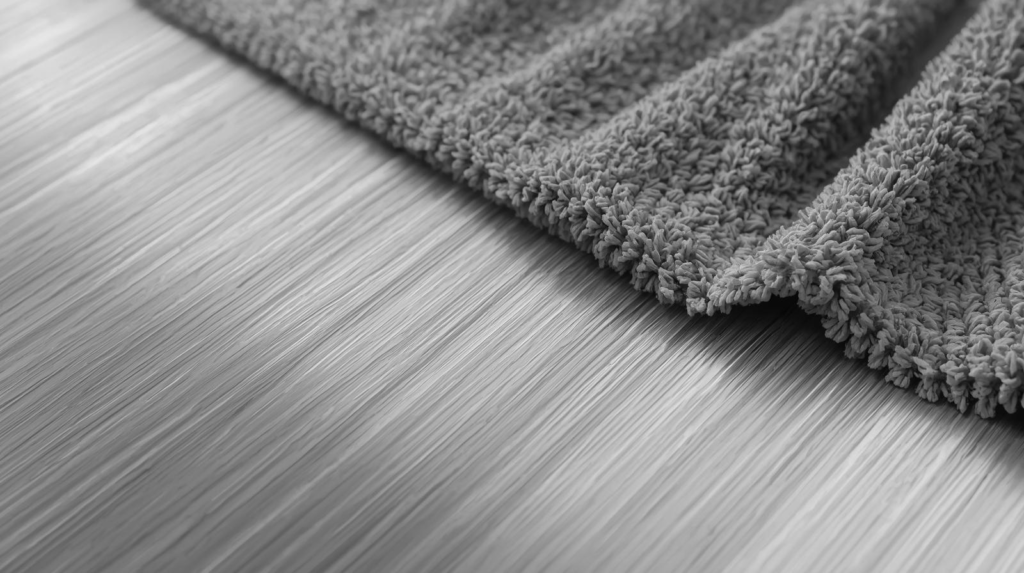
- Wipe with the grain, which Kohler explicitly recommends (“working with, not across, the grain”) in their stainless sink care tips and again in their broader kitchen sink care guidance.
- Rinse and dry.
Remove hard-water spots (white haze / limescale)
If you have chalky white film, it’s usually mineral deposits. A standard stainless approach is:
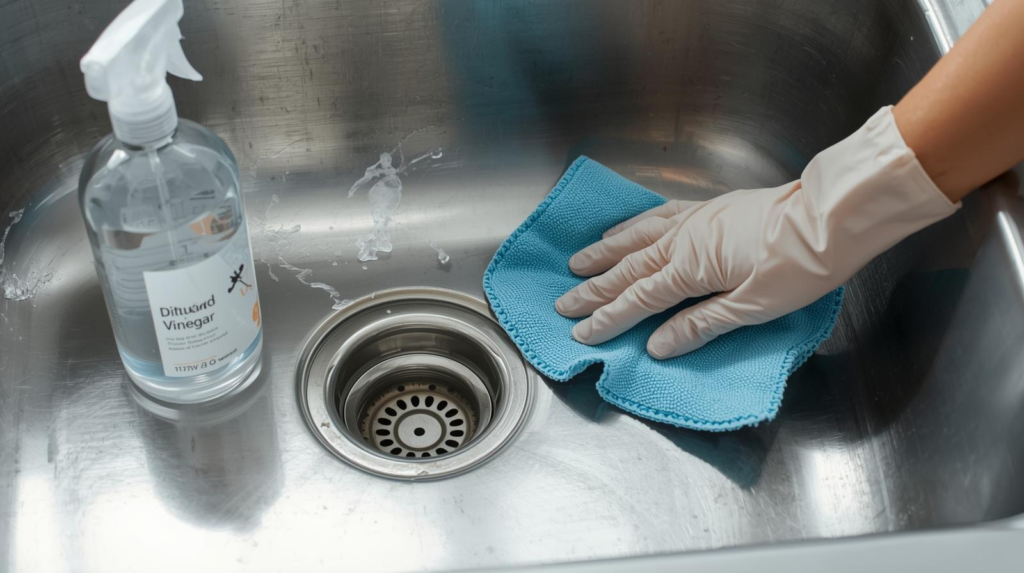
- Spray diluted white vinegar onto the deposits, a method included in SSINA’s cleaning guidance PDF.
- Let it sit briefly (a minute or two), then wipe with the grain as advised by Kohler.
- Rinse thoroughly and dry, as emphasized by Franke.
Remove rust spots (the orange/brown freckles)
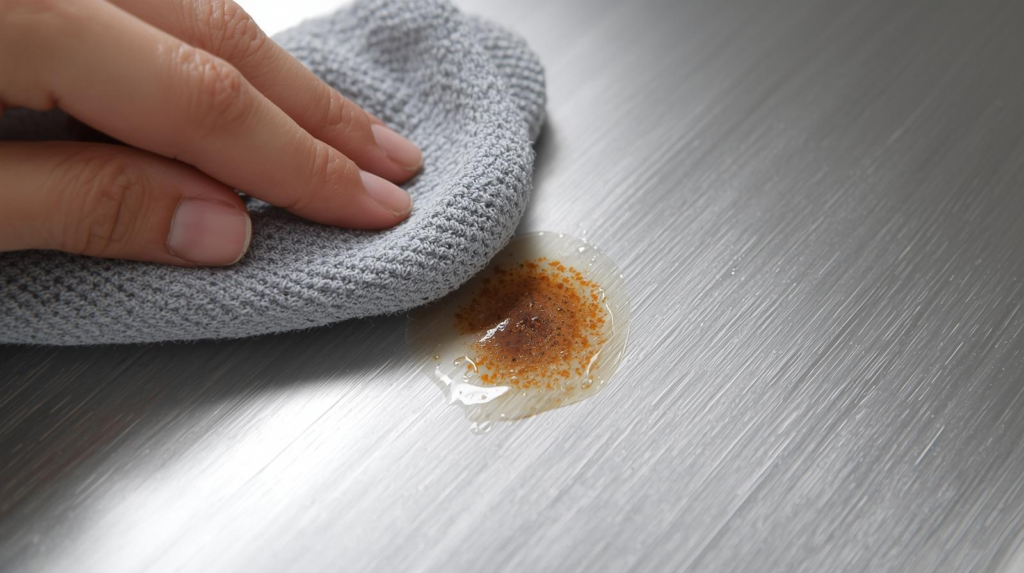
Most “rust” on sinks is surface contamination (iron particles from steel wool, cast-iron pans, or metal items left wet), which is described by Franke and discussed in industry materials like the Nickel Institute’s stainless cleaning handbook (free-iron contamination and cleaning).
Method (gentle and common):
- Use a damp soft cloth plus a mild abrasive cleanser designed for stainless (avoid aggressive scratching).
- For stubborn rust staining, many people use an oxalic-acid cleaner; Bar Keepers Friend explains this approach in their stainless sink rust-removal guidance.
- Always rinse and dry afterward, consistent with manufacturer routines like Franke’s care instructions.
What not to do (to avoid dullness and damage)
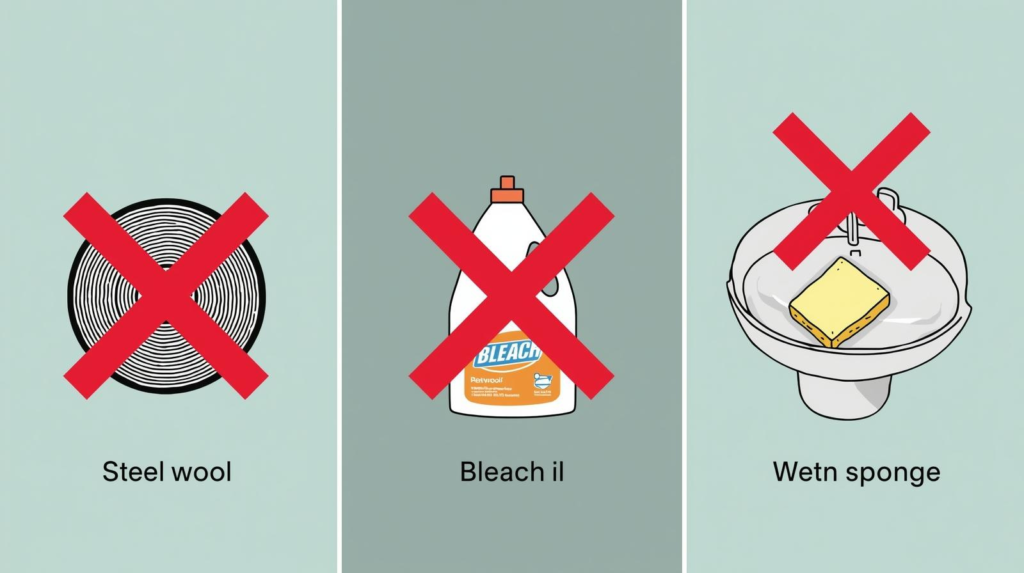
- Don’t use steel wool/wire brushes—both SSINA and Kohler warn against them.
- Don’t leave bleach/chloride cleaners sitting on the surface; Franke lists products containing chlorine/chlorides as potentially attacking the surface, and Kohler notes chloride (bleach) cleaners are not recommended and should be rinsed immediately if used.
- Don’t let wet items sit for long periods; Franke notes trapped moisture (like under pads) contributes to water deposits and spotting in their care guidance.
Summary
For a stainless steel sink that stays shiny: clean with mild soap and a soft cloth, then rinse and dry every time. Deep clean weekly by wiping with the grain, remove mineral film with diluted vinegar, and avoid steel wool and chloride/bleach cleaners.