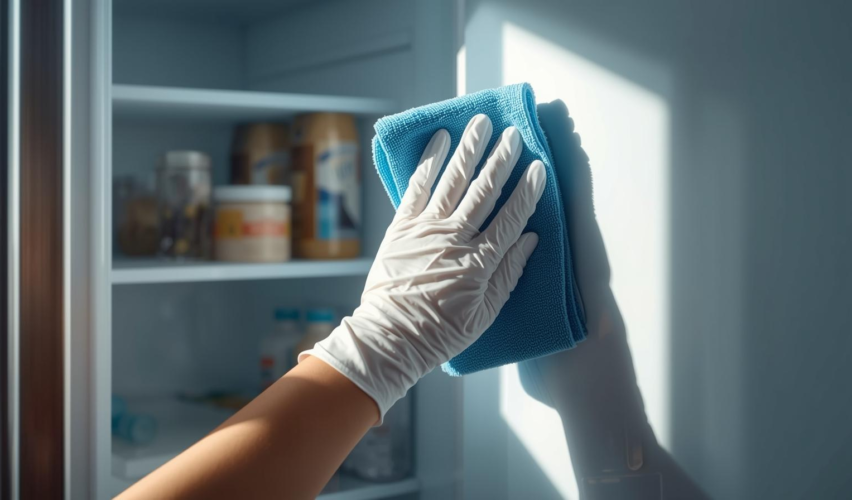
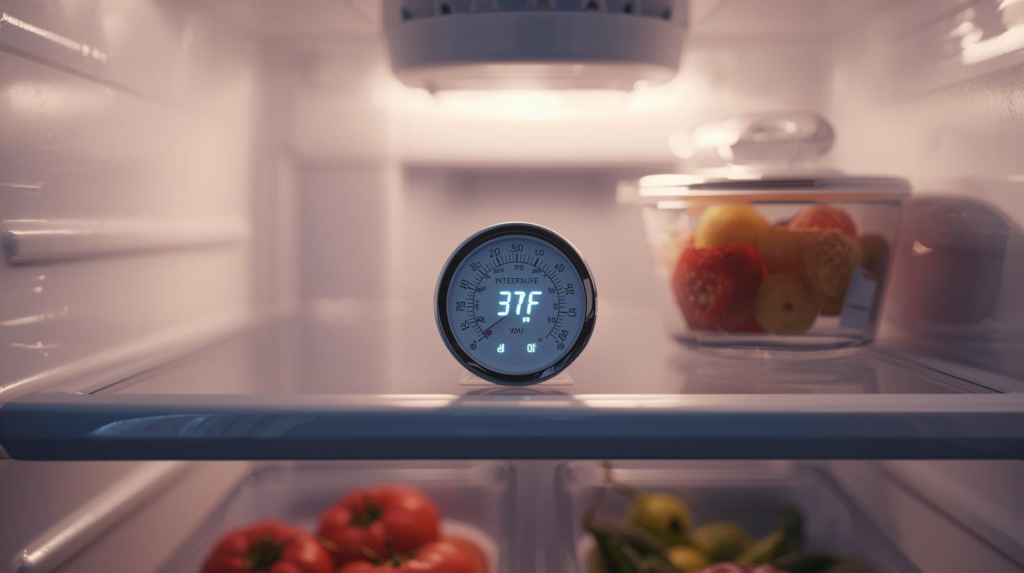
A clean refrigerator helps reduce odors, prevents sticky spills from turning into stubborn buildup, and supports safer food storage. Keep your fridge at 40°F (4°C) or below per the FDA (U.S. Food and Drug Administration), and at 40°F or below per CDC food-safety guidance (CDC); set your freezer to 0°F (-18°C) per FDA (U.S. Food and Drug Administration) and CDC (CDC).
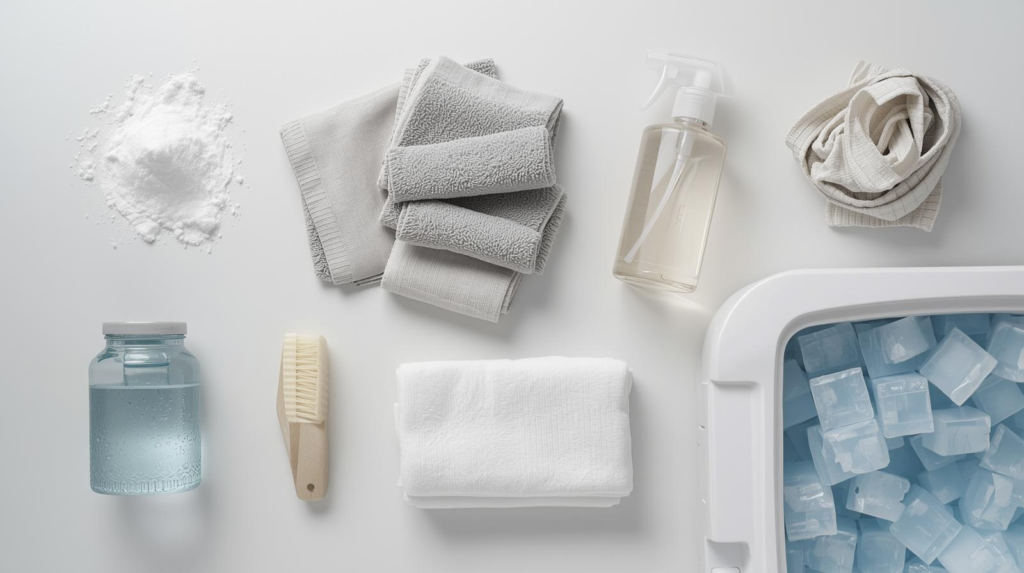
What you’ll need
- Trash/recycling bag
- Microfiber cloths or clean sponges
- Dish soap + warm water
- Baking soda
- Small soft brush/toothbrush (for seams and corners)
- Dry towel
- Optional: cooler + ice packs (CDC recommends having a cooler and frozen gel packs ready to keep food cold when food must be removed) (CDC)
- Optional: vacuum + brush attachment (for grille/coils)
Step-by-step: deep-clean your refrigerator
1) Protect your food first
If you’ll be cleaning for more than a few minutes, move perishables into a cooler so they stay cold (CDC: keep fridge 40°F or below and use thermometers to verify) (CDC). If your fridge doesn’t display an exact temperature, use an appliance thermometer as advised by the FDA (U.S. Food and Drug Administration) and USDA FSIS (Food Safety and Inspection Service).
2) Empty, toss, and sort
Discard anything that’s expired or questionable; foodborne germs multiply fastest in the ‘Danger Zone’ (40°F–140°F) per USDA FSIS (Food Safety and Inspection Service), so items that have been warm too long are risky. Wipe sticky jars so you don’t reintroduce residue.
3) Remove shelves and drawers
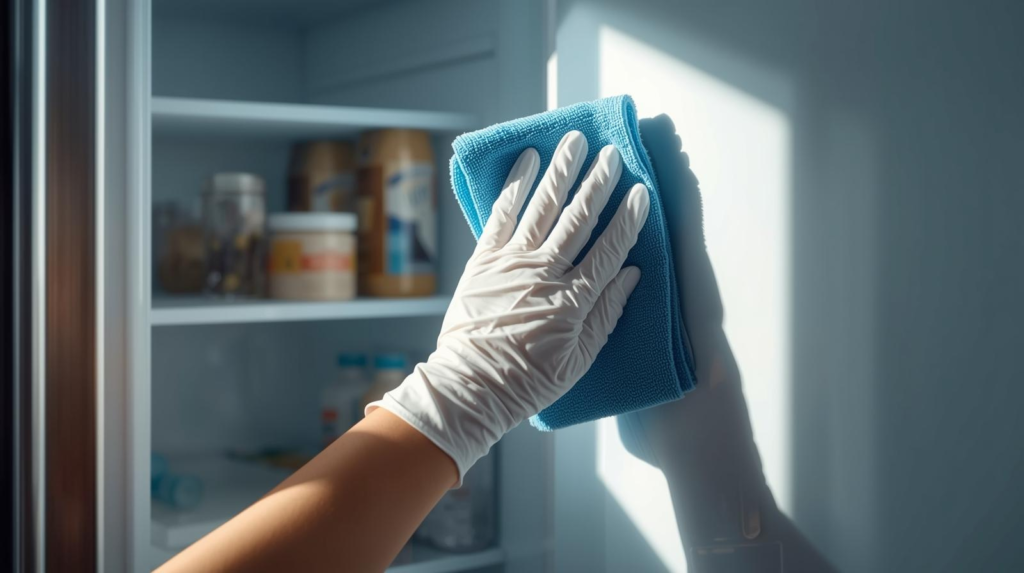
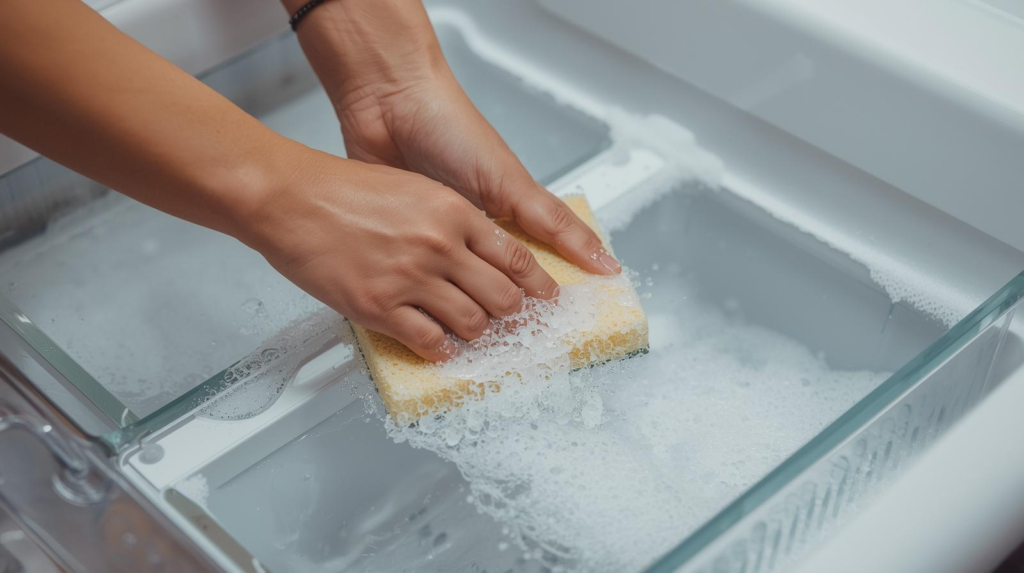
Pull out removable bins, drawers, and shelves; wash them with warm water + dish soap, rinse, and dry completely. (Drying matters because trapped moisture can hold odors and grime.)
Tip: If you have glass shelves, avoid extreme temperature swings (manufacturers commonly caution this; follow your specific manual if available).
4) Clean the interior with a gentle baking-soda wash
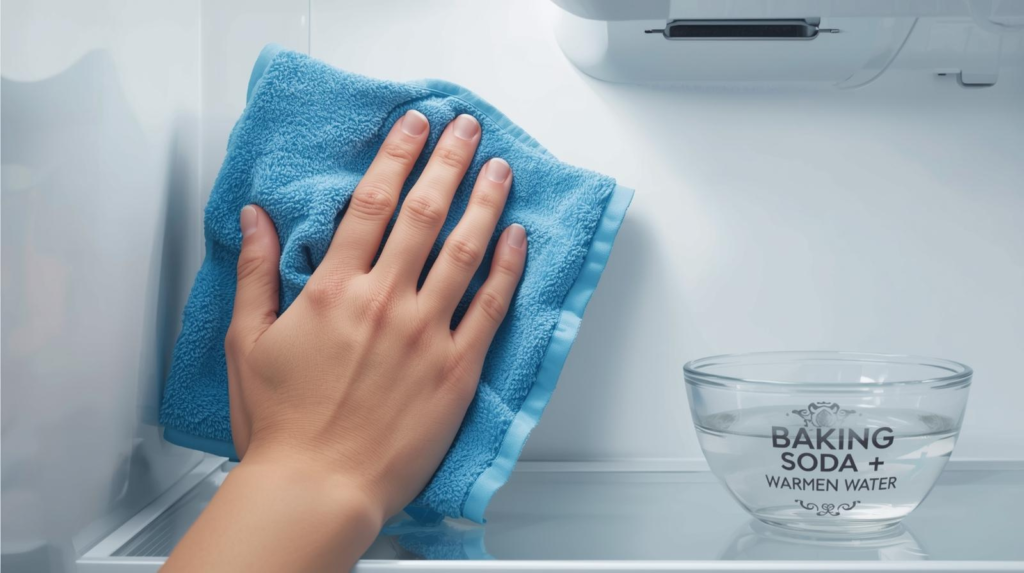
Make a mild cleaner: baking soda + warm water (widely recommended by extension programs for deodorizing fridge interiors) — for example North Carolina Cooperative Extension (NC State Extension) and Penn State Extension (Penn State Extension) recommend baking soda solutions for odor control/cleaning. Wipe walls, ceiling, floor, door shelves, rails, and corners.
For stuck-on spills: lay a warm damp cloth over the spot for 5–10 minutes, then wipe again.
5) Clean the door gasket (seal)
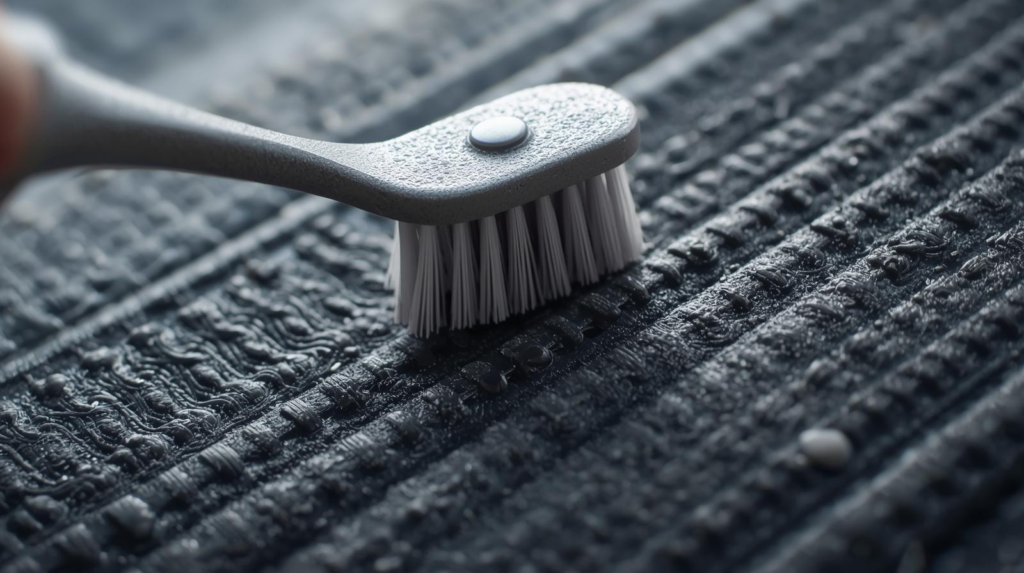
Use warm soapy water and a soft brush/toothbrush to clean inside the folds, then wipe dry. ENERGY STAR specifically recommends checking door seals as part of refrigerator care (ENERGY STAR).
6) Optional: Sanitize after risky leaks (raw meat juices, moldy spills)
If you had raw-meat juices leak, prioritize preventing cross-contamination; USDA advises keeping raw meat/poultry/seafood contained so juices don’t drip onto other foods (USDA), and CDC emphasizes keeping raw animal foods separate from ready-to-eat foods (CDC).
For odor incidents and “deep clean” situations, Penn State Extension gives an example sanitizing mix of 1 tablespoon unscented liquid chlorine bleach per gallon of warm water (Penn State Extension) (always follow the bleach label and ensure proper ventilation).
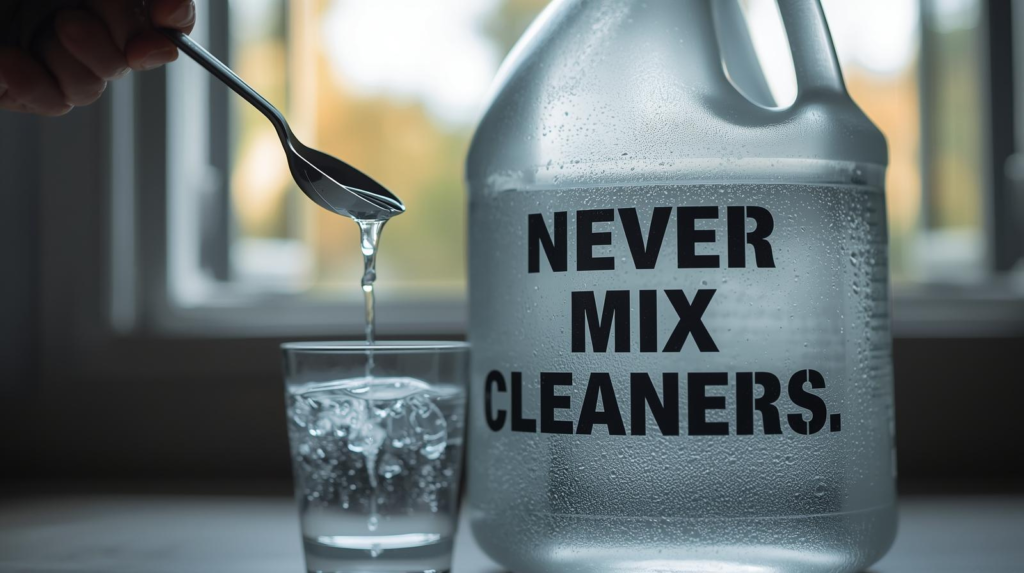
Safety warning: Never mix bleach with ammonia or acids (like vinegar) — official public health guidance warns this can release toxic gases (Washington State Department of Health).
7) Dry everything completely, then reassemble
Dry all surfaces and parts before putting them back. This helps prevent lingering smells and new residue from sticking.
8) Clean the exterior
Use mild dish soap and water for most exteriors; for stainless steel, wipe with the grain.
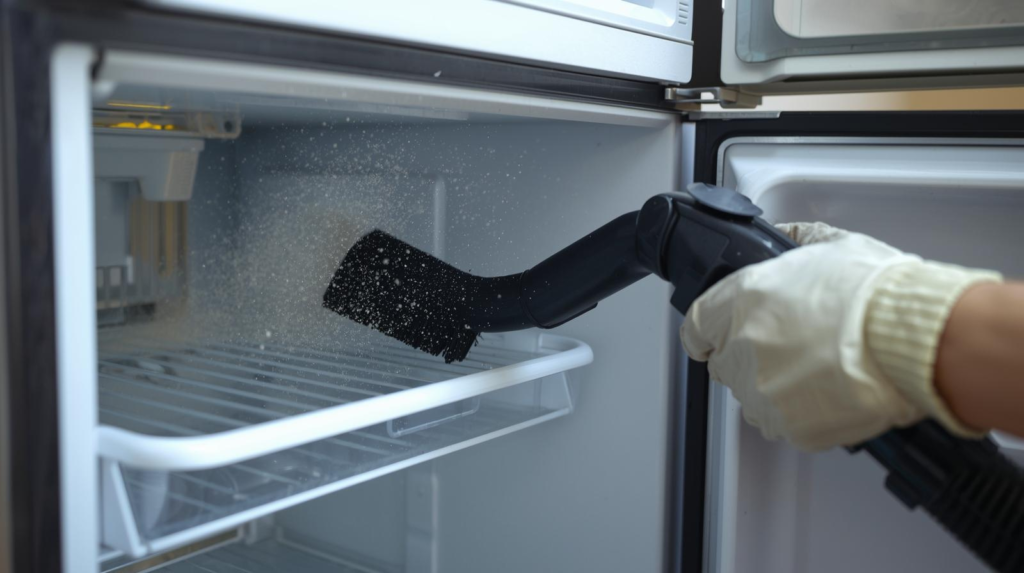
9) Vacuum the grille and (if accessible) condenser coils
ENERGY STAR recommends keeping condenser coils clean (especially on older models) and using the user manual for safe access (ENERGY STAR). If you want manufacturer-style steps, GE’s guidance includes unplugging and brushing/vacuuming after removing the base grille (if needed) (GE Appliances).
Restock so it stays cleaner (and safer)
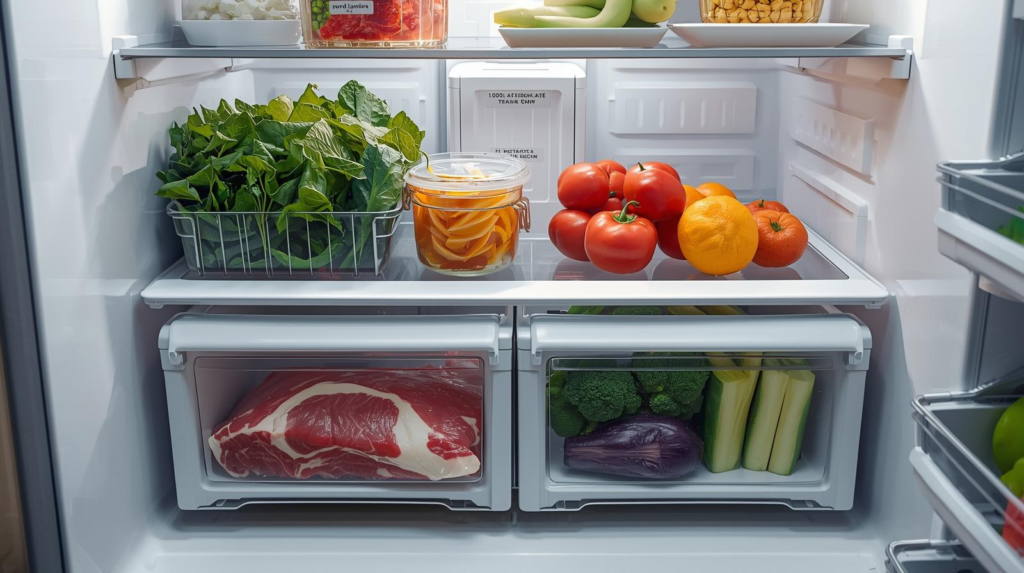
Store raw meat/poultry/seafood so it can’t drip: USDA recommends using containers/plates/sealed bags to prevent juices contaminating other foods (USDA), and a USDA food-safety article explicitly suggests placing raw meat on the bottom shelf so it won’t drip on ready-to-eat items (USDA).
Also remember: Listeria monocytogenes can grow at refrigeration temperatures, so clean handling still matters even when food is kept cold (FDA) (U.S. Food and Drug Administration) and (USDA Q&A) (Ask USDA).
Odor fixes that work
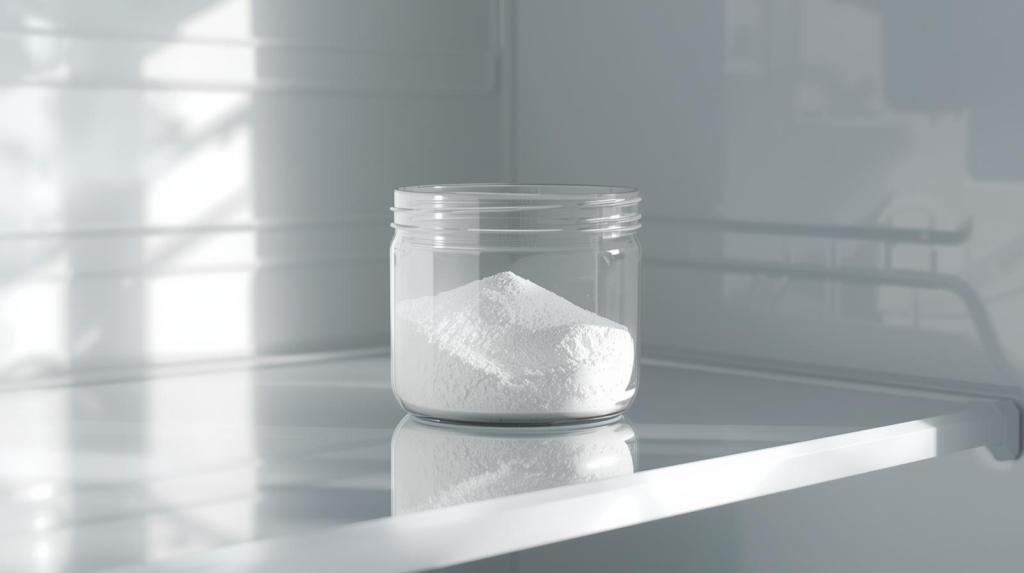
To remove odors, USDA FSIS recommends washing the interior (including door and gasket) with hot water and baking soda (Food Safety and Inspection Service). For ongoing odor absorption, USDA’s “AskUSDA” suggests placing baking soda or coffee grounds in an open container (Ask USDA).
Summary
Keep your fridge at 40°F (4°C) or below, remove and wash shelves/drawers, wipe the interior with a baking-soda solution, and clean seals/coils for better performance. If you sanitize, never mix bleach with other cleaners.