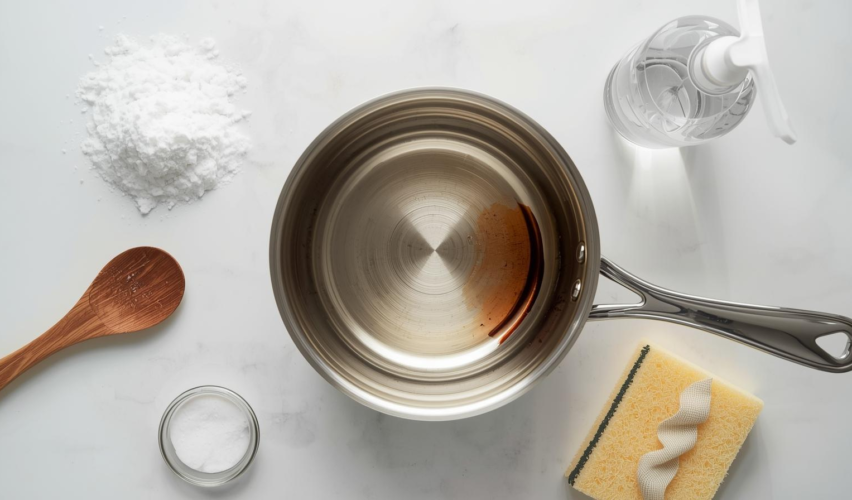
A burnt pot looks hopeless, but most “scorched” messes are just carbonized food stuck to the surface—and you can usually lift it with heat + soaking + a mild abrasive before you reach for anything harsh. The two biggest success factors are (1) softening the burnt layer and (2) using the gentlest method that works for your pot’s material. (Arm & Hammer)
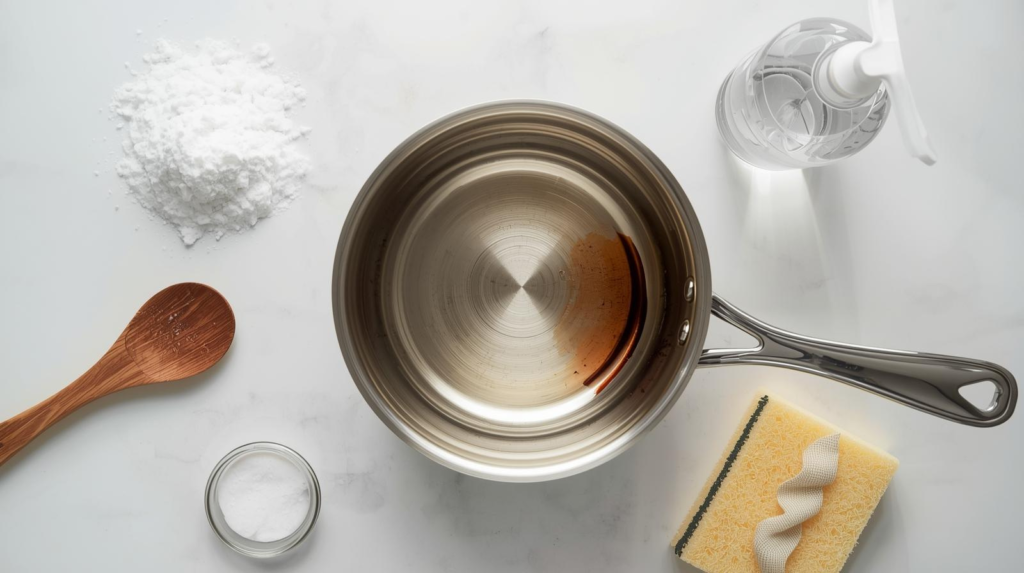
Before you start: identify the pot material
This matters because the wrong scrubber or cleaner can permanently scratch coatings.
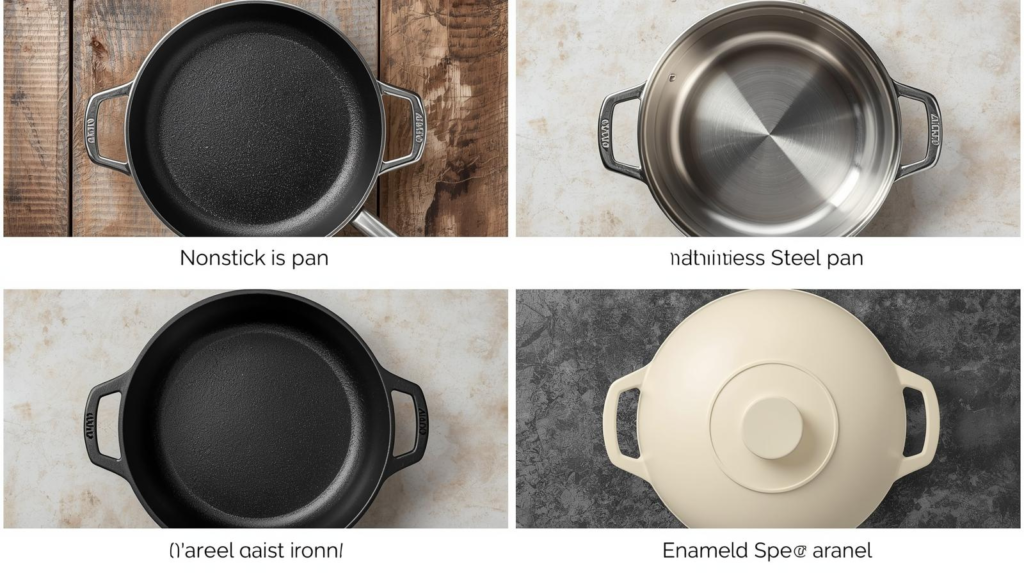
- Nonstick: avoid abrasives and harsh powders; use gentle tools and mild soap first. (Made In Cookware)
- Cast iron (bare): don’t soak; clean promptly, dry completely, and re-oil. (Arkansas Extension Service)
- Enameled cast iron: generally tolerate baking soda and non-abrasive scrubbing; avoid metal tools that can scratch enamel. (Misen)
- Stainless steel: usually the most forgiving; simmer methods + non-scratch pads work well. (Bar Keepers Friend)
Safety first: don’t mix cleaners
Some viral “cleaning hacks” can create irritating or toxic gases. In particular:
- Never mix bleach with acids (like vinegar)—it can release chlorine gas. (CDC)
- Don’t mix hydrogen peroxide and vinegar in the same container—they can form peracetic acid, a strong irritant/corrosive. (University of Rochester Medical Center)
If you use more than one product, rinse thoroughly between steps and ventilate your kitchen. (nj.gov)
The “ladder” method (start easy, escalate only if needed)
Step 1: Deglaze and lift the loose stuff
- Let the pot cool slightly (don’t shock-hot metal with cold water).
- Add hot water to cover the burnt area.
- Scrape gently with a wooden spoon or silicone spatula to lift softened bits.
This removes what’s already loosened so your next step works faster. (Real Simple)
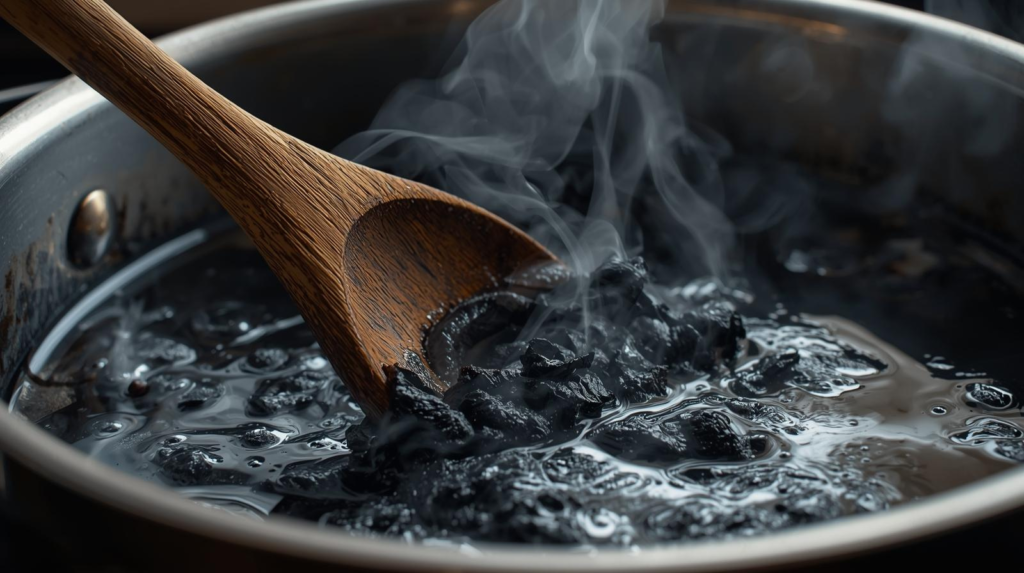
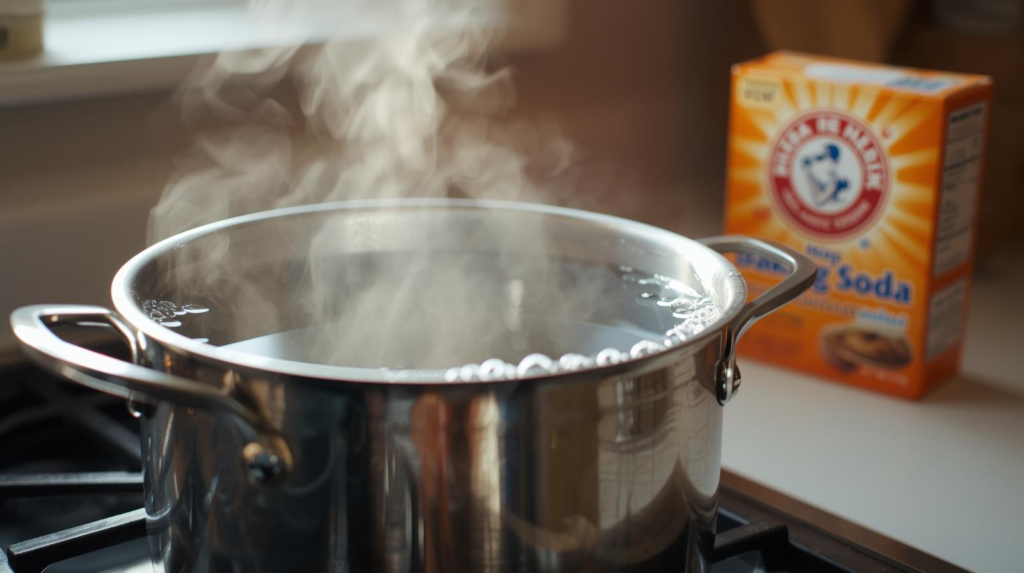
Step 2: Simmer with baking soda (best all-around fix)
Baking soda works well because it’s mildly abrasive and alkaline, which helps break up many cooked-on messes. (Arm & Hammer)
- Add enough water to cover the burn.
- Add 1–3 tablespoons of baking soda (more for larger pots).
- Bring to a gentle boil, then simmer 10–15 minutes.
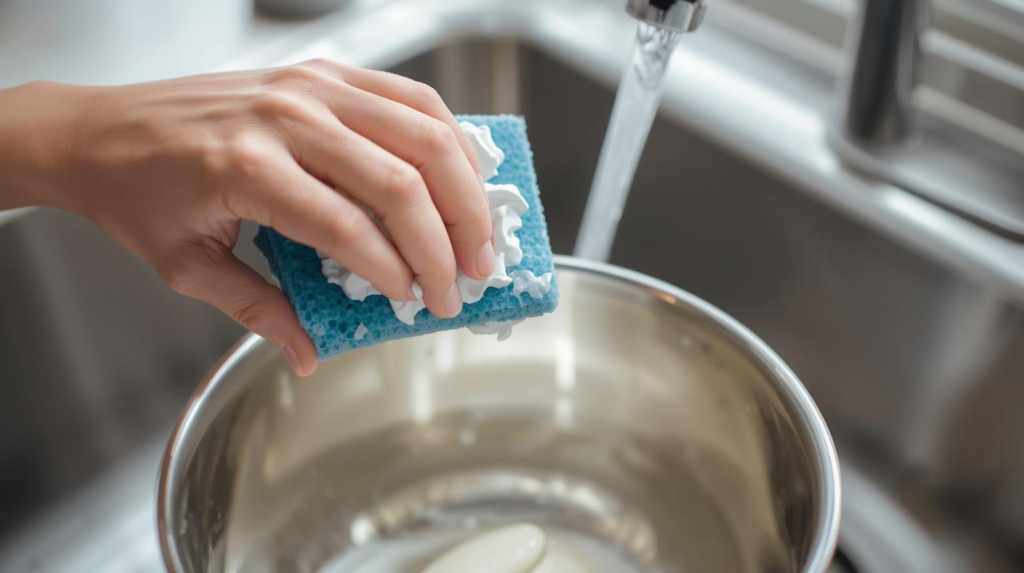
- Turn off heat, let it cool a bit, then scrub with a non-scratch sponge.
- Rinse and repeat if needed.
This is a go-to approach for stainless steel and enamel, and it’s often safe enough for many pots when you keep scrubbing gentle. (Arm & Hammer)
Step 3: Baking soda paste (for stubborn rings)
- Drain most water.
- Sprinkle baking soda and add just enough water to make a thick paste.
- Spread over the burnt area and let sit 20–30 minutes.
- Scrub with a non-scratch sponge, rinse.
Paste gives you more “cling time” and abrasion without going full sandpaper. (Arm & Hammer)
Step 4: Vinegar + baking soda boil (optional boost for stainless/enamel)
Some guides recommend a vinegar boil followed by baking soda to help loosen cooked-on residue (you’ll see fizzing when the acid meets baking soda). (Arm & Hammer)
- Add water + a small splash of vinegar and bring to a boil.
- Remove from heat, add baking soda carefully (it will foam).
- Let sit, then scrub gently and rinse well.
Skip this on bare cast iron (acids can strip/complicate seasoning) and don’t use it as an excuse to mix random chemicals. (Mississippi State Extension)
Step 5: Use a cookware cleanser (when the pot is still stained)
For stainless steel (and some other materials—always check your pot’s care guide), a dedicated cleanser can be the fastest finish. Bar Keepers Friend, for example, recommends making a paste and not letting it sit longer than about a minute before rubbing and rinsing. (Bar Keepers Friend)
Use a soft cloth or non-scratch sponge, rinse thoroughly, and wash with hot soapy water afterward. (Bar Keepers Friend)
Material-specific “do’s and don’ts” (so you don’t damage the pot)
Nonstick pots
- Do: soak briefly in warm soapy water and use a soft sponge; use a gentle baking soda paste only if needed. (Made In Cookware)
- Don’t: use steel wool, abrasive pads, or aggressive scouring powders (they can scratch the coating). (Made In Cookware)
Bare cast iron
- Do: use hot water + gentle scrubbing; for stuck bits, a coarse salt scrub is commonly recommended, then dry thoroughly and lightly oil. (Real Simple)
- Don’t: soak for long periods; prolonged moisture can encourage rust and mess with seasoning. (Mississippi State Extension)
Enameled cast iron
- Do: use baking soda simmer/paste and non-abrasive tools; dry after cleaning. (Misen)
- Don’t: use metal utensils or overly aggressive abrasives that can scratch enamel. (Misen)
Stainless steel
- Do: simmer with baking soda; use a dedicated cleanser when needed and follow label timing. (Arm & Hammer)
- Don’t: default to harsh abrasives first—you’ll often get the burn off with a simmer and a non-scratch pad. (Real Simple)
Quick “burn prevention” habit that saves cleanup later
If something starts sticking, lower the heat and add liquid early. Overheating and letting food go dry are common routes to scorching, and once sugars/proteins carbonize they’re harder to remove. (Southern Living)
Summary
- Start with hot water + gentle scraping.
- Simmer with baking soda (most effective, least risky for many pots).
- Escalate to a baking soda paste or (for stainless/enamel) a vinegar + baking soda step if needed.
- Use a cookware cleanser for final stains—follow the product directions closely.
- Avoid dangerous chemical mixing (especially bleach + acids, peroxide + vinegar).
Related Articles
https://homeandgardenworld.com/advice/how-to-clean-cast-iron
https://homeandgardenworld.com/kitchen/how-to-clean-a-stainless-sink
https://homeandgardenworld.com/kitchen/how-to-remove-rust-from-stainless-steel