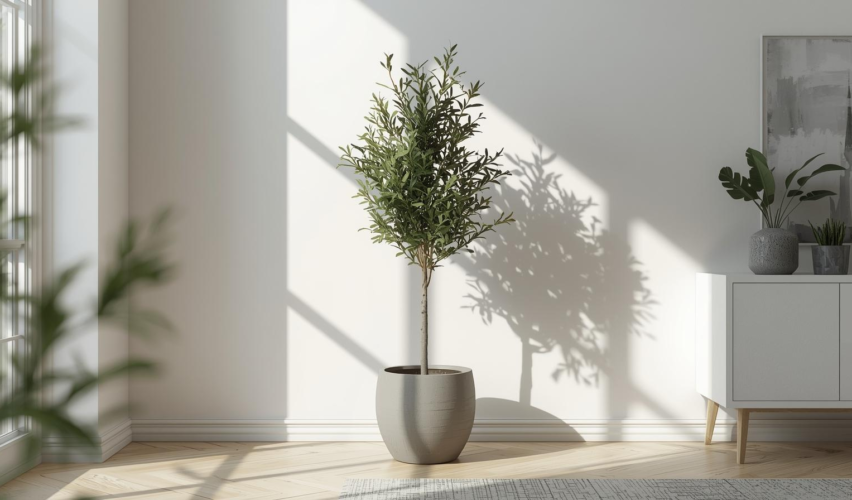
Indoor “trees” are the fastest way to make a space feel finished: they add height, soften hard lines, and create a focal point that smaller plants can’t match. The trick is picking a species that actually fits your light, ceiling height, and tolerance for maintenance—because a tree that needs full sun will struggle in a dim corner, no matter how pretty it looks on day one.
Below are the best indoor trees to grow in typical US homes, from statement-makers like fiddle-leaf figs to low-drama dracaenas and pet-friendlier palms. You’ll get quick picks up top, a comparison table, and a practical buying guide for keeping taller plants healthy indoors.
Our Methodology
We built this list by prioritizing indoor survivability over hype. Our recommendations are grounded in reputable home-and-garden editorial roundups and plant-care references, then checked against practical indoor constraints like light intensity, watering tolerance, and mature size. For lighting guidance, we relied on university extension resources that define indoor light levels (including foot-candle ranges and window direction) and show which plant types fit low, medium, and high light. (University of Maryland Extension)
Because “indoor trees” often share space with pets, we also verified toxicity notes against the ASPCA’s toxic/non-toxic plant database when relevant. (ASPCA) For fruiting trees (especially citrus), we used extension guidance on direct-sun requirements and seasonal acclimation. (University of Minnesota Extension)
Quick Picks
Best overall: Rubber Tree (Ficus elastica) — Tall, architectural, and generally forgiving in bright, indirect light. Price range: $25–$200+ (Pricing may vary.) (University of Maryland Extension)
Best for low light: Corn Plant / Mass Cane (Dracaena fragrans) — One of the easiest “tree forms” for medium-to-lower indoor light. Price range: $30–$180 (Pricing may vary.) (Good Housekeeping)
Best statement tree: Fiddle-Leaf Fig (Ficus lyrata) — Big-leaf drama for bright rooms; worth it if you can give stable light and placement. Price range: $40–$300+ (Pricing may vary.) (The Spruce)
Best pet-friendlier pick: Money Tree (Pachira aquatica) — Popular braided trunk look; listed as non-toxic by ASPCA (still avoid snacking). Price range: $25–$200 (Pricing may vary.) (ASPCA)
Best palm for beginners: Parlor Palm (Chamaedorea elegans) — Classic indoor palm with a softer look; ASPCA lists it as non-toxic. Price range: $20–$150 (Pricing may vary.) (ASPCA)
Best for fragrance/fruit: Dwarf Lemon Tree — Needs real direct sun indoors; incredible blooms if you can provide it. Price range: $40–$250+ (Pricing may vary.) (Yard and Garden)
Comparison Table
| Indoor tree | Best for | Key features | Price range* |
| Rubber Tree (Ficus elastica) | Modern, upright “floor plant” | Glossy leaves, strong silhouette | $25–$200+ |
| Fiddle-Leaf Fig (Ficus lyrata) | Statement look | Large violin-shaped leaves | $40–$300+ |
| Weeping Fig (Ficus benjamina) | Classic indoor tree shape | Dense canopy; can be pruned | $30–$200 |
| Willow-Leaf Ficus (Ficus “Alii”) | Sleeker ficus alternative | Narrow leaves; airy crown | $40–$250 |
| Ficus Audrey (Ficus benghalensis) | Softer, matte-leaf ficus | Velvety foliage; sculptural trunk | $50–$300+ |
| Money Tree (Pachira aquatica) | Pet-friendlier statement | Braided trunk common; easy size control | $25–$200 |
| Ming Aralia (Polyscias fruticosa) | Compact “tree” for small rooms | Finely cut foliage; stays smaller | $30–$150 |
| Dragon Tree (Dracaena marginata) | Tough, upright form | Spiky leaves; adaptable indoors | $25–$180 |
| Corn Plant / Mass Cane (Dracaena fragrans) | Lower-light tolerance | Cane form; forgiving watering | $30–$180 |
| Song of India (Dracaena reflexa) | Colorful vertical accent | Variegation; tidy growth | $25–$150 |
| Norfolk Island Pine | Soft evergreen look | Holiday-to-year-round tree vibe | $20–$200 |
| Dwarf Olive Tree | Mediterranean style | Needs strong sun; elegant gray-green leaves | $50–$300+ |
| Dwarf Lemon Tree | Fruit + fragrance | Requires direct sun indoors | $40–$250+ |
| Calamondin Orange Tree | Small citrus indoors | Fragrant blooms; compact fruiting | $40–$250 |
| Bird of Paradise (Strelitzia) | Tropical “big leaf” height | Dramatic leaves; needs bright light | $60–$350+ |
| Dwarf Banana (Musa) | Fast tropical impact | Huge leaves; bright light | $40–$250 |
| Yucca Cane (Yucca) | Dry-air, modern look | Drought-tolerant; stiff form | $30–$200 |
| Ponytail Palm (Beaucarnea recurvata) | Forgetful waterers | Bulb trunk stores water; ASPCA non-toxic | $25–$200+ |
| Areca Palm (Dypsis lutescens) | Bright-room palm | Full, feathery fronds; ASPCA non-toxic | $30–$250 |
| Parlor Palm (Chamaedorea elegans) | Lower-light palm | Slow-growing; ASPCA non-toxic | $20–$150 |
| Kentia Palm (Howea forsteriana) | Premium palm look | Elegant arching fronds | $80–$500+ |
| Lady Palm (Rhapis excelsa) | Low-light-friendly palm | Clumping canes; slow growth | $60–$400+ |
| Cat Palm (Chamaedorea cataractarum) | Soft, bushy palm | Dense fronds; likes steady moisture | $30–$250 |
| Bamboo Palm (Chamaedorea seifrizii) | Narrow spaces | Upright canes; indoor friendly | $30–$250 |
| Majesty Palm (Ravenea rivularis) | Big “tropical corner” | Large fronds; humidity helps | $30–$250 |
| Coffee Plant (Coffea arabica) | Glossy leaves + novelty | Compact tree habit; bright indirect | $20–$120 |
| Bay Laurel (Laurus nobilis) | Edible leaf harvest | Aromatic leaves; bright light | $30–$200 |
| Jade Plant (Crassula ovata) | Mini “tree” for sunny windows | Succulent trunk; drought tolerant | $15–$150 |
| Madagascar Palm (Pachypodium lamerei) | Sculptural, desert look | Spiny trunk; bright sun | $30–$250 |
| Schefflera / Umbrella Tree | Fast greenery (pet-free homes) | Full canopy; forgiving growth | $25–$200 |
| Sago Palm (Cycas revoluta) | Ultra-sculptural look (pet-free) | Slow-growing; extremely toxic to pets | $30–$300+ |
*Pricing may vary by size, pot, and region.
The 31 Best Indoor Trees
1) Rubber Tree (Ficus elastica)
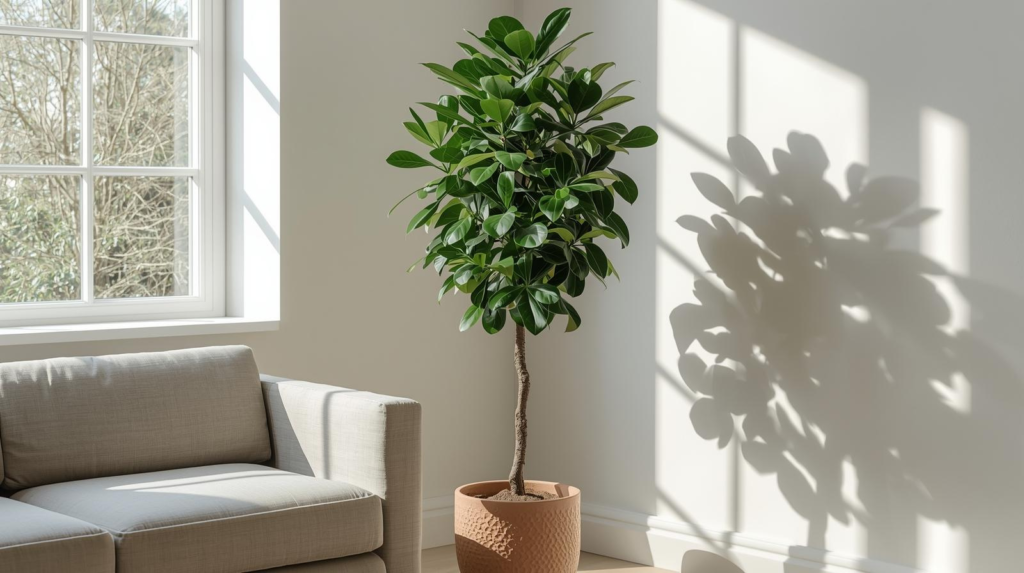
A go-to indoor tree when you want height without constant fuss. It does best in medium-bright to bright indirect light—exactly the light range many homes have near east/west windows. (University of Maryland Extension)
Pros:
- Strong upright form, easy focal point
- Generally forgiving once established
- Handles typical indoor humidity well
Cons:
- Drops leaves if light is too low for too long
- Sap can be messy; use care when pruning
Pricing: $25–$200+ (Pricing may vary.)
2) Fiddle-Leaf Fig (Ficus lyrata)
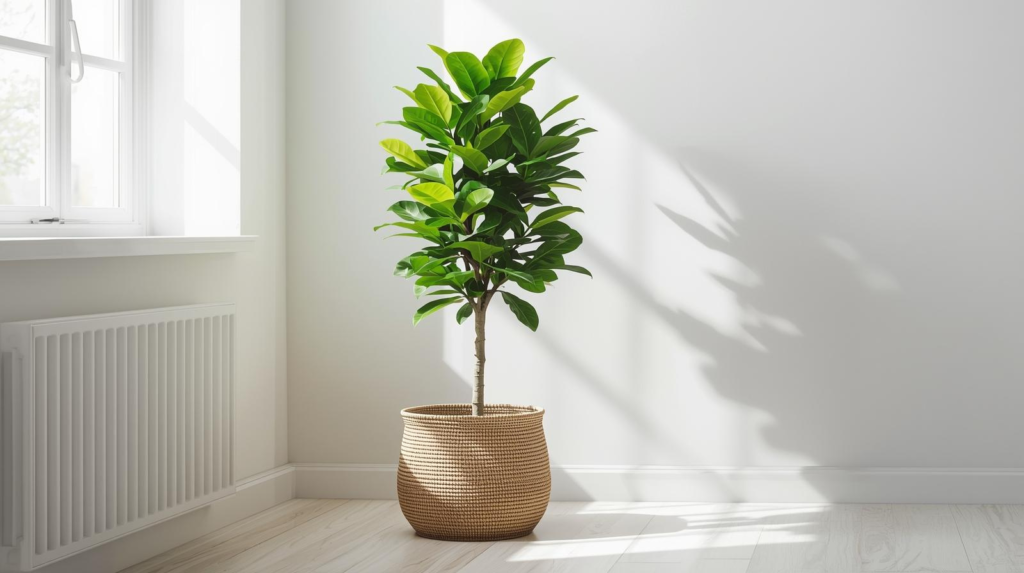
The classic statement tree—beautiful, but happiest with consistent conditions and bright filtered light. University extension guidance specifically flags drafts and inconsistent moisture as common issues. (UC Agriculture and Natural Resources)
Pros:
- Big, dramatic leaves that read “designer”
- Can grow tall indoors with the right light
Cons:
- Sensitive to drafts and swings in watering (UC Agriculture and Natural Resources)
- Toxic to pets per ASPCA (ASPCA)
Pricing: $40–$300+ (Pricing may vary.)
3) Weeping Fig (Ficus benjamina)
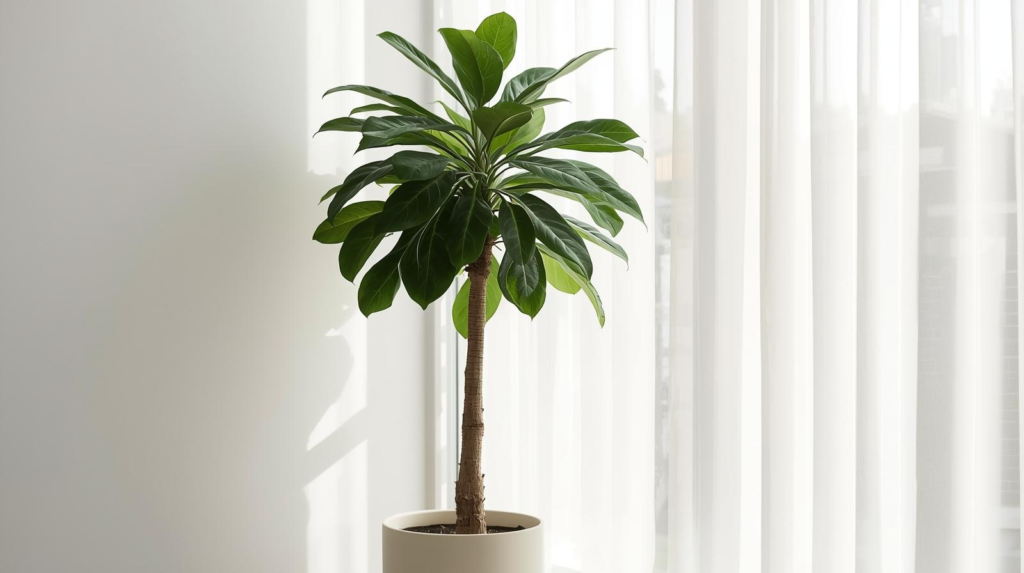
A traditional “true tree” look indoors, with a trunk and canopy that can be shaped by pruning. Note: ASPCA lists Ficus benjamina as toxic to cats and dogs. (ASPCA)
Pros:
- Classic canopy form that feels like a real tree
- Responds well to pruning for shape control
Cons:
- Can drop leaves when stressed by moves/light changes
- Toxic to pets per ASPCA (ASPCA)
Pricing: $30–$200 (Pricing may vary.)
4) Willow-Leaf Ficus (Ficus “Alii”)
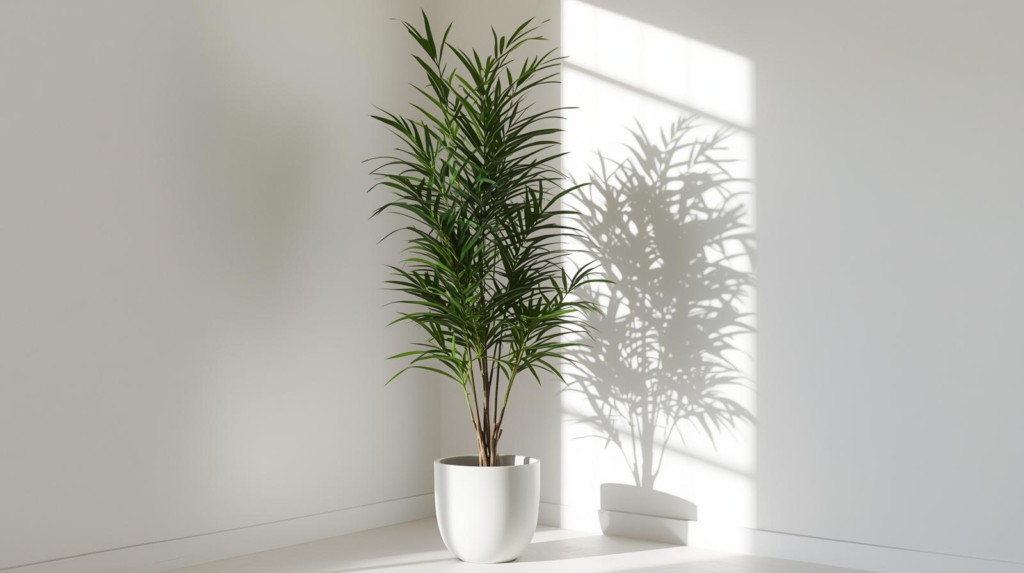
If you like ficus trees but want a lighter, less “bushy” look, Alii’s narrow leaves create a clean silhouette. (The Spruce)
Pros:
- Elegant, airy canopy
- Great for contemporary rooms
Cons:
- Still dislikes sudden location changes
- Needs decent light for best density
Pricing: $40–$250 (Pricing may vary.)
5) Ficus Audrey (Ficus benghalensis)
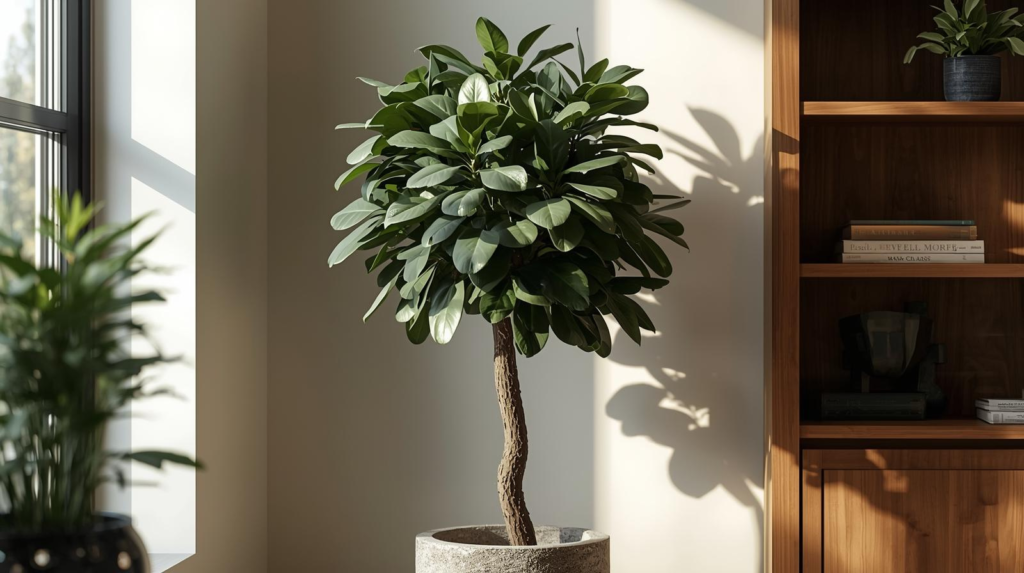
A softer ficus with velvety, matte leaves and a sculptural trunk—great when you want height without the high-gloss look. (The Spruce)
Pros:
- Distinctive matte foliage
- Strong architectural presence
Cons:
- Needs bright indirect light to stay full
- Can be slow to rebound after stress
Pricing: $50–$300+ (Pricing may vary.)
6) Money Tree (Pachira aquatica)
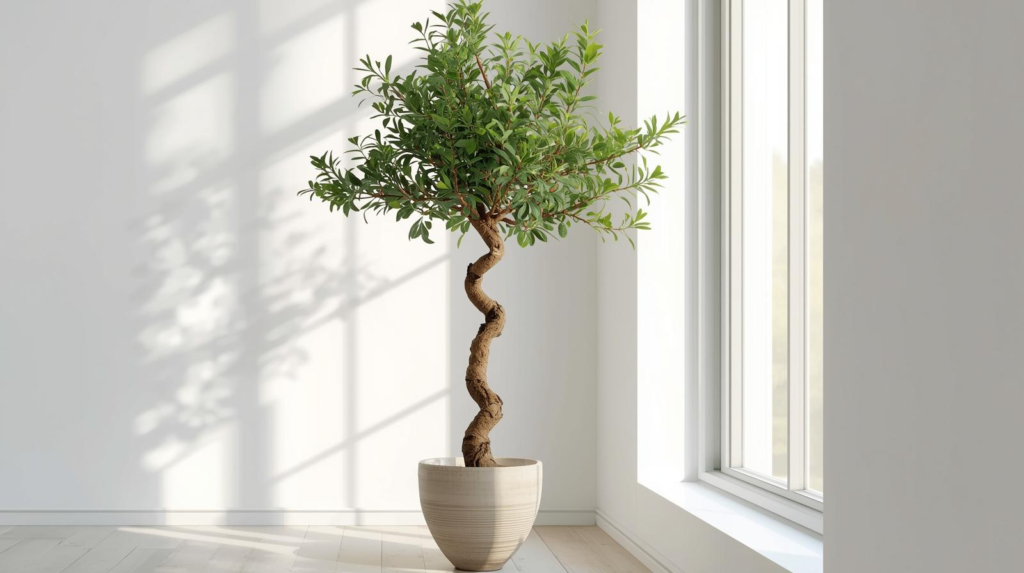
A very livable indoor tree that stays manageable with pruning and is commonly sold in a braided form. ASPCA lists it as non-toxic to cats and dogs (though any plant can still cause mild GI upset if chewed). (ASPCA)
Pros:
- Pet-friendlier pick (ASPCA non-toxic listing) (ASPCA)
- Easy way to add height without huge leaves
Cons:
- Doesn’t love cold drafts
- Overwatering can still cause issues if drainage is poor
Pricing: $25–$200 (Pricing may vary.)
7) Ming Aralia (Polyscias fruticosa)
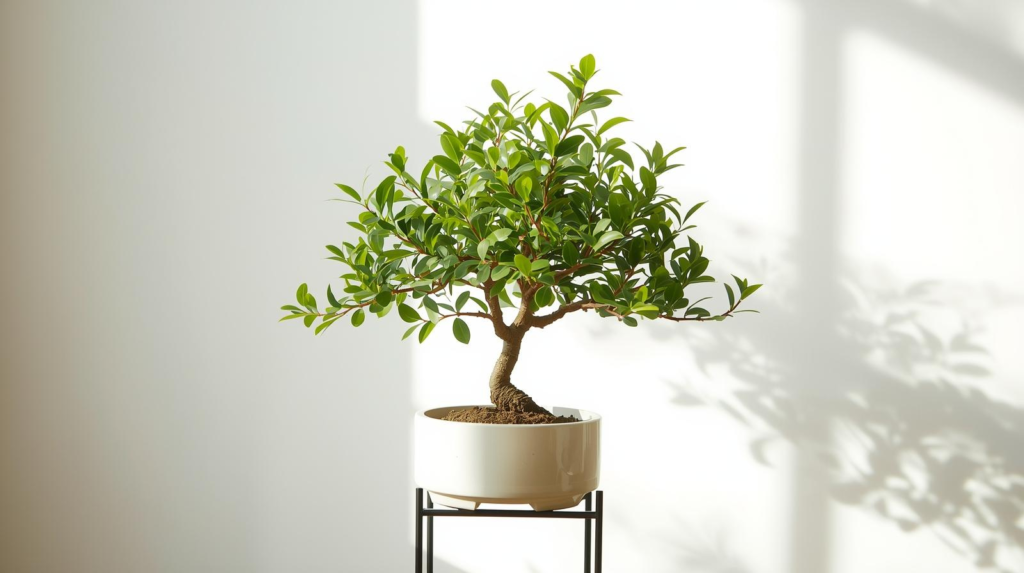
A smaller-scale “tree” that gives you a trunked, woody look without taking over the room—often recommended for compact spaces. (Good Housekeeping)
Pros:
- Great “mini tree” proportions
- Fine texture looks airy, not bulky
Cons:
- Prefers stable conditions (less move-around-friendly)
- Can thin out in low light
Pricing: $30–$150 (Pricing may vary.)
8) Dragon Tree (Dracaena marginata)
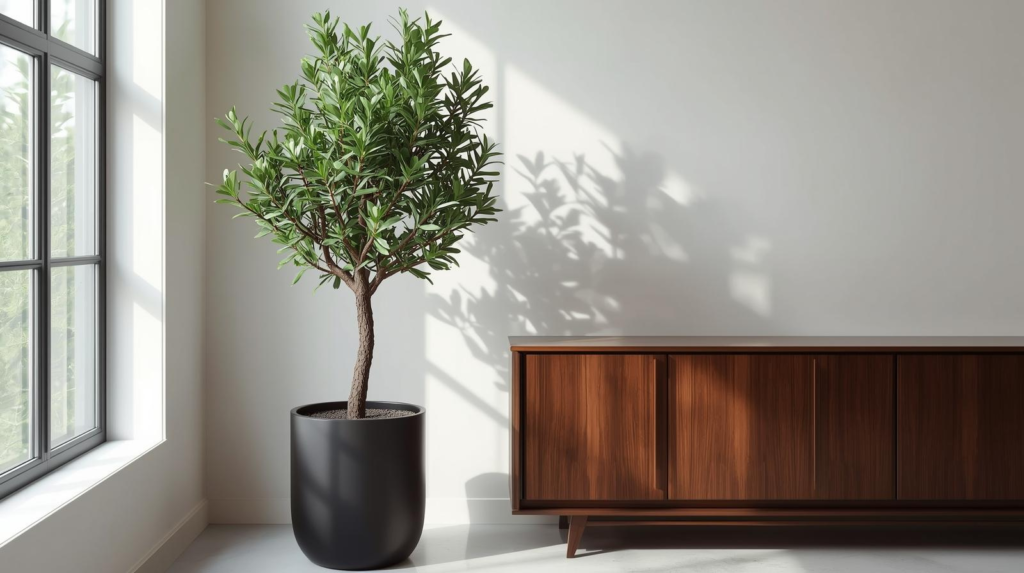
One of the easiest tall plants to live with. It’s widely noted as tolerant of typical indoor conditions, and university lighting guidance lists dracaena among medium-bright indoor plant examples. (University of Maryland Extension)
Pros:
- Upright, narrow footprint
- Handles average indoor humidity well
Cons:
- Can get bare stems over time (normal)
- Keep away from pets that chew (some dracaenas are listed on ASPCA toxic lists) (ASPCA)
Pricing: $25–$180 (Pricing may vary.)
9) Corn Plant / Mass Cane (Dracaena fragrans)
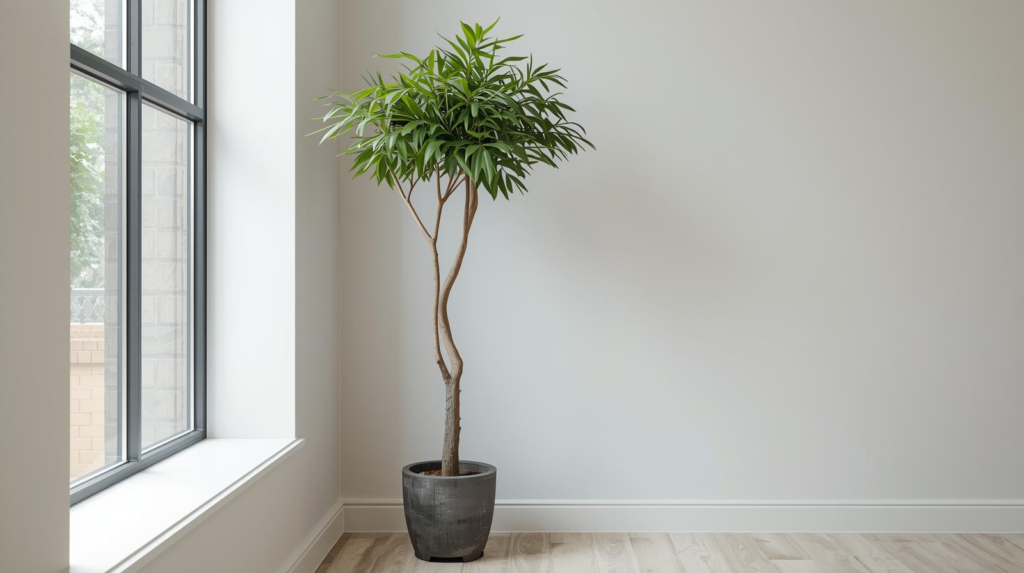
A top pick for “I want a tree but my light isn’t amazing.” University guidance includes dracaena among medium-bright examples, and it’s commonly cited as tolerant of lower indoor light than many true trees. (University of Maryland Extension)
Pros:
- Very forgiving growth habit
- Great height for corners
Cons:
- Overwatering is the most common mistake
- Leaves can brown near vents
Pricing: $30–$180 (Pricing may vary.)
10) Song of India (Dracaena reflexa)
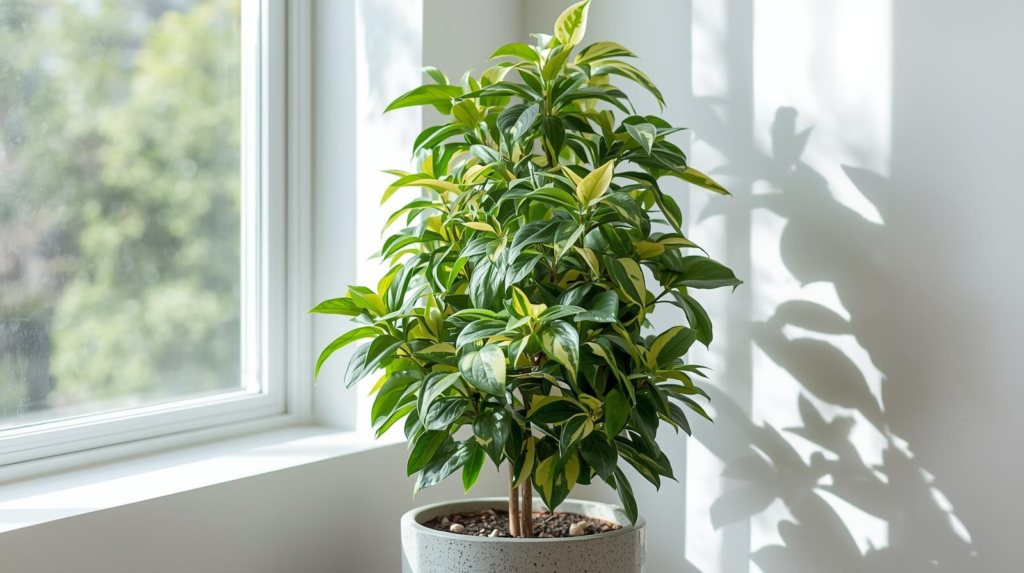
A dracaena option with variegated color that still reads “tree-like” as it matures. (The Spruce)
Pros:
- Adds color without flowers
- Tidy, upright form
Cons:
- Variegation looks best with brighter light
- Sensitive to soggy soil
Pricing: $25–$150 (Pricing may vary.)
11) Norfolk Island Pine
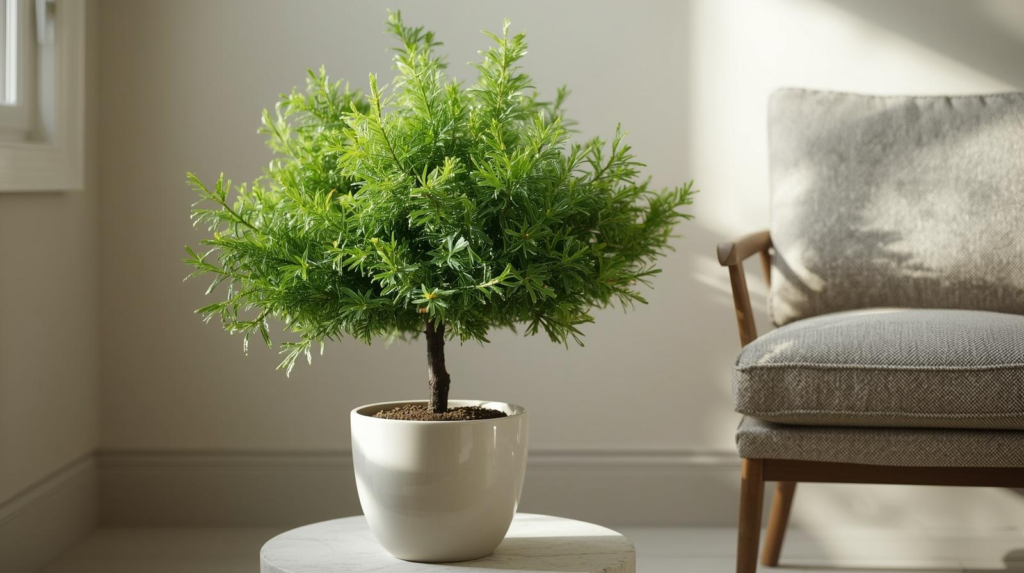
A softer “evergreen indoors” look that works as a year-round tree shape, not just a holiday plant. Many guides place it in medium to bright indirect light. (Good Housekeeping)
Pros:
- Christmas-tree vibe without needles everywhere
- Looks good even at smaller sizes
Cons:
- Can brown if kept too dry for long stretches
- Prefers brighter light than a deep corner
Pricing: $20–$200 (Pricing may vary.)
12) Dwarf Olive Tree (Olea europaea)
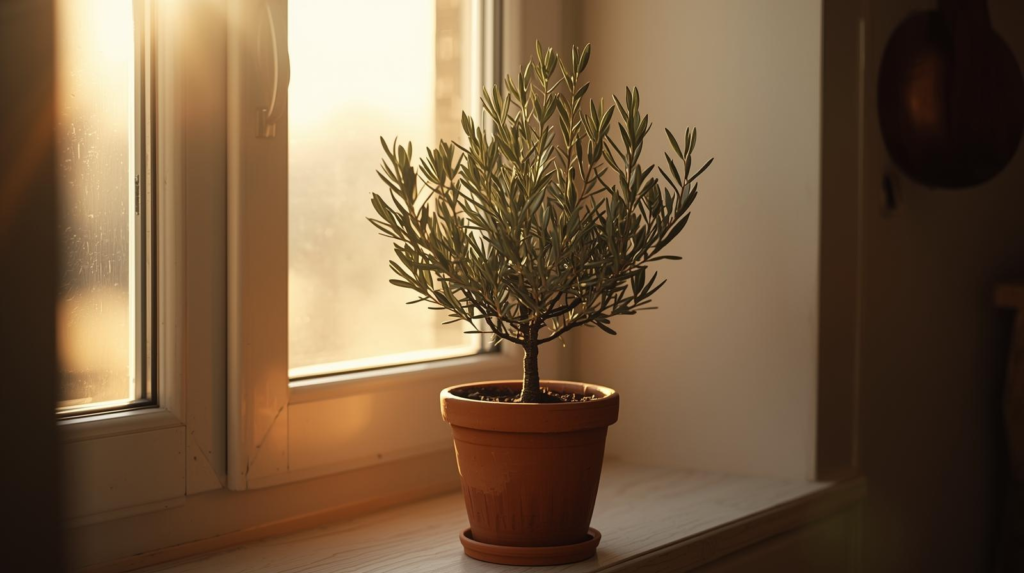
The “Mediterranean minimalism” tree—gorgeous, but it needs real sun. Illinois Extension notes dwarf olives do best with at least 6 hours of sun and suggests a south-facing window. (Illinois Extension)
Pros:
- Elegant gray-green foliage
- Adds a high-end, airy feel
Cons:
- Requires strong sun indoors (Illinois Extension)
- Can drop leaves if light is insufficient
Pricing: $50–$300+ (Pricing may vary.)
13) Dwarf Lemon Tree (Citrus limon)
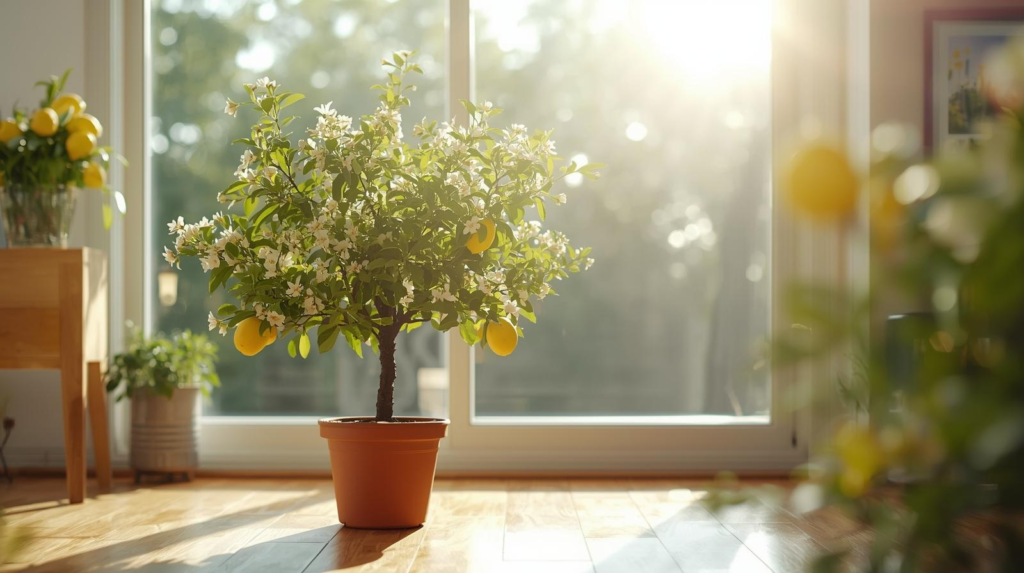
For fragrance and fruit, citrus is unmatched—but it’s also one of the most light-demanding indoor trees. Multiple extensions emphasize 6–8+ hours of direct light (south/west windows often required). (Yard and Garden)
Pros:
- Incredible blossoms and scent
- Potential for real fruit indoors
Cons:
- Needs substantial direct sun indoors (Yard and Garden)
- Pest checks matter before moving indoors seasonally (Better Homes & Gardens)
Pricing: $40–$250+ (Pricing may vary.)
14) Calamondin Orange Tree (Citrus × microcarpa)
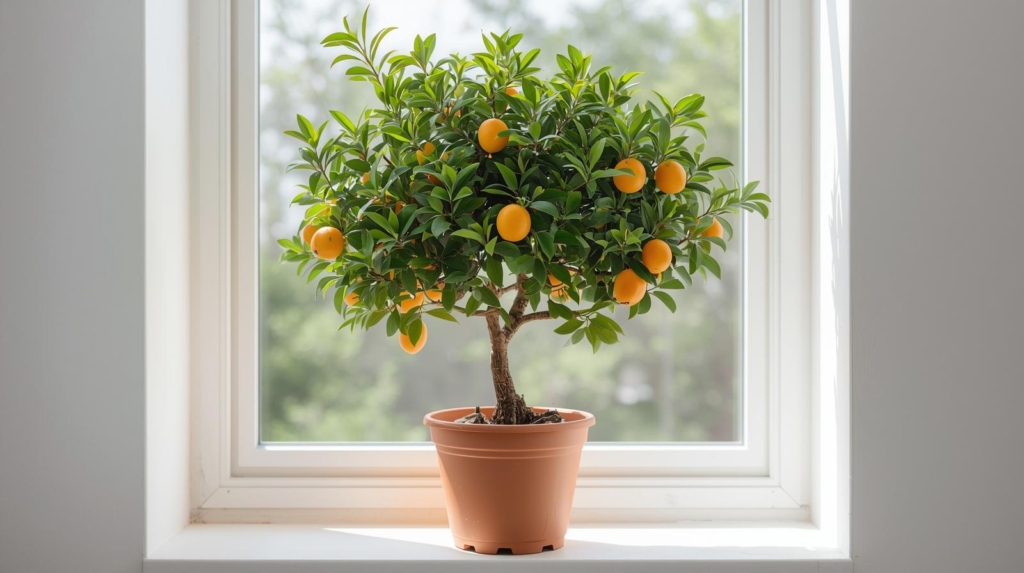
A popular indoor citrus because it stays compact while still offering fragrant blooms and small fruit. Like all citrus, it wants strong light. (Yard and Garden)
Pros:
- Compact citrus habit for smaller homes
- Fragrant flowers are the main reward
Cons:
- Direct sun is still required for best results (Yard and Garden)
- Can drop leaves if moved abruptly
Pricing: $40–$250 (Pricing may vary.)
15) Bird of Paradise (Strelitzia)
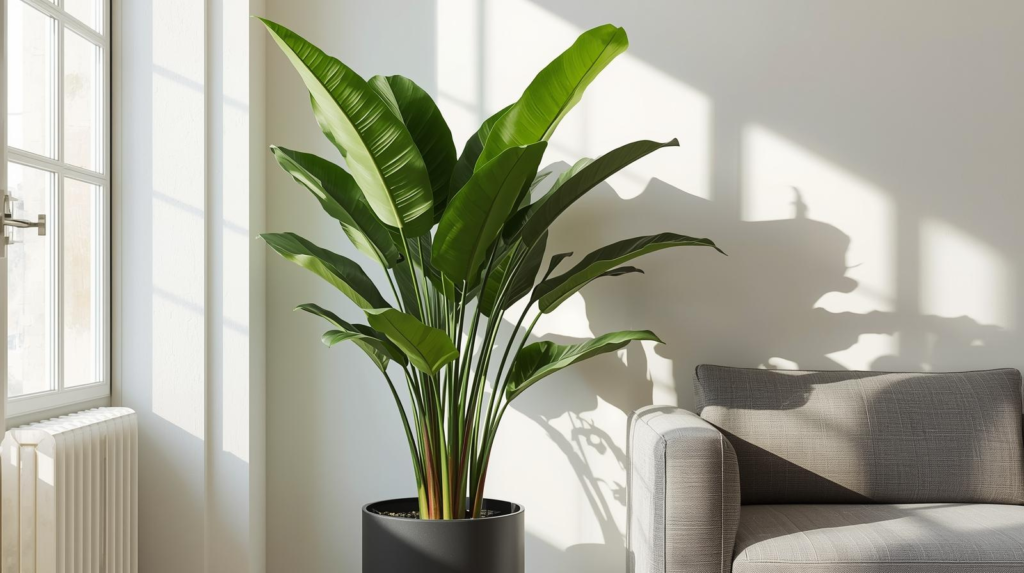
A “tree-sized” tropical effect thanks to tall stems and huge leaves. It generally performs best in bright indoor light; ASPCA lists Bird of Paradise Flower (Strelitzia reginae) as toxic to cats and dogs. (Good Housekeeping)
Pros:
- Instant tropical statement
- Fills vertical space quickly
Cons:
- Needs bright light to stay strong
- Toxic to pets per ASPCA (ASPCA)
Pricing: $60–$350+ (Pricing may vary.)
16) Dwarf Banana (Musa)
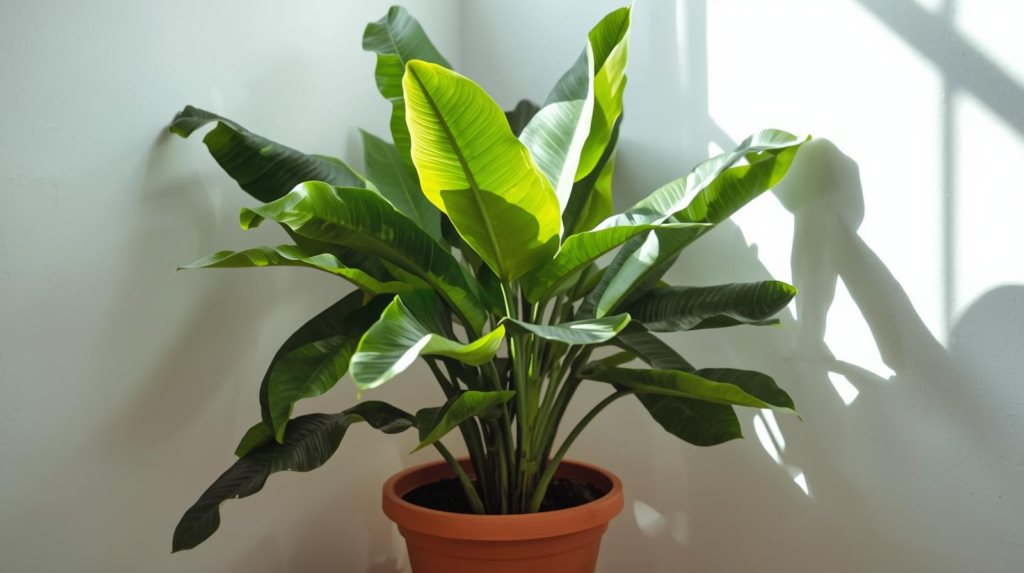
If you want fast “vacation energy,” banana plants deliver huge leaves—but they need bright light to look their best. (Good Housekeeping)
Pros:
- Big-leaf drama on a budget
- Makes a room feel lush quickly
Cons:
- Leaves tear easily (normal) and need space
- Bright light is non-negotiable
Pricing: $40–$250 (Pricing may vary.)
17) Yucca Cane (Yucca spp.)
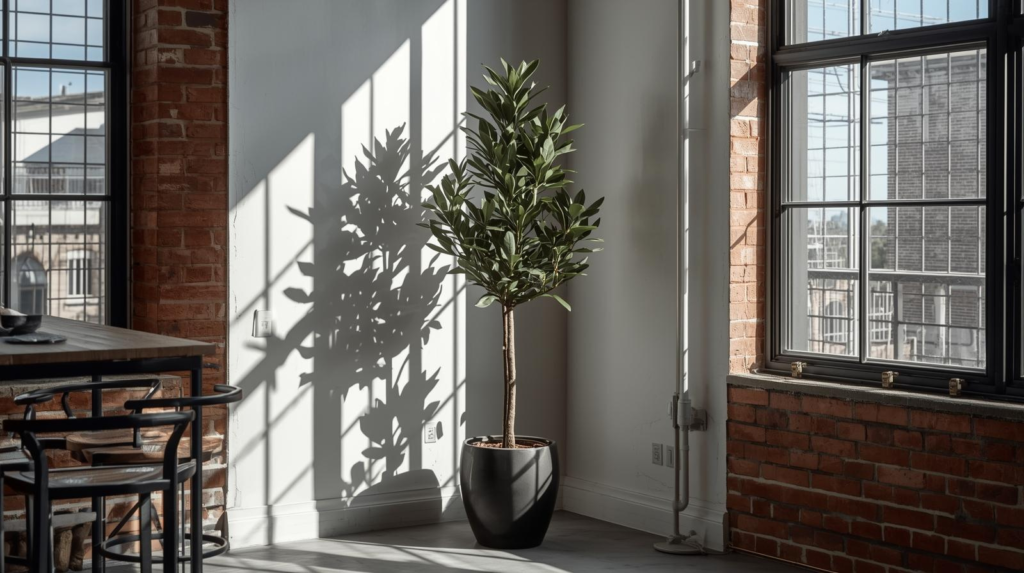
A strong pick for dry indoor air and people who forget to water—just know it’s not pet-friendly. ASPCA lists yucca as toxic to cats and dogs. (ASPCA)
Pros:
- Drought tolerant, great for busy households
- Architectural silhouette
Cons:
- Toxic to pets per ASPCA (ASPCA)
- Needs brighter light than most “low-light” plants
Pricing: $30–$200 (Pricing may vary.)
18) Ponytail Palm (Beaucarnea recurvata)
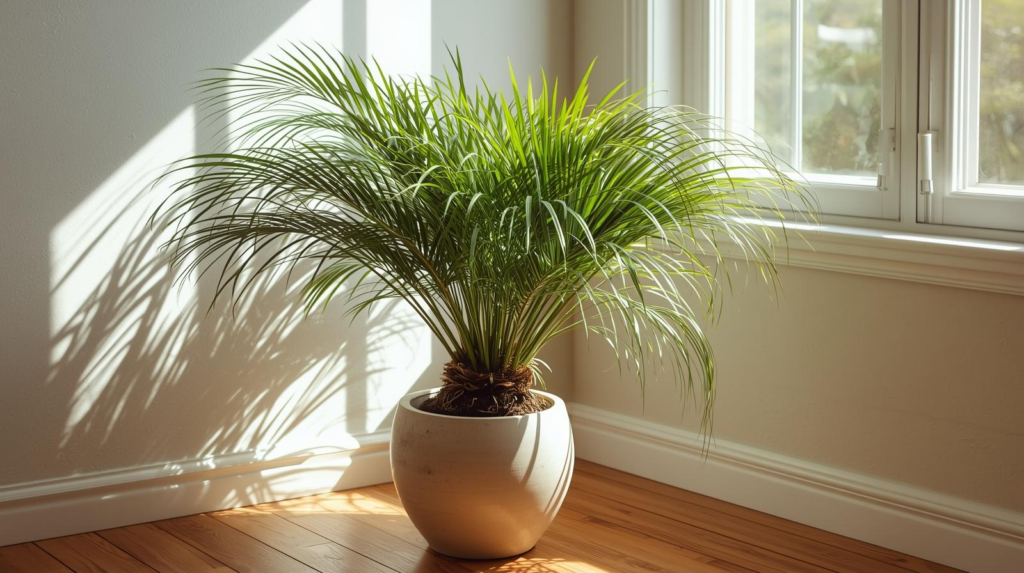
A near-perfect “forgetful waterer” tree. ASPCA lists ponytail as non-toxic to cats and dogs. (ASPCA)
Pros:
- Very drought tolerant thanks to swollen base
- ASPCA-listed as non-toxic (ASPCA)
Cons:
- Growth is slow
- Needs brighter light to stay compact
Pricing: $25–$200+ (Pricing may vary.)
19) Areca Palm (Dypsis lutescens)
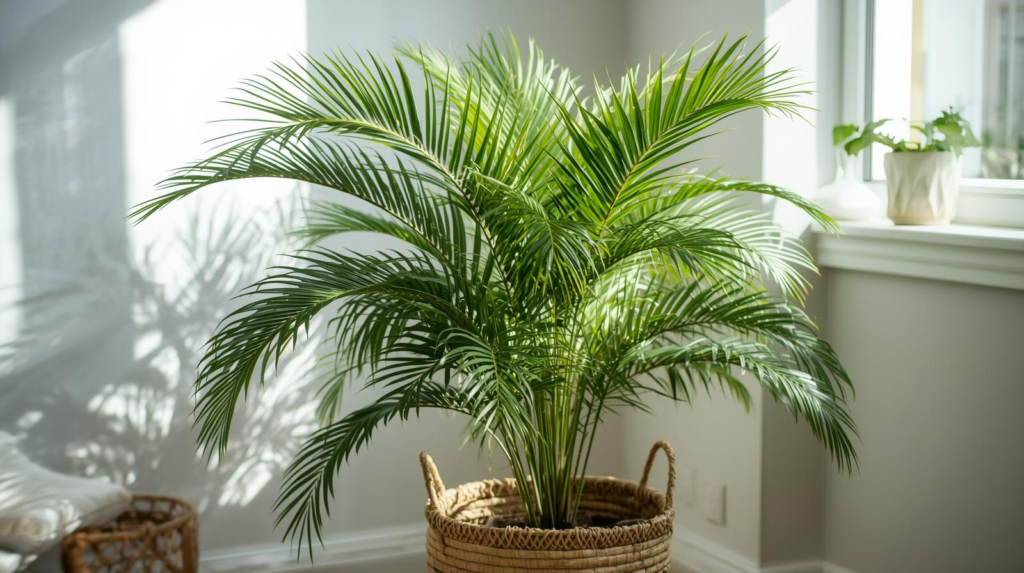
A feathery palm that can turn a blank corner into something lively—best in brighter indoor light. ASPCA lists areca palm as non-toxic. (ASPCA)
Pros:
- Full, tropical look
- ASPCA-listed as non-toxic (ASPCA)
Cons:
- Browning tips are common in very dry air
- Needs consistent, not soggy, moisture
Pricing: $30–$250 (Pricing may vary.)
20) Parlor Palm (Chamaedorea elegans)
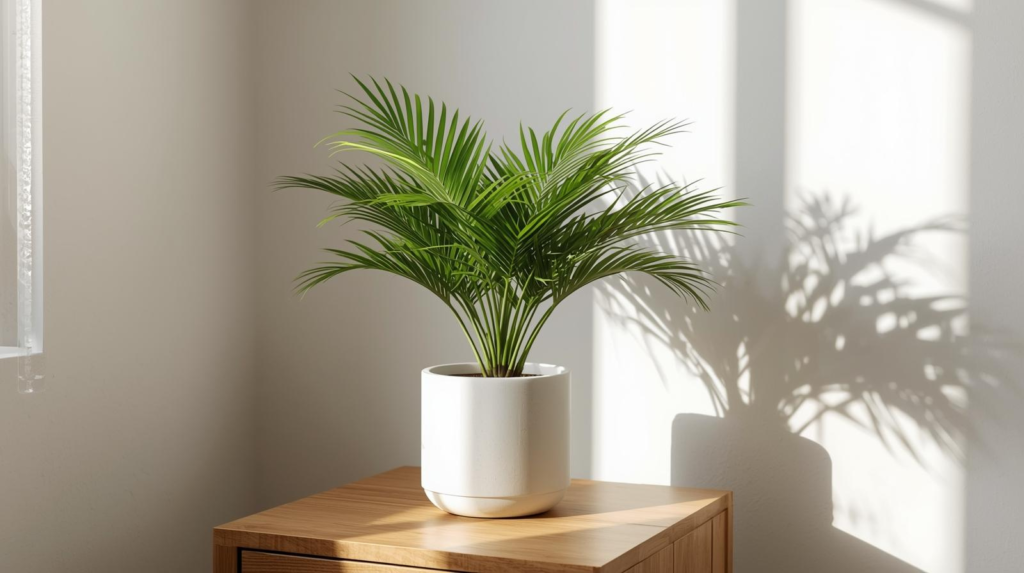
A classic indoor palm with a softer look and a reputation for tolerating lower indoor light than many palms. ASPCA lists it as non-toxic. (ASPCA)
Pros:
- Works better than most palms in medium light
- ASPCA-listed as non-toxic (ASPCA)
Cons:
- Slow grower
- Doesn’t like being waterlogged
Pricing: $20–$150 (Pricing may vary.)
21) Kentia Palm (Howea forsteriana)
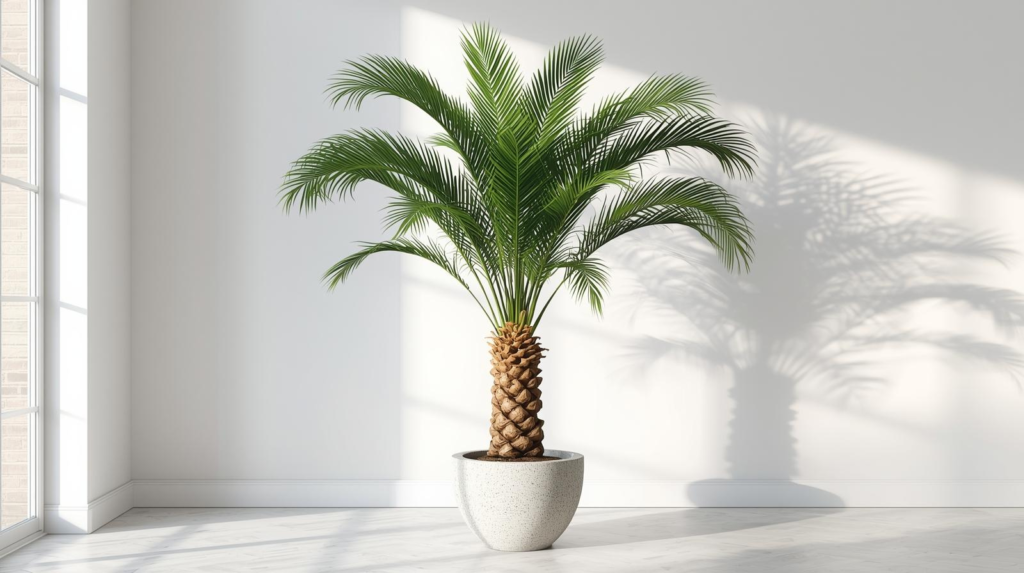
The “premium hotel lobby” palm—elegant fronds, slower growth, and a refined look that suits minimal interiors. (The Spruce)
Pros:
- One of the most elegant indoor palms
- Grows slowly (less constant resizing)
Cons:
- Usually more expensive
- Performs best with brighter indirect light
Pricing: $80–$500+ (Pricing may vary.)
22) Lady Palm (Rhapis excelsa)
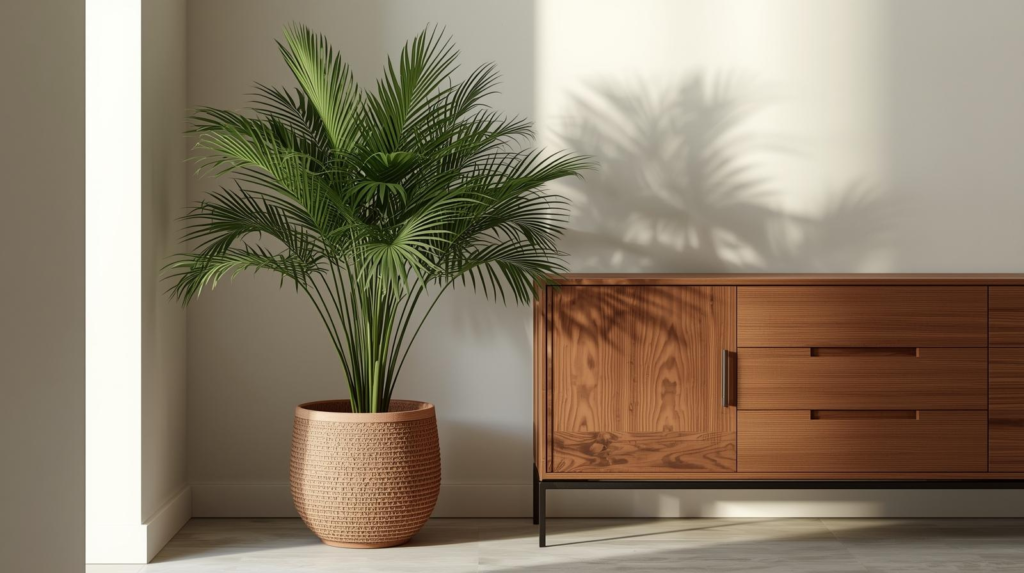
A clumping palm that reads structured and tidy. It’s often recommended as a palm option for lower indoor light situations. (The Spruce)
Pros:
- Neat, cane-form growth
- Often tolerates lower indoor light than many palms (The Spruce)
Cons:
- Slow growth
- Can be pricey at larger sizes
Pricing: $60–$400+ (Pricing may vary.)
23) Cat Palm (Chamaedorea cataractarum)
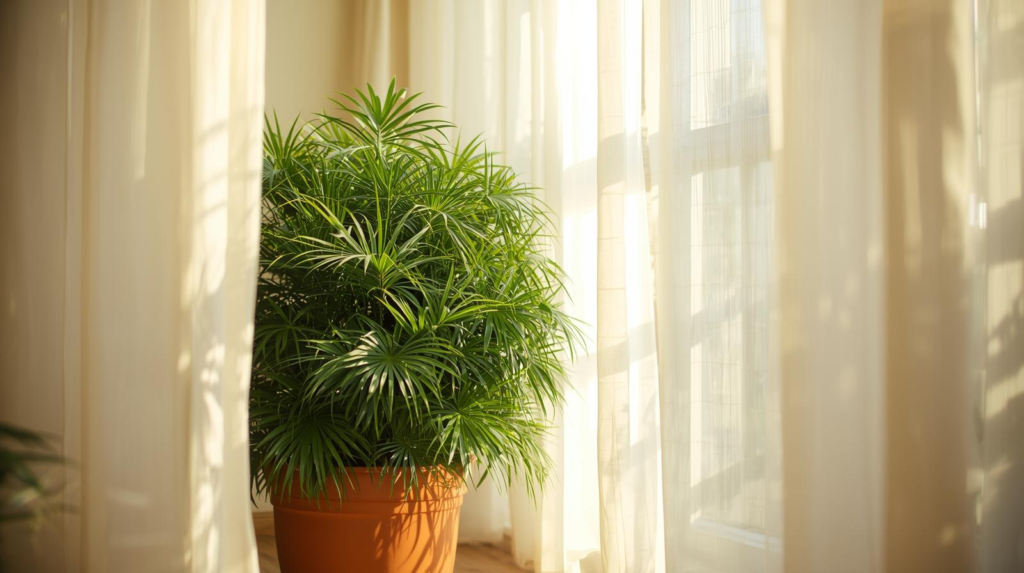
A bushier, denser palm that feels softer and fuller than upright cane types. (Good Housekeeping)
Pros:
- Dense “green screen” look
- Great for bright indirect light rooms
Cons:
- Prefers steadier moisture than drought-tolerant plants
- Tips brown if humidity is very low
Pricing: $30–$250 (Pricing may vary.)
24) Bamboo Palm (Chamaedorea seifrizii)
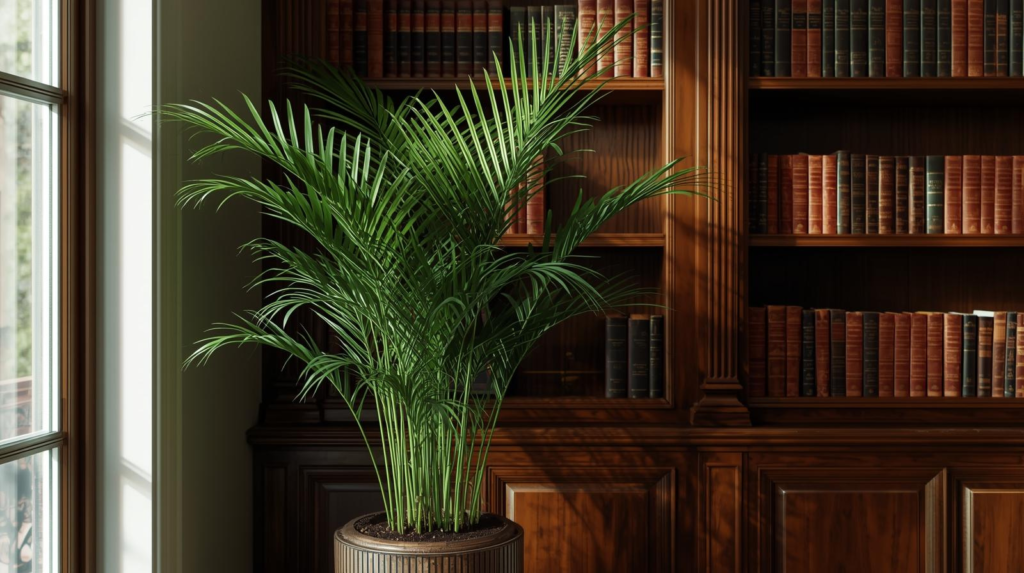
An upright, cane-style palm that fits narrow spots while still reading tall and leafy. (The Spruce)
Pros:
- Narrow footprint for tight corners
- Can look “tree-like” without huge fronds
Cons:
- Prefers brighter indirect light
- Needs consistent watering rhythm (not soggy)
Pricing: $30–$250 (Pricing may vary.)
25) Majesty Palm (Ravenea rivularis)
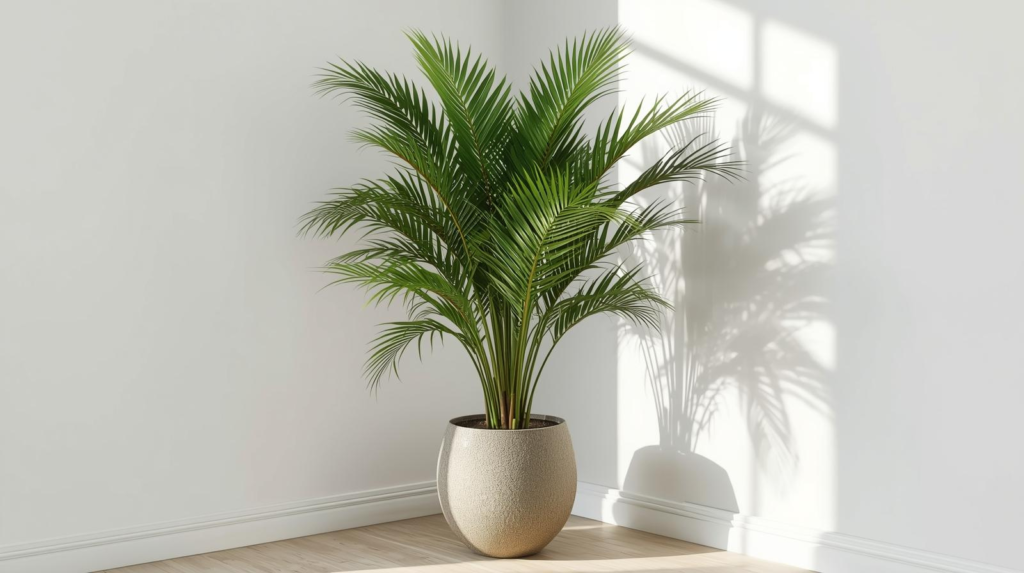
Often sold large for an immediate tropical corner. It can look amazing, but it’s happiest with good light and humidity. (The Spruce)
Pros:
- Big impact quickly (often sold at larger sizes)
- Classic palm silhouette
Cons:
- Browning can happen in dry air
- Needs brighter indoor light than many people expect
Pricing: $30–$250 (Pricing may vary.)
26) Coffee Plant (Coffea arabica)
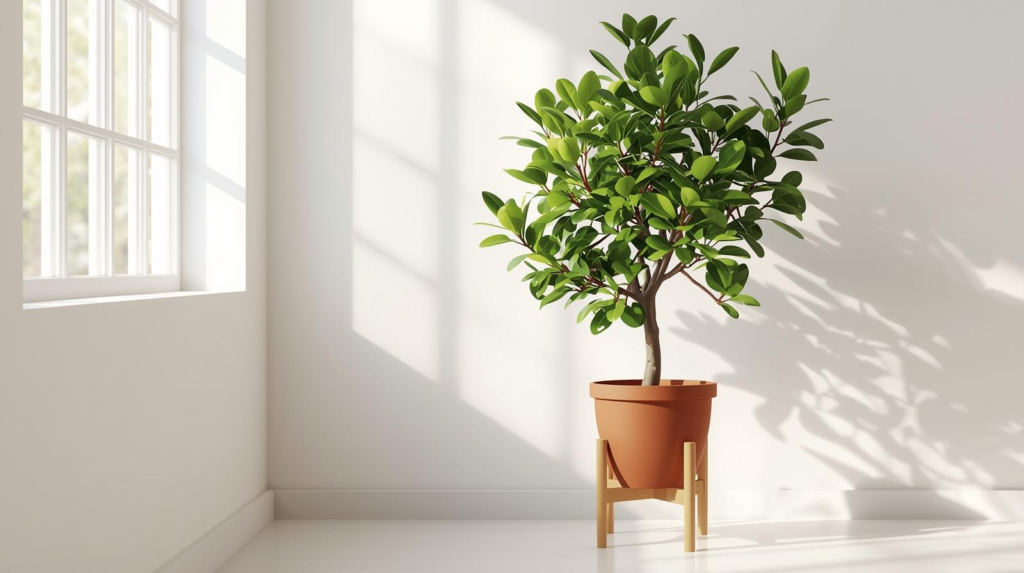
A glossy-leafed, woody plant that can be trained into a small indoor tree form—nice if you want something a little different without extreme care demands. (The Spruce)
Pros:
- Glossy leaves look polished
- Stays relatively compact with pruning
Cons:
- Prefers brighter indirect light
- Can sulk in very dry air
Pricing: $20–$120 (Pricing may vary.)
27) Bay Laurel (Laurus nobilis)
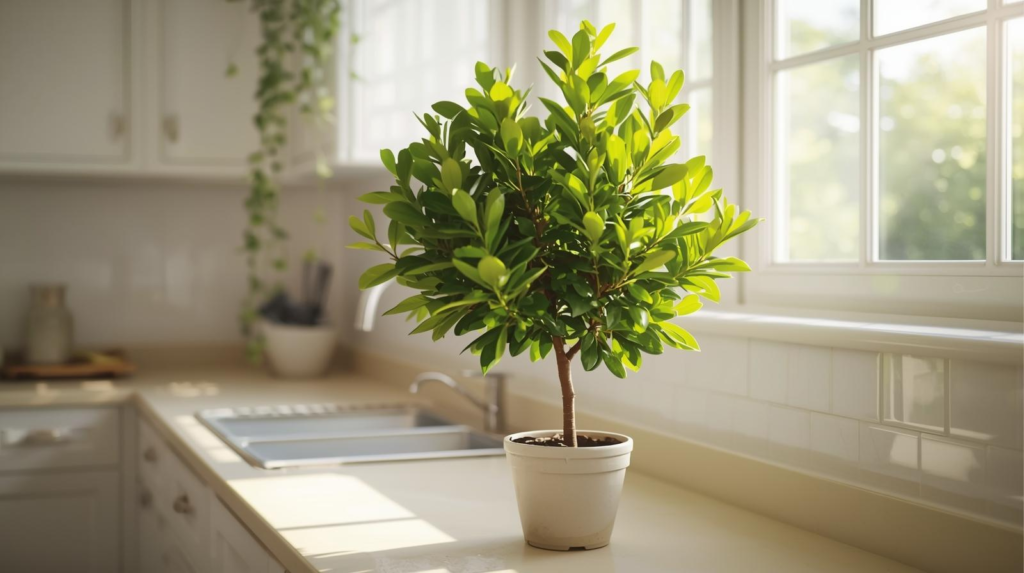
An herb “tree” you can actually harvest from, provided you have a bright window. Think: kitchen-friendly, Mediterranean vibe, functional leaves. (The Spruce)
Pros:
- Edible leaves for cooking
- Great potted-tree look for kitchens
Cons:
- Needs brighter light than most foliage plants
- Slow growth indoors
Pricing: $30–$200 (Pricing may vary.)
28) Jade Plant (Crassula ovata)
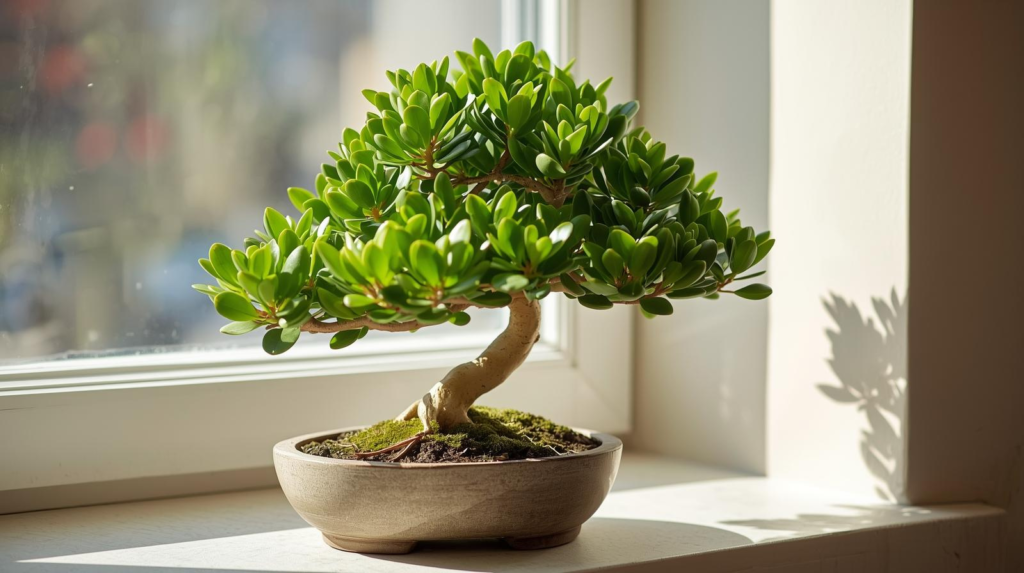
A “mini tree” for sunny windowsills: thick trunk, branching habit, and excellent drought tolerance. (gardeningsolutions.ifas.ufl.edu)
Pros:
- Very drought tolerant
- Easy to shape by pruning
Cons:
- Needs strong light to avoid stretching
- Susceptible to overwatering in heavy soil
Pricing: $15–$150 (Pricing may vary.)
29) Madagascar Palm (Pachypodium lamerei)
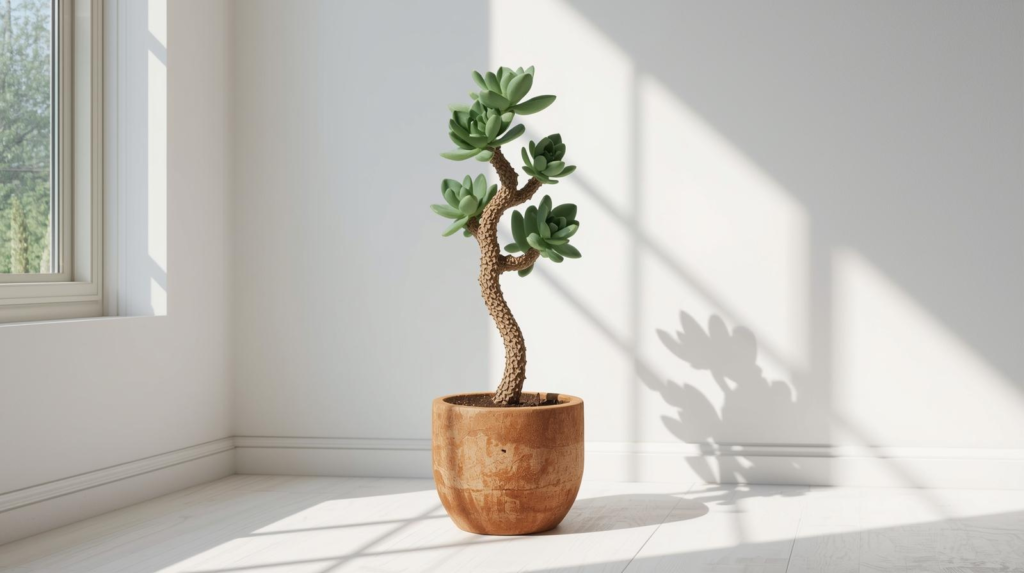
A sculptural, desert-style “tree” with a spiny trunk and tufts of leaves—best for bright, sun-filled spots and hands-off watering. (The Spruce)
Pros:
- Very architectural and unusual
- Drought tolerant when established
Cons:
- Spines are not kid/pet friendly
- Needs bright light to stay healthy
Pricing: $30–$250 (Pricing may vary.)
30) Schefflera / Umbrella Tree (Schefflera)
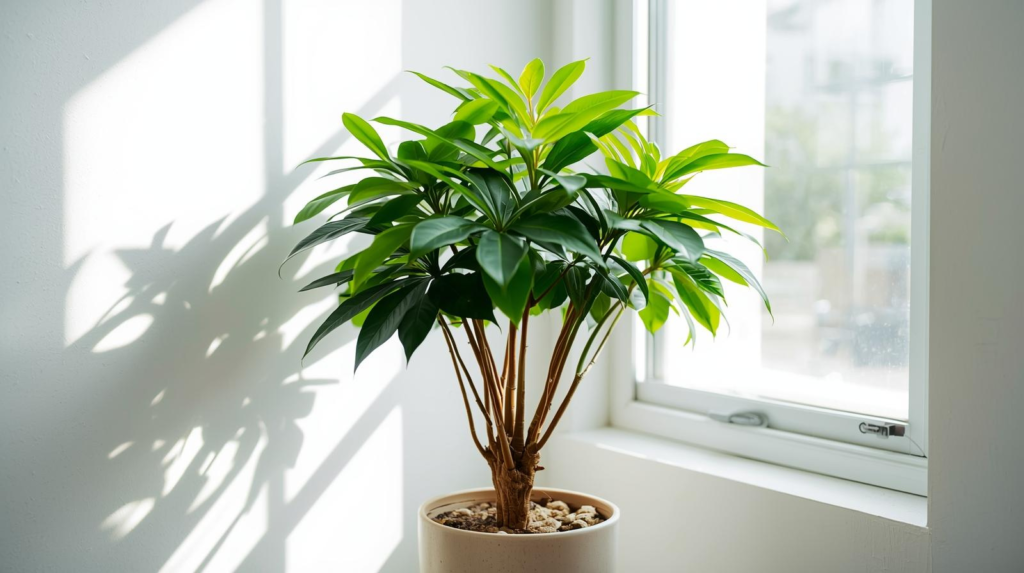
A fast way to get a full, leafy “tree” silhouette indoors. Pet note: ASPCA lists schefflera/umbrella tree as toxic to cats and dogs. (ASPCA)
Pros:
- Full canopy effect relatively quickly
- Forgiving growth in average homes
Cons:
- Toxic to pets per ASPCA (ASPCA)
- Can get leggy without enough light
Pricing: $25–$200 (Pricing may vary.)
31) Sago Palm (Cycas revoluta) (Pet-free homes only)
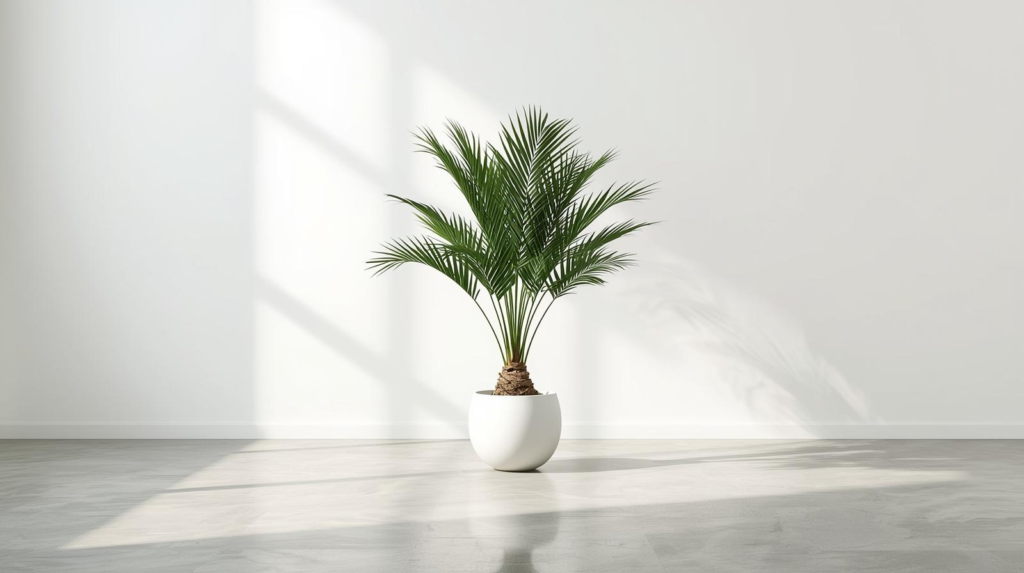
It’s not a true palm, but it’s widely sold as an indoor “palm” for its sculptural fronds. If you have pets, this is a hard no: ASPCA lists it as toxic to cats and dogs, with severe potential outcomes. (ASPCA)
Pros:
- Extremely sculptural, slow-growing centerpiece
- Looks expensive even at smaller sizes
Cons:
- Highly toxic to pets per ASPCA (ASPCA)
- Slow growth (not for instant “fill”)
Pricing: $30–$300+ (Pricing may vary.)
How to Pick the Right Indoor Tree
Measure your light honestly
Most “indoor tree failures” are really light mismatches. University extension references explain indoor light using window direction and measurable ranges (foot-candles/PPF), which helps translate “bright indirect” into real placement decisions. (University of Maryland Extension) If you’re more than a few feet from a window, assume you’re in medium-to-low light unless you’re using grow lights.
Know which trees demand direct sun
Citrus and olives are the big ones: extensions repeatedly note that citrus typically needs a south/west window and hours of direct sun for best performance and fruiting. (Yard and Garden) If you can’t offer that, choose dracaena, palms, or many ficus instead.
Size the plant to the room
A practical rule from indoor-tree guides: leave headroom. Trees should be at least a couple feet shorter than your ceiling so new growth doesn’t immediately create stress and pruning battles. (The Spruce)
Match watering style to the species
Indoor watering needs change with light and temperature; extension guidance emphasizes that warmer, sunnier spots dry faster than cooler, low-light ones. (UA Cooperative Extension) If you forget to water, pick ponytail palm, yucca, or jade; if you’re consistent, palms and some citrus become easier.
Plan for HVAC dryness and drafts
Drafts and vents are common indoor-tree stressors (especially for finicky leaves like fiddle-leaf fig). (UC Agriculture and Natural Resources) If leaves crisp at the edges, move the tree away from airflow first before changing watering.
Pet safety isn’t optional
When it matters, verify with a reliable database like the ASPCA list—not social media. (ASPCA) If you’re in a pet household, palms like parlor and areca (ASPCA-listed non-toxic) are usually safer bets than sago palm, schefflera, and some ficus types. (ASPCA)
FAQs
What’s the easiest indoor tree for beginners?
For most homes, a dracaena (like corn plant or dragon tree) is one of the most forgiving “tree-form” houseplants, especially in medium-bright indoor light. (University of Maryland Extension)
What indoor tree works best in low light?
If your light is limited, look to plants commonly recommended for lower indoor light—like corn plant (dracaena fragrans) or certain palms such as lady palm—rather than sun-hungry citrus. (The Spruce)
Do indoor lemon trees really need direct sunlight?
Yes. University extension resources consistently note that citrus typically needs a very sunny window and multiple hours of direct light for good growth and fruiting indoors. (Yard and Garden)
Are money trees safe for cats and dogs?
The ASPCA lists money tree (Pachira aquatica) as non-toxic to cats and dogs, though chewing any plant can still cause mild stomach upset. (ASPCA)
What indoor trees should pet owners avoid?
Sago palm is a major one—ASPCA lists it as toxic to cats and dogs and warns of severe effects. Schefflera (umbrella tree) and yucca are also listed as toxic. (ASPCA)
Why is my indoor tree dropping leaves after I brought it home?
Many indoor trees react to a sudden change in light, airflow, and watering rhythm. Start by stabilizing placement and light (don’t move it repeatedly), then adjust watering based on how quickly the pot dries in that spot. (UA Cooperative Extension)
Should I use a grow light for an indoor tree?
If your home lacks bright windows, a grow light can help bridge the gap—especially for trees that need higher light (like citrus). Use extension light-level guidance to understand what “bright” means and aim for a consistent schedule rather than 24/7 light. (University of Minnesota Extension)