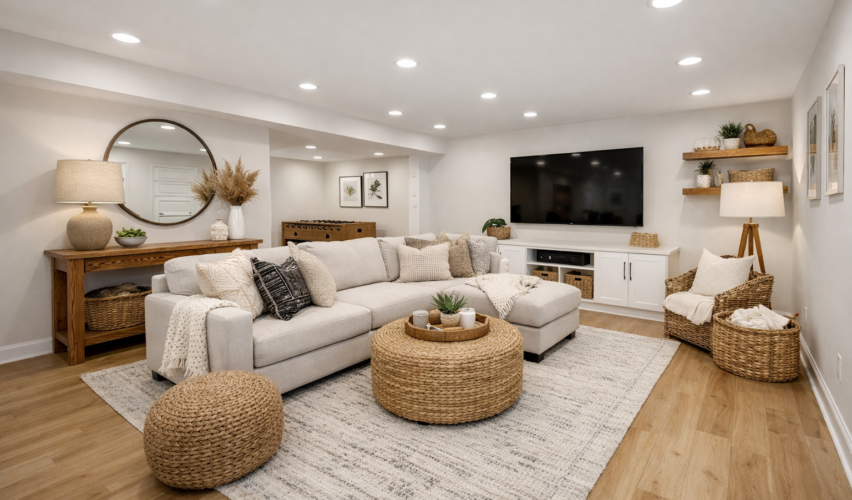
Basements ask more from a floor than almost any other part of the house. You’ve got concrete slabs, seasonal humidity, the occasional water event, and colder temps underfoot. The smartest basement flooring ideas start with one priority: pick a material that matches your basement’s moisture reality, then choose a look that fits how you’ll use the space. Popular expert picks tend to cluster around waterproof, below-grade-friendly options like luxury vinyl planks/tiles, porcelain tile, and coated/sealed concrete. (This Old House)
Start here: a quick basement flooring decision checklist
If you do these three things first, you’ll avoid the most common basement flooring regrets
Check for active water problems before you shop: if you have seepage, bulk water, or recurring puddles, fix drainage/gutters/grading or sump issues first (a “waterproof” floor won’t save a wet slab long term)
Decide how warm and soft you want it to feel: some floors are bulletproof but cold (tile, concrete coatings), while others feel warmer (vinyl with underlayment, carpet tiles over a subfloor system)
Pick the install approach: floating click floors are DIY-friendly; tile and coatings can be more demanding depending on slab condition.
Idea 1: Luxury vinyl plank (LVP) or luxury vinyl tile (LVT) for a finished “main level” look
If you want your basement to feel like the rest of your home, LVP/LVT is often the easiest win. This Old House highlights vinyl plank/tile as basement-friendly and repairable (you can replace a damaged plank/tile).
Look ideas that work well below grade
Wide-plank oak visuals for family rooms
Light “white oak” tones to brighten windowless basements
Concrete-look LVT for modern basements and laundry rooms
Herringbone or chevron patterns (using LVT) for a higher-end feel
What to shop for (quick specs)
A waterproof rigid core (often marketed as SPC/WPC in many product lines) is commonly positioned as a practical choice for wet-prone areas like basements (MSI Surfaces)
A thicker wear layer for kids/pets/high traffic (manufacturer varies)
Integrated pad if you want a quieter, softer step
Idea 2: Porcelain tile for the most water-proof, worry-free floor
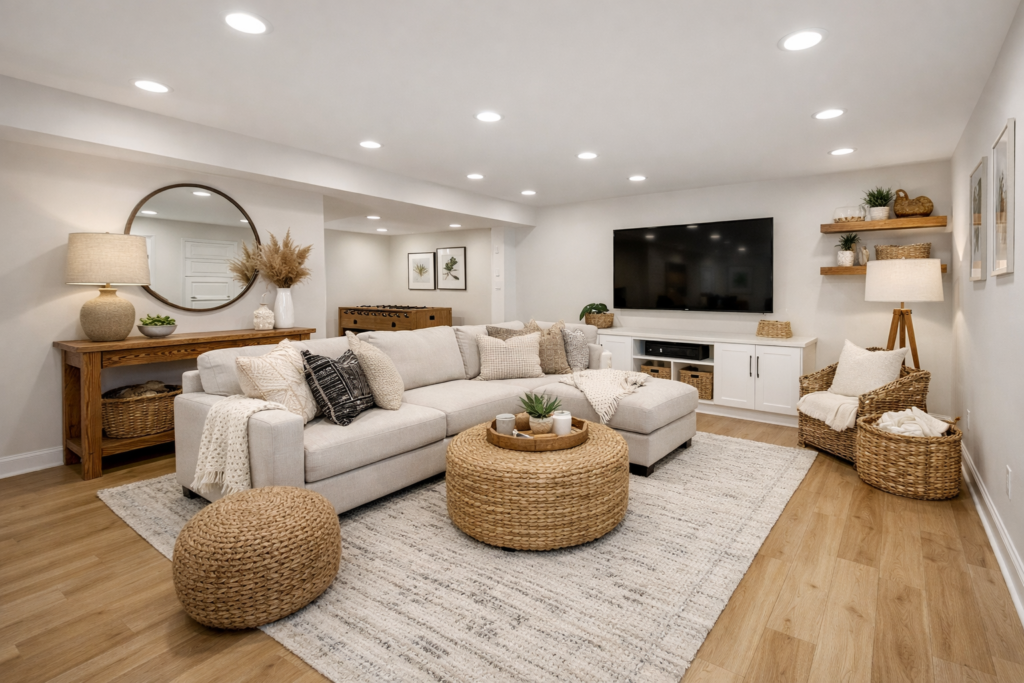
Porcelain tile is one of the toughest basement picks, especially for laundry rooms, utility spaces, and basements that see damp boots or occasional water. Family Handyman includes ceramic/porcelain tile among top basement flooring options. (Family Handyman)
Design-forward tile ideas
Large-format tile (fewer grout lines, calmer look)
Slate-look porcelain for a rugged, upscale vibe
Heated floor + tile if the basement is a primary living zone (higher cost, big comfort)
Important basement tile note: concrete moisture can affect bond and performance, so follow current tile installation standards and appropriate prep for slabs. (Tile Council of North America)
Idea 3: Epoxy (or similar) coatings for a seamless, modern basement floor
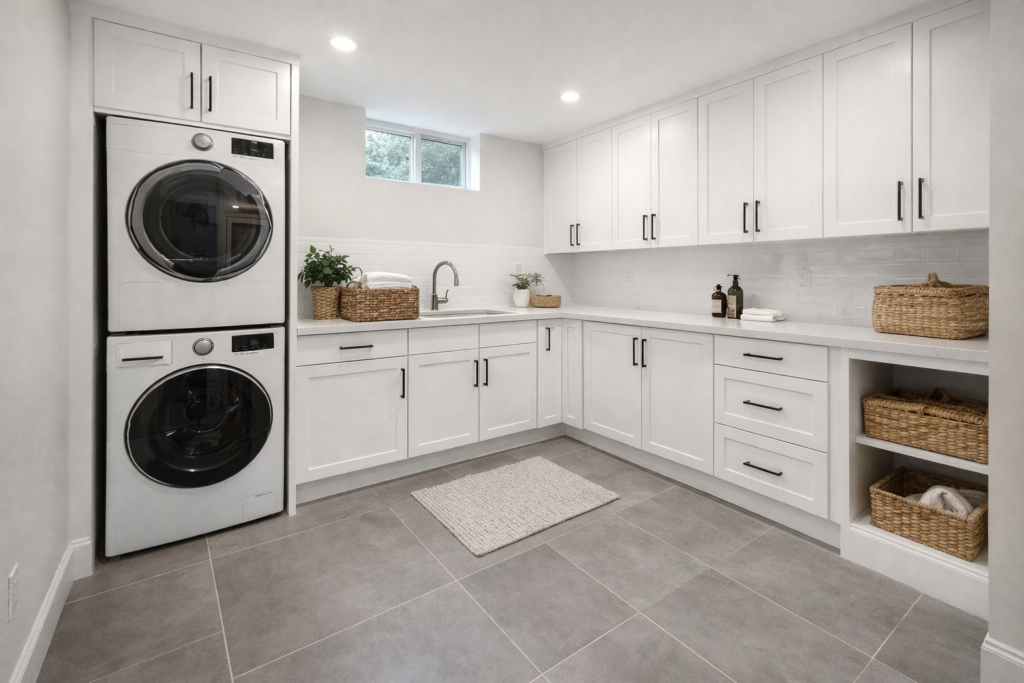
If you want a clean, durable surface over concrete (especially for workshops, storage, and game rooms), coatings are a popular basement flooring idea. The big caveat is moisture vapor coming through the slab can cause coating failure if the slab isn’t prepped and tested correctly; epoxy pros consistently flag moisture as a major risk. (Amadeus Epoxy)
Style options beyond “garage gray”
Solid color matte or satin-look finishes
Flake floors (hide dirt and small imperfections)
Metallic epoxy for a dramatic, high-gloss statement
Best uses
Home gyms, workshops, mechanical rooms
Basements where you’d rather keep the concrete look but upgrade durability
Idea 4: Sealed or stained concrete for a low-maintenance, industrial vibe
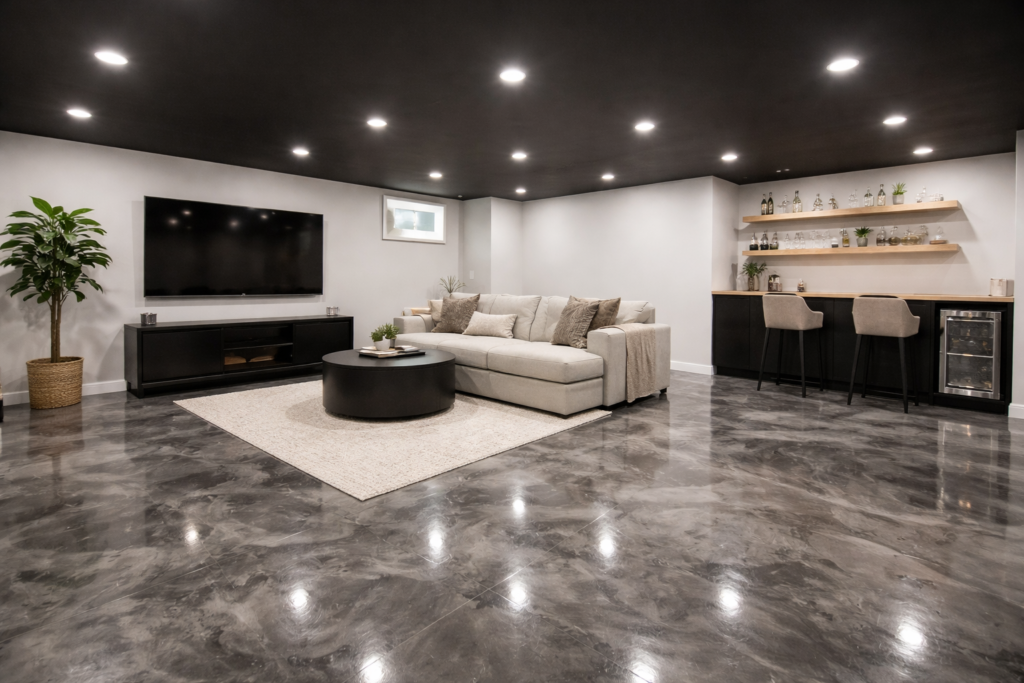
If your slab is in good shape, sealing or staining concrete can be cost-effective and durable, with fewer layers than decorative coatings. It’s also easy to pair with big rugs to add warmth and zoning (media area, play area, office nook). HGTV includes dyed/stained concrete among basement flooring options. (HGTV)
Design ideas
Warm stain + oversized rug = “loft” feel
Stenciled patterns for a faux tile look
Matte sealers for a more modern finish (less glare)
Idea 5: Carpet tiles for comfort you can replace piece-by-piece
Carpet tiles are a practical “finished basement” idea when you want warmth and softness but don’t want the risk of wall-to-wall carpet after a spill or leak. If a section gets stained, you can swap out tiles instead of redoing the whole floor. Family Handyman includes carpet as a basement option.
Make it look intentional
Go tonal (heathered grays) for a clean, modern look
Use two colors to create zones (gym edge, play corner, TV area)
Pair with a subfloor system if your slab is cold
Idea 6: Rubber flooring for home gyms and kid-proof play spaces
Rubber is one of the best basement flooring ideas for impact resistance, sound dampening, and traction. It’s a favorite for gyms and weight areas because it’s forgiving underfoot and handles abuse. Family Handyman lists rubber flooring as a top basement choice.
Style upgrades
Large rubber tiles with clean seams
Speckled rubber for a more “commercial gym” look
Rubber runner paths for workout zones while keeping LVP elsewhere
Idea 7: A raised subfloor system to make almost any basement floor warmer and safer
If your basement feels cold or you’re worried about minor moisture, a raised subfloor panel system can be a game-changer under many finishes. DRICORE describes its raised panel design as creating airflow underneath to help protect finished floors and support multiple flooring types. (DRICORE®)
One important detail: some panel systems include an integrated moisture membrane, and DRICORE notes that for certain insulated panels, adding a separate vapor barrier over concrete is not recommended because the built-in membrane handles incidental moisture.
Best combos
Subfloor panels + carpet tiles for a cozy living basement
Subfloor panels + engineered wood look (if you’re set on a wood aesthetic)
Subfloor panels + LVP for warmth and comfort
Idea 8: Engineered wood (only with the right build-up and moisture control)
If you want real wood, engineered wood is more dimensionally stable than solid hardwood, but wood and moisture are still a tricky pairing. APA (Engineered Wood Association) stresses that excessive moisture is a common pitfall and that moisture conditions need to be controlled for long-term performance. (APA)
Basement-friendly approach
Use a proper subfloor system over concrete
Follow the flooring manufacturer’s moisture testing and installation requirements (this is non-negotiable).
Idea 9: “Hybrid” basement floors that look designer and solve real problems
Some of the best basement flooring ideas mix materials by zone so each area performs well
LVP in the main living area + tile in the laundry/mechanical zone
Coated concrete in the workshop + carpet tiles in the media area
Tile perimeter (wet boots zone) + LVP center (living zone)
Room-by-room picks that usually work
Family room / guest space: LVP/LVT (warm look, easy maintenance)
Laundry room: porcelain tile or waterproof vinyl
Home gym: rubber or coated concrete
Workshop / storage: epoxy or sealed concrete (Concrete Coatings North Idaho)
Kids playroom: LVP + big rugs, or carpet tiles + subfloor
Common basement flooring mistakes to avoid
Skipping moisture reality: coatings can peel and floors can fail if moisture vapor isn’t addressed (Amadeus Epoxy)
Putting “wood-like” floors directly on problem slabs without testing: APA emphasizes moisture control as critical for wood flooring performance
Choosing cold surfaces for living basements without a comfort plan: tile and concrete look great, but many people end up buying rugs anyway
Quick “best overall” recommendation
If you want the safest blend of style, comfort, and basement-friendliness, start your search with a waterproof LVP/LVT rigid-core product, then decide whether you need a raised subfloor for warmth and moisture management. Tile is the durability king for wet zones, and coatings are excellent when you want seamless concrete performance—just don’t ignore moisture testing and prep.