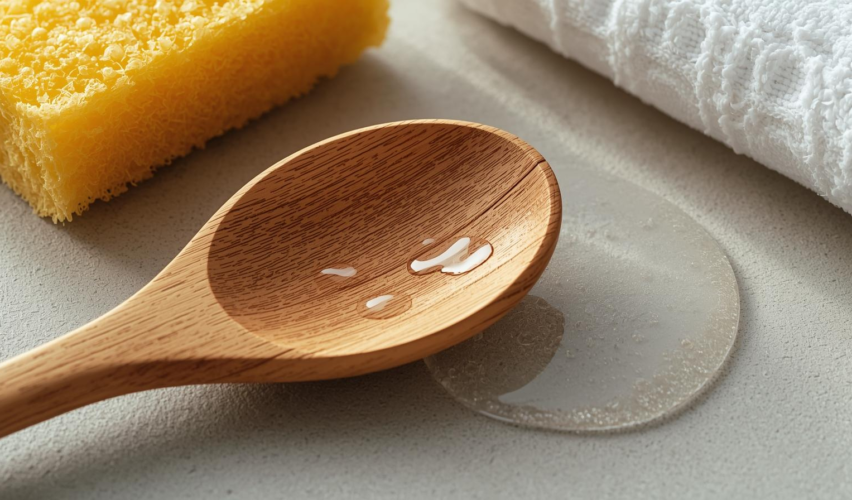
Wooden spoons are durable, but they’re also porous, which means oils and food residues can work into the grain if you don’t clean and dry them well. The best approach is simple: wash promptly, don’t soak, dry completely, and condition the wood occasionally. (NC State Extension)
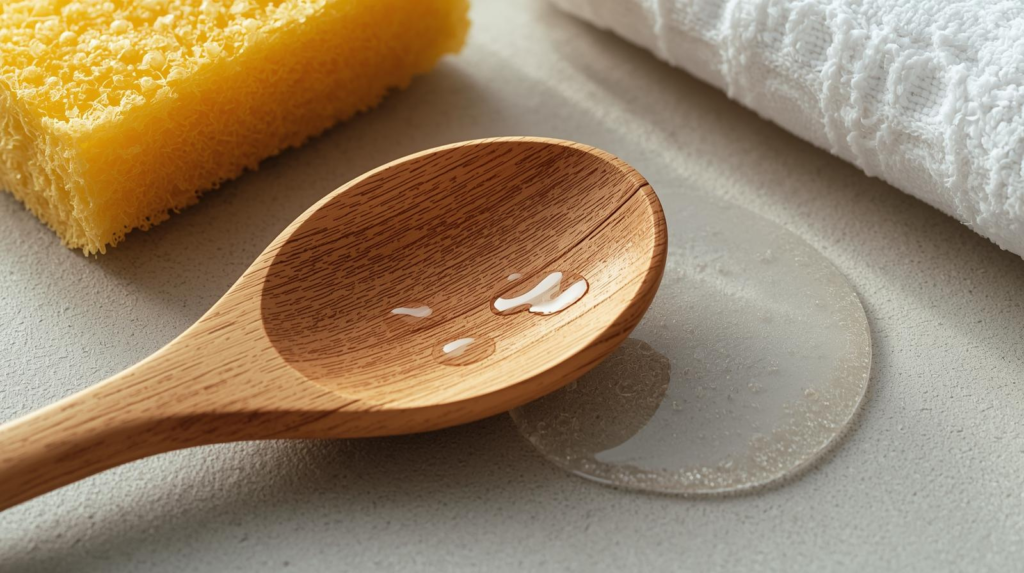
Everyday cleaning (do this after each use)
This routine removes residue before it has time to sink into the wood—exactly what food-safety guidance recommends for wood food-contact items (like cutting boards): wash with hot, soapy water, then rinse and dry. (Food Safety and Inspection Service)
- Rinse right away under warm water to remove food bits.
- Wash with hot, soapy water using a sponge or dish brush (scrub the bowl and the handle). (Food Safety and Inspection Service)
- Rinse thoroughly, then dry immediately. Air-drying is ideal; some extension guidance notes towels can recontaminate clean items, so letting them air-dry helps. (NC State Extension)
Tip: If your spoon touched raw meat/eggs or something high-risk, jump to the sanitizing section below after washing. (NC State Extension)
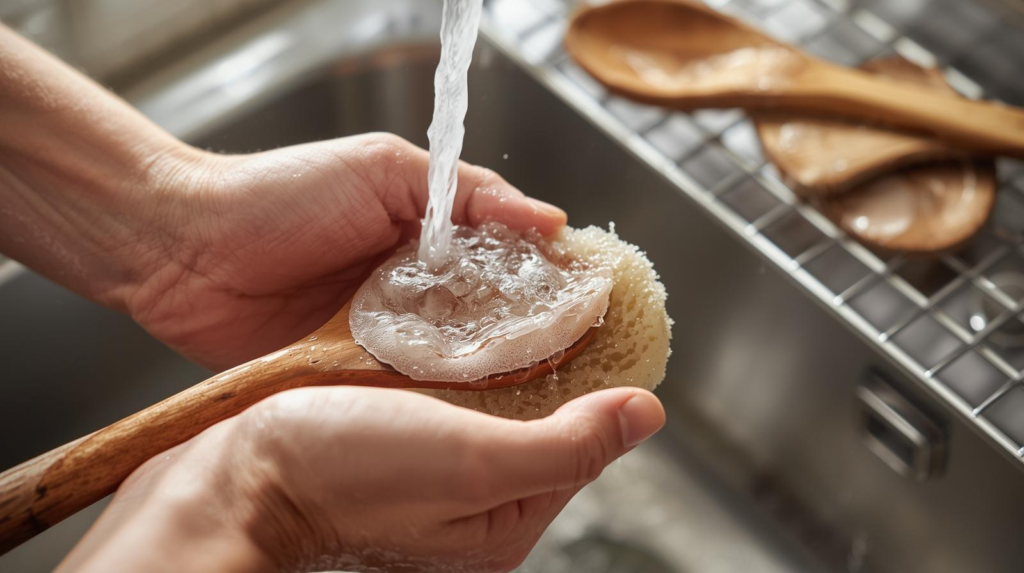
Deep clean for stains or lingering odors (weekly or as needed)
If your spoon smells like garlic/curry or looks stained, you want mild abrasion plus dwell time—without harsh chemicals.
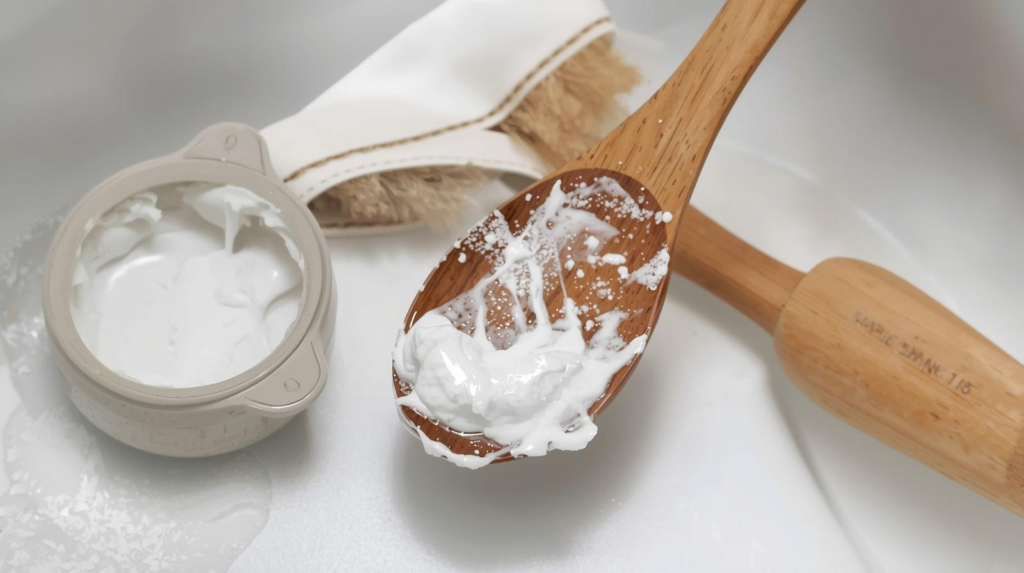
Option A: Baking soda paste (gentle scrub)
A baking-soda paste is a common “go-to” for stuck-on residue because it adds mild scrubbing power without being as aggressive as scouring powders. (Better Homes & Gardens)
- Mix baking soda + a few drops of water to make a thick paste.
- Rub it into the spoon with a sponge/brush.
- Let sit 5–10 minutes, then rinse and dry well. (Better Homes & Gardens)
Option B: Hot-water wash + thorough dry (for “film”)
Sometimes the “odor” is just oily buildup. A careful hot, soapy wash followed by complete drying solves it—because sanitizers and deodorizing steps work poorly if grease and residue are still present. (Food Standards Australia New Zealand)
Sanitizing wooden spoons (when you should do it and how)
You generally don’t need to sanitize a wooden spoon every time you cook. But you should sanitize after contact with raw meat/seafood/eggs, during household illness, or if the spoon sat dirty for a long time. Food-safety and extension guidance commonly recommends a dilute unscented chlorine bleach solution for food-contact surfaces—after you wash first. (NC State Extension)
Safe, standard bleach-sanitize method
- Wash first with hot, soapy water, then rinse. (Sanitizers don’t work well through food residue.) (Food Standards Australia New Zealand)
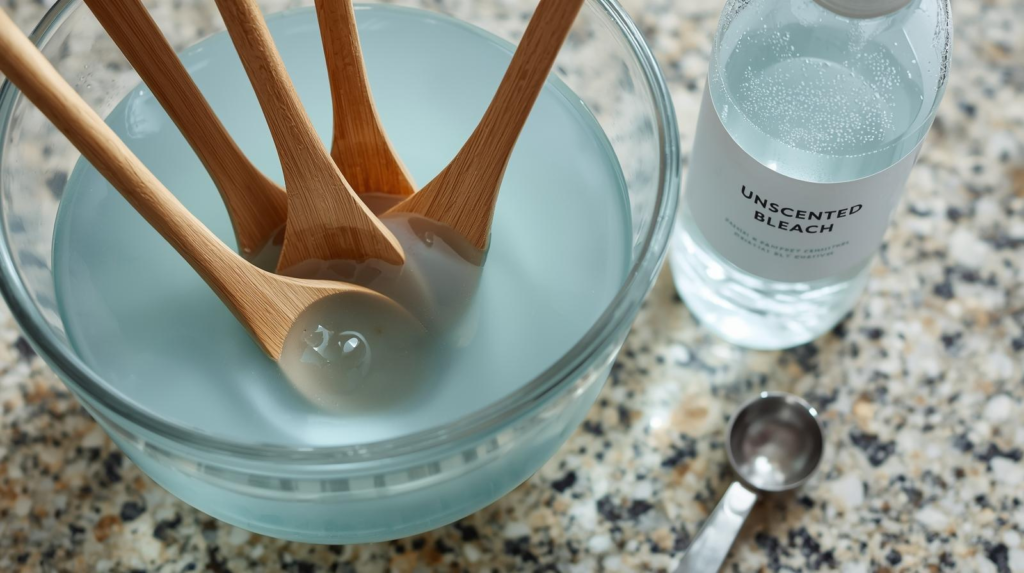
- Mix a sanitizing solution: 1 tablespoon of unscented household chlorine bleach per 1 gallon of water (cool or warm—not hot). Multiple extension resources use this recipe, and they note hot water makes bleach dissipate faster. (NC State Extension)
- Soak the spoon briefly (or fully wet it) and keep it in contact with the solution for about 1 minute (some guidance uses longer soak times for utensils; either is fine—don’t “double” the bleach to compensate). (NC State Extension)
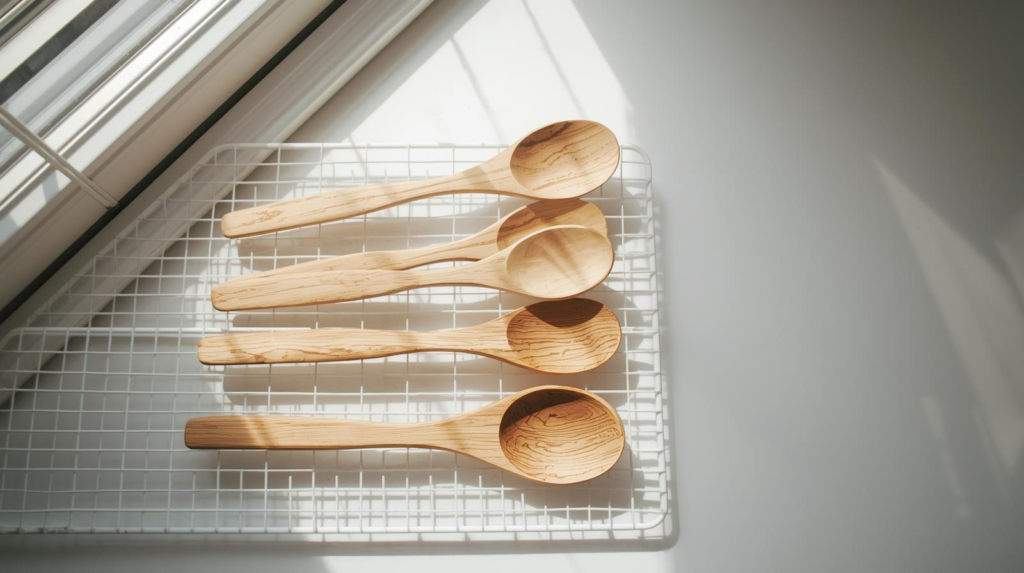
- Air-dry completely on a clean rack. (NC State Extension)
Important: Use unscented bleach (not splashless/gel) and don’t make the solution stronger than recommended—“more” isn’t better for food-contact sanitizing. (CAGR Natural Resources)
Drying is non-negotiable (this prevents warping, cracks, and smells)
Wood stays happiest when it doesn’t sit wet.
- After washing, wipe and air-dry with good airflow. (NC State Extension)
- Avoid leaving wooden spoons submerged; prolonged moisture encourages swelling and can contribute to cracking/roughness over time. (Better Homes & Gardens)
Condition the wood (monthly or when it looks dry)
Conditioning helps keep wood from drying out and getting rough. USDA food-safety guidance for wooden cutting boards recommends rubbing with mineral oil to help retain moisture—similar care applies to wooden utensils. (Food Safety and Inspection Service)
How to oil a wooden spoon
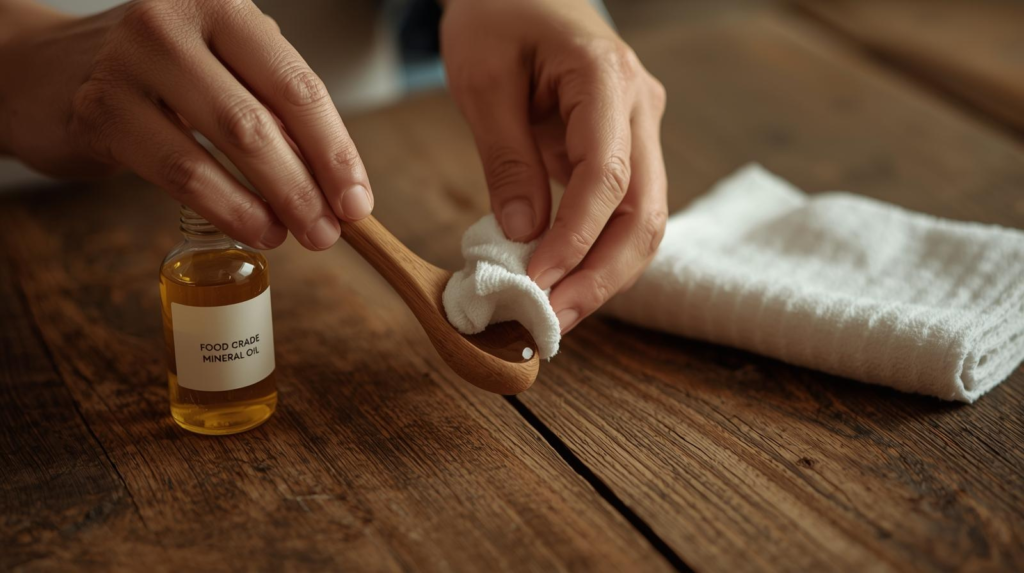
- Make sure the spoon is completely clean and dry. (Better Homes & Gardens)
- Rub on a thin layer of food-grade mineral oil (or a beeswax/mineral-oil conditioner). (Food Safety and Inspection Service)
- Let it soak in for a few hours (or overnight), then wipe off excess.
What to avoid (common mistakes that shorten a spoon’s life)
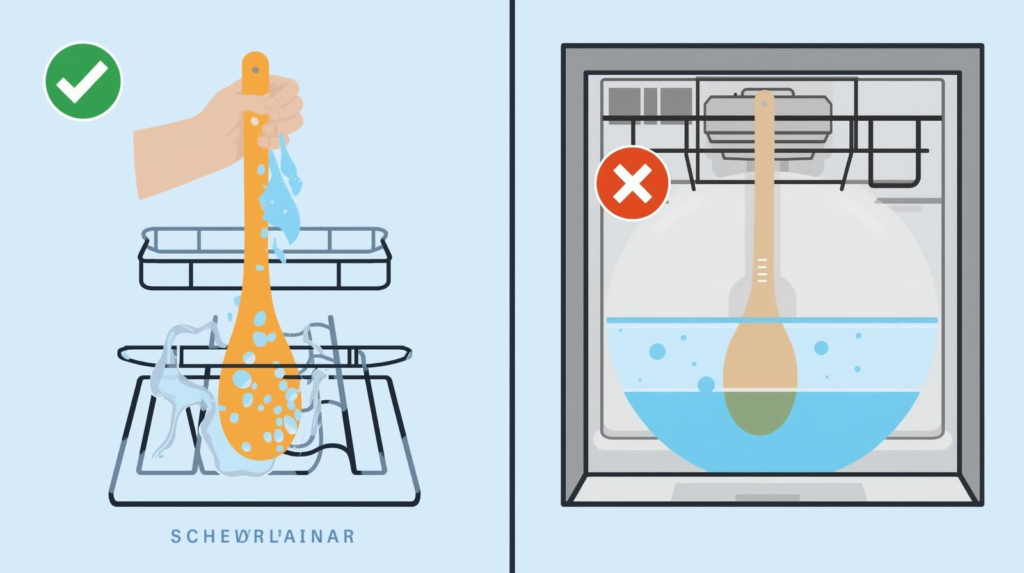
- Dishwashers for wood items: Even some official dishwashing guidance notes wooden boards should be cleaned by hand, and experts repeatedly warn that dishwasher heat/moisture can be hard on wood. (UC Agriculture and Natural Resources)
- Boiling “deep-clean” trends: It may pull grime out, but repeated boiling can strip oils and contribute to warping/cracking—several expert-backed articles caution against making boiling a habit. (Better Homes & Gardens)
- Long soaks: If you must soak (e.g., burnt-on sauce), keep it brief and dry well afterward. The longer wood sits wet, the more likely it is to swell and feel rough later. (Better Homes & Gardens)
When to replace a wooden spoon
Replace it if you notice:
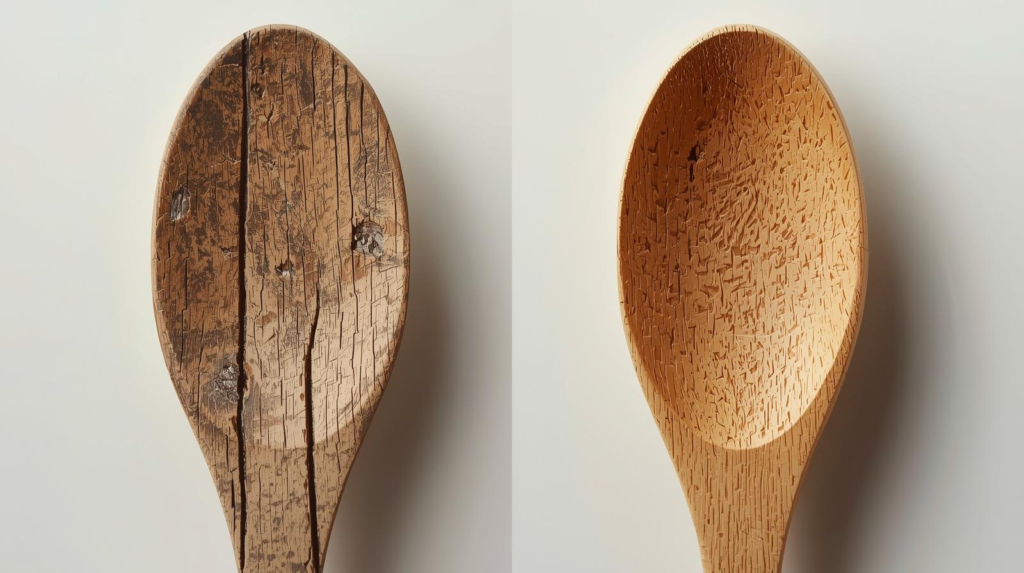
- Deep cracks, splits, or splintering (they’re hard to clean thoroughly and can shed fragments). (Ask USDA)
- A persistent musty odor that returns immediately even after washing/sanitizing.
Quick checklist
- Wash with hot, soapy water → rinse → dry/air-dry fully. (Food Safety and Inspection Service)
- Sanitize after risky contact using 1 Tbsp unscented bleach per 1 gallon water, then air-dry. (NC State Extension)
- Oil with food-grade mineral oil monthly or when dry. (Food Safety and Inspection Service)
- Avoid dishwashers, long soaks, and frequent boiling. (UC Agriculture and Natural Resources)
Related Articles
https://homeandgardenworld.com/advice/how-to-clean-cast-iron
https://homeandgardenworld.com/kitchen/how-to-clean-a-burnt-pot
https://homeandgardenworld.com/kitchen/how-to-clean-kitchen-cabinets