Baseboards are low to the ground, so they collect a perfect storm of dust, pet hair, shoe scuffs, mop splash, and sticky grime—especially near kitchens, hallways, and entryways. The best way to clean baseboards is a simple three-pass system: remove dry debris first, wash gently with a mild solution, then detail tough spots (without damaging paint or wood). This approach matches how paint manufacturers recommend cleaning painted surfaces (start mild, avoid harsh abrasion, and don’t soak the material). (Sherwin-Williams)
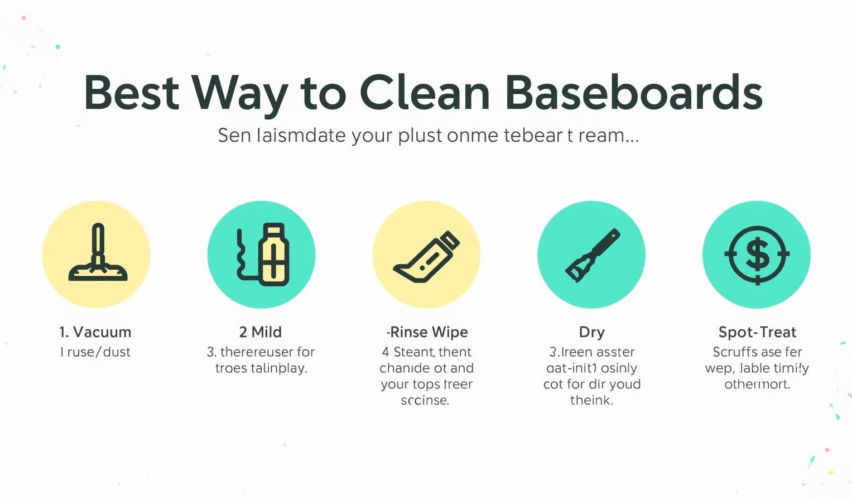
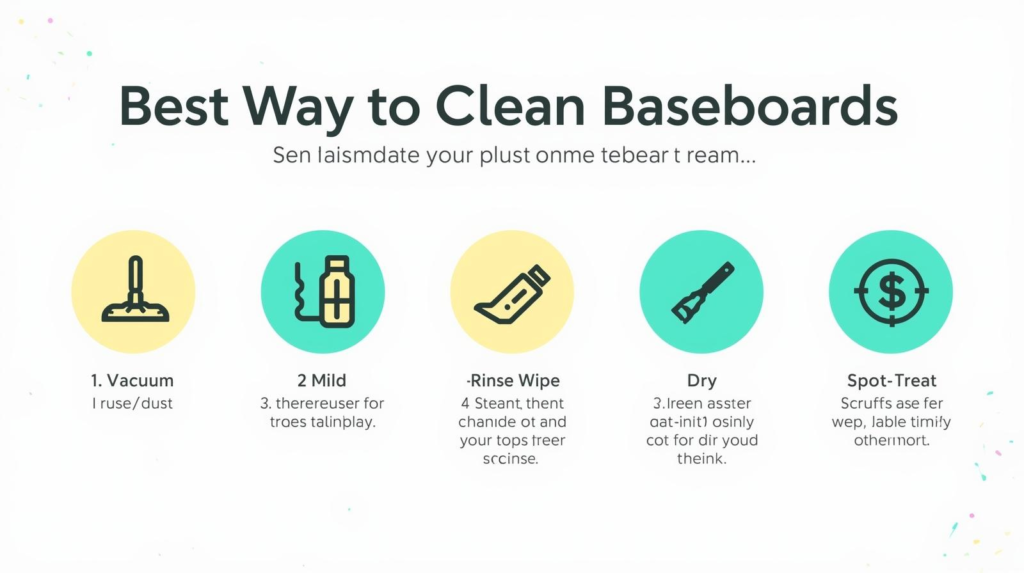
The best way to clean baseboards in 5 steps (the method that works in almost every home)
- Vacuum or dry-dust first (brush attachment or microfiber) so you don’t turn dust into muddy streaks. (Sherwin-Williams Images)
- Wipe with a barely-damp microfiber cloth using warm water + a few drops of mild dish soap (think “gentle,” not heavy suds). This mirrors common guidance for cleaning painted surfaces: mild detergent, warm water, soft cloth, gentle pressure. (Sherwin-Williams)
- Rinse-wipe with a clean damp cloth (water only) to remove any soap film that attracts dust. (Sherwin-Williams)
- Dry immediately with a towel to prevent swelling (especially MDF) and to avoid water marks. (Paint-care guidance commonly emphasizes wringing out cloths and avoiding excess water.) (Sherwin-Williams)
- Spot-treat scuffs and stuck-on grime last, using the least aggressive method that works.
What you’ll need (simple, cheap, and effective)
- Vacuum with brush attachment or a microfiber duster
- 2–3 microfiber cloths (one for wash, one for rinse, one for dry)
- Bucket or bowl of warm water
- Mild dish soap or mild detergent
- Cotton swabs or a soft toothbrush (for grooves and profiles)
- Optional: kneeling pad (your knees will thank you)
Step-by-step: the “3-pass” baseboard cleaning system (fast + thorough)
Pass 1: Remove dry debris (don’t skip this)
Baseboards trap dust in corners and along the top ledge. Start dry so you don’t create a grimy slurry. A vacuum brush is ideal for pet hair and heavy dust, and microfiber helps trap particles instead of flinging them around. (Sherwin-Williams Images)
Pass 2: Wash gently (mild soap beats harsh chemicals most of the time)
Mix warm water with a small amount of mild soap. Dampen the cloth and wring it well—you want “barely damp,” not dripping. Sherwin-Williams’ cleaning guidance for painted surfaces emphasizes mild detergent with warm water, soft cloth/sponge, and gentle wiping to avoid streaks and damage. (Sherwin-Williams)
Work in 3–6 foot sections: wipe → rinse-wipe → dry. This keeps the finish even and prevents water from sitting on the trim. (Sherwin-Williams)
Pass 3: Detail and spot-treat (scuffs, kitchen grease, mystery marks)
This is where most people accidentally damage trim—usually by scrubbing too hard or using overly abrasive tools.
How to remove scuff marks on baseboards (without ruining the finish)
Start with the gentlest option and step up only if needed:
- Damp microfiber + mild soap (often enough for fresh scuffs) (Sherwin-Williams)
- Baking soda paste (very light pressure, then rinse-wipe and dry)
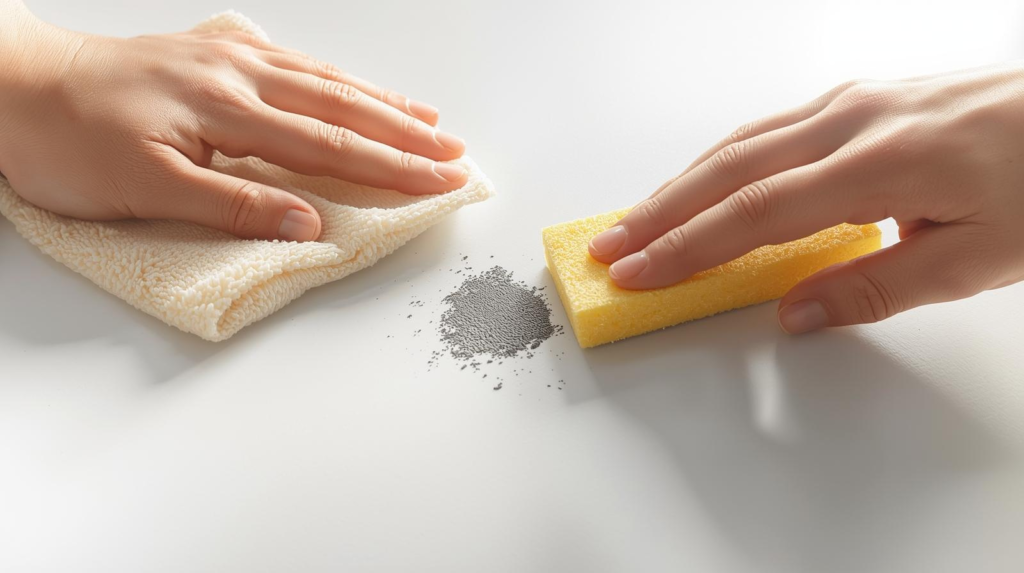
- Melamine foam “eraser” (Magic Eraser-type) for stubborn scuffs only with caution: melamine sponges are mildly abrasive (they work like very fine sandpaper) and can dull or remove finishes if you scrub aggressively or use them on delicate/finished surfaces. Test a hidden spot first and use minimal pressure. (The Spruce)
The right cleaning approach for different baseboard materials
Painted wood baseboards
Use the standard 3-pass method. Avoid soaking the wood and don’t use harsh, high-alkaline cleaners that can degrade finishes. Mild soap and water is a widely recommended baseline for painted surfaces. (Sherwin-Williams)
MDF baseboards
MDF can swell if water seeps into seams or chips. Keep cloths extra-wrung, don’t flood edges, and always dry immediately. (This is a “water control” situation—less moisture, more passes.) (Sherwin-Williams)
Stained or natural wood baseboards
Use minimal water and avoid abrasive tools that can strip or dull the protective finish. Cleaning pros commonly warn that melamine sponges can strip finishes and that too much water can damage wood over time. (The Spruce)
Kitchens, mudrooms, and hallways: how to cut greasy buildup
If baseboards feel sticky (common near stoves and high-traffic paths), do this:
- Vacuum/dust first
- Use warm water + mild soap and a bit more dwell time (wipe, wait 30–60 seconds, wipe again)
- Rinse-wipe and dry
If it still feels tacky, repeat rather than jumping straight to harsh chemicals—paint care guidance generally starts mild and escalates carefully. (Sherwin-Williams)
Bathrooms and laundry rooms: handling mildew safely
If you see suspected mildew, focus on ventilation and safe cleaning practices. If you choose to disinfect with bleach, follow official safety guidance: never mix bleach with ammonia or other cleaners, ventilate well, and use protective gear as appropriate. (CDC)
Also note the difference between cleaning (soap + water removes grime) and disinfecting (chemicals kill remaining germs). The CDC emphasizes cleaning first before disinfecting. (CDC)
How often should you clean baseboards? (a realistic schedule)
- Quick dusting: every 2–4 weeks (or weekly with pets/allergies)
- Wipe-down wash: every 2–3 months for most homes
- Deep clean: seasonally (or before hosting / spring cleaning)
A “little often” approach prevents the thick grime layer that takes forever to remove.
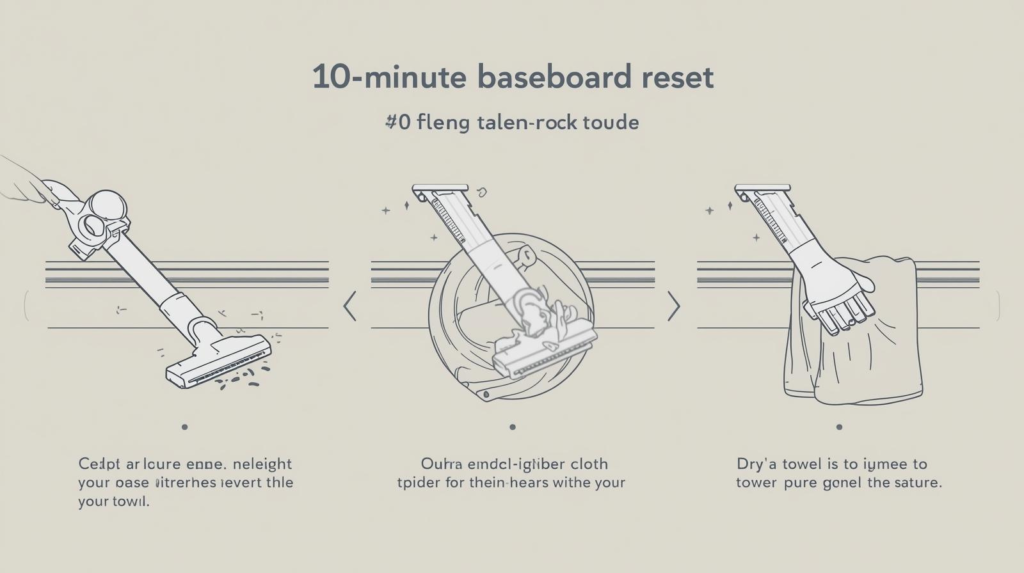
Speed-clean option: the 10-minute baseboard reset
If you’re short on time:
- Vacuum baseboards quickly with brush attachment
- Damp microfiber wipe with mild soapy water
- Dry pass with towel
You’ll remove most visible dust and dullness without turning it into a multi-hour project. (For a more detailed method, Apartment Therapy also recommends a dust-first approach followed by wiping.) (Apartment Therapy)
Common mistakes that make baseboards look worse
- Wetting before dusting: creates muddy streaks and pushes grit into paint (Sherwin-Williams Images)
- Using dripping cloths: risks MDF swelling and water marks (Sherwin-Williams Images)
- Scrubbing with abrasives too early: can dull paint or strip wood finish (The Spruce)
- Mixing cleaners (especially bleach): can create dangerous fumes; don’t do it (CDC)
FAQs about cleaning baseboards
Can I use a Magic Eraser on baseboards?
You can, but treat it as a last step and use a light touch. Melamine foam is abrasive and can dull or remove finishes—especially on glossy, varnished, or delicate surfaces. Always spot-test first. (The Spruce)
What’s the safest cleaner for painted baseboards?
Warm water with a small amount of mild detergent on a soft cloth is a widely recommended starting point for painted surfaces. (Sherwin-Williams)
I just painted—when can I clean baseboards?
Some paint guidance recommends waiting before washing newly painted surfaces (often around a couple of weeks) to allow proper curing. (Sherwin-Williams Images)
Should I disinfect baseboards?
Usually, baseboards just need cleaning. If you need disinfection (after illness, contamination, or mildew concerns), clean first, then disinfect safely and never mix products. (CDC)
Bottom line
The best way to clean baseboards is dry debris removal first, then a gentle wash with mild soap and minimal water, followed by a rinse-wipe and immediate drying. Save abrasive tools for stubborn scuffs, use them lightly, and follow official safety rules if disinfectants like bleach are involved. (Sherwin-Williams)
Related Articles
https://homeandgardenworld.com/kitchen/how-to-clean-kitchen-cabinets
https://homeandgardenworld.com/kitchen/how-to-clean-a-refrigerator