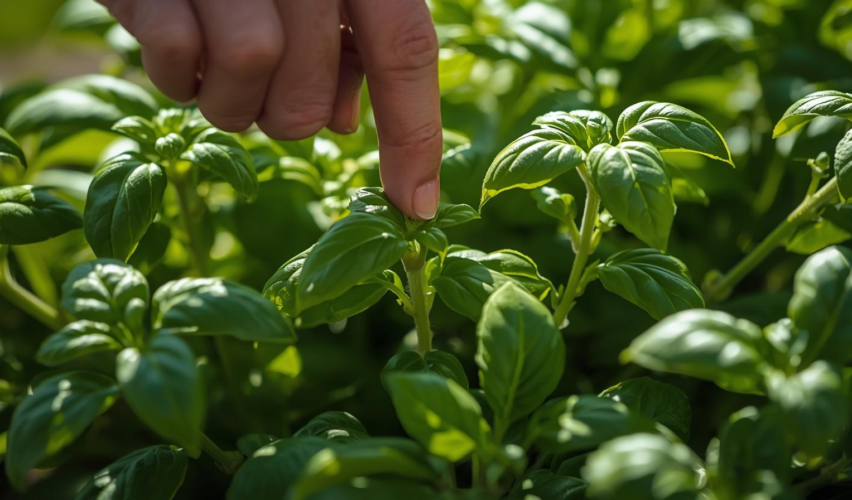
Pruning basil isn’t about making it smaller—it’s about telling the plant to branch. When you cut a stem just above a leaf node (the spot where two leaves meet the stem), basil responds by pushing out two new shoots, which quickly turns a tall plant into a leafy “basil bush.” This branching response is described in the pruning/harvesting guidance from the Utah State University Extension basil guide (Utah State University Extension) and the University of Minnesota Extension basil page (University of Minnesota Extension), and it’s the same “pinch back at nodes to get bushier plants” principle explained by the UC ANR Master Gardener pinching article (UC Agriculture and Natural Resources).
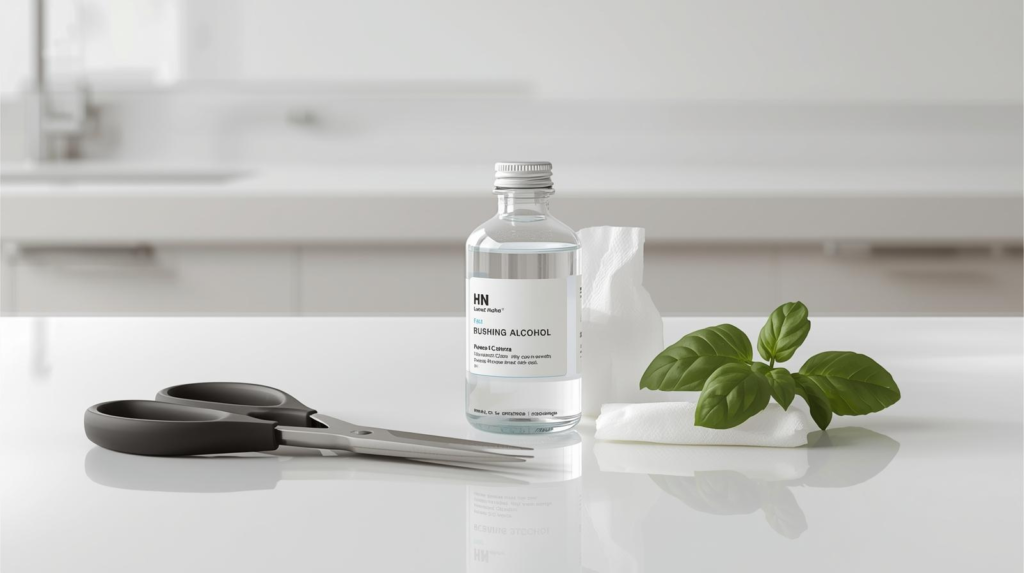
What you’ll need
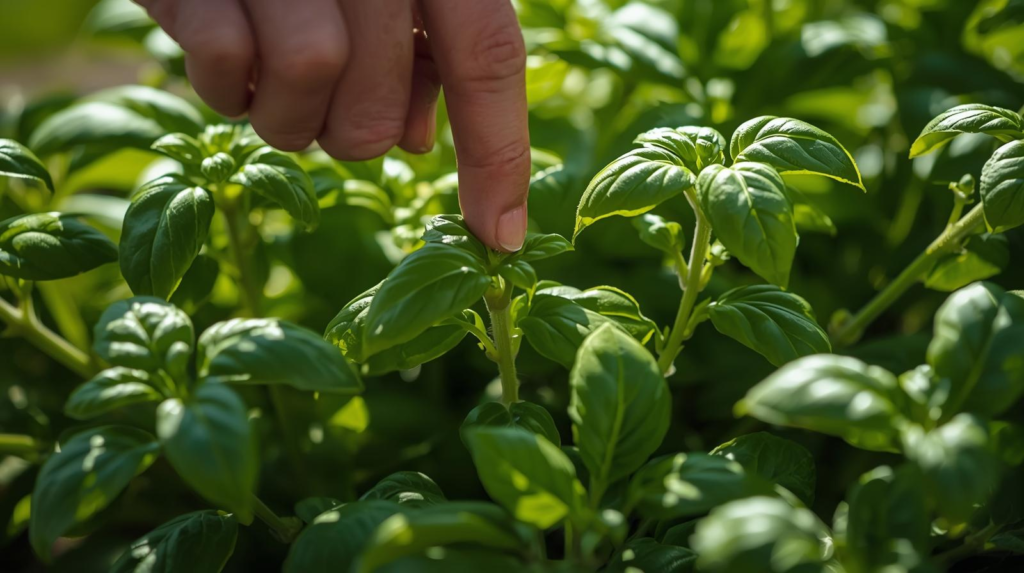
Use clean, sharp scissors/snips for crisp cuts, and disinfect tools when disease is a concern (especially if you’re moving between plants). Practical disinfection options like wiping/dipping with 70% isopropyl alcohol are recommended by the Iowa State University Extension tool-sanitizing FAQ (Yard and Garden) and the University of Maryland Extension pruning tools guide (University of Maryland Extension), and broader cleaning/disinfecting guidance is also covered by the University of Minnesota Extension tools disinfection guide (University of Minnesota Extension).
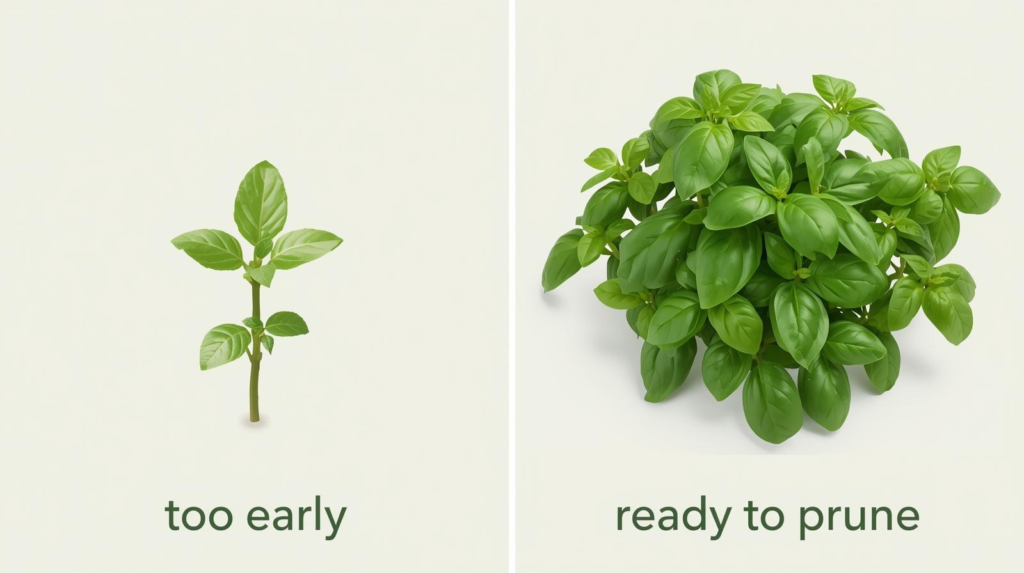
When to start pruning basil
Start once basil is established, not as a tiny seedling. A common, research-based rule is to begin when the plant has at least 6–8 leaves, per the Utah State University Extension basil harvesting guidance (Utah State University Extension), or when it’s about 6–10 inches tall, per the UC Master Gardeners of Placer County basil harvest tips (UC Agriculture and Natural Resources). This timing helps ensure the plant has enough leaf area left to keep growing after you cut. (Utah State University Extension)
The best way to prune basil (step-by-step)
Step 1: Find a node (the branching point)
Look for a place where two leaves grow opposite each other on a stem—this is the “node” where new side shoots can form. Cutting at nodes is the key technique emphasized by the Utah State University Extension basil guide (Utah State University Extension) and the University of Minnesota Extension harvesting instructions (University of Minnesota Extension).
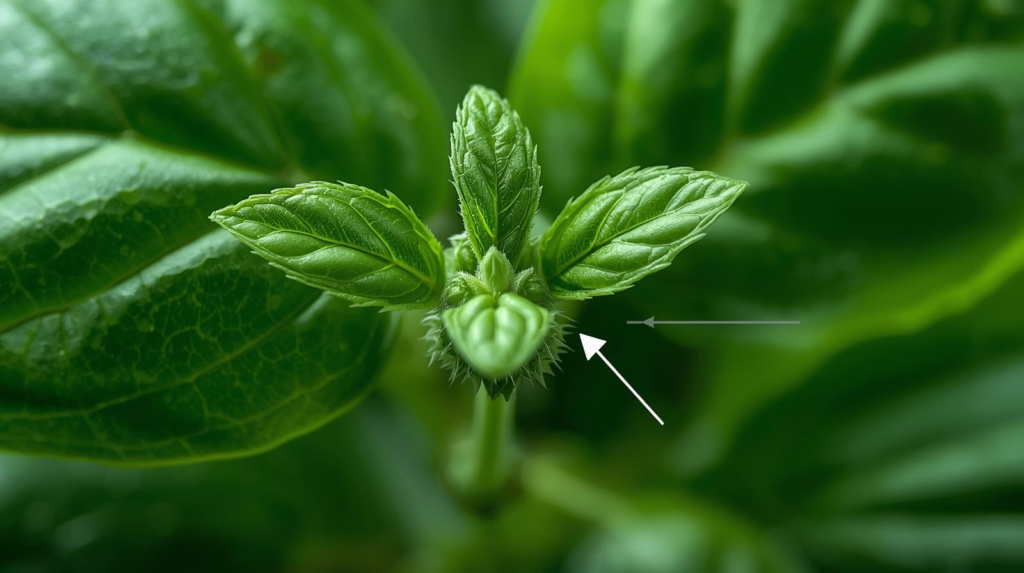
Step 2: Cut just above the node (not below it)
Make your cut just above a pair of leaves so the buds at that node can become new branches, matching the “cut above leaves/node” method in the University of Minnesota Extension basil page (University of Minnesota Extension) and the “cut stems just above a leaf node” instruction in the Utah State University Extension basil guide (Utah State University Extension). Expect visible regrowth at the cut point relatively quickly under warm, bright conditions. (University of Minnesota Extension)
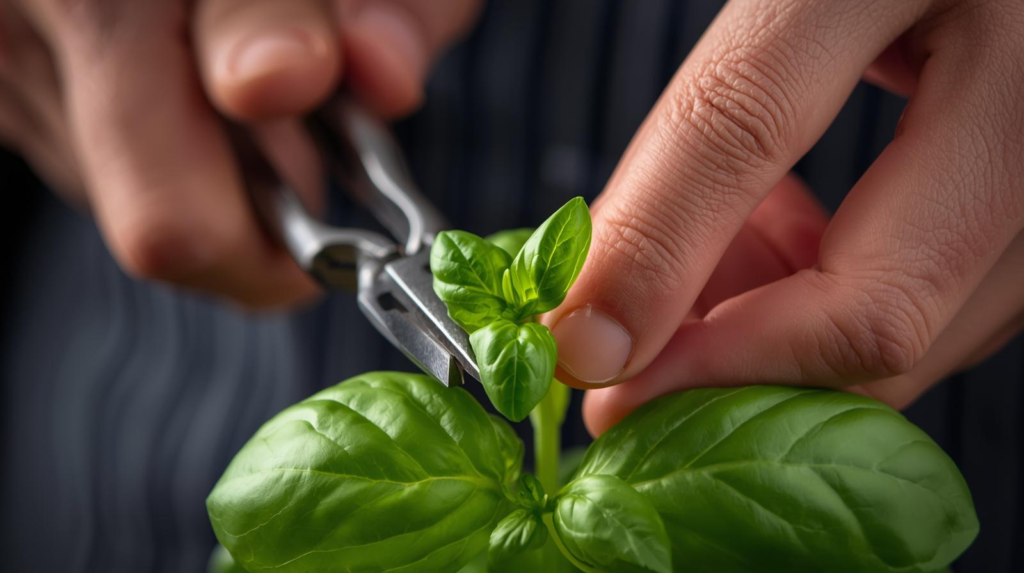
Step 3: Leave enough leaves behind
Don’t “scalp” the plant. One practical approach is to leave 2–4 leaves on the remaining stem, which is explicitly described in the harvesting section of the Utah State University Extension basil guide (Utah State University Extension). Another widely used guideline is to avoid removing more than about one-third of the plant at a time, which is recommended in extension/education materials like the UF/IFAS basil pruning guidance (Pasco County Extension blog) (What’s Happening Around Florida) and the University of Kentucky basil publication (MGCafe Publications).
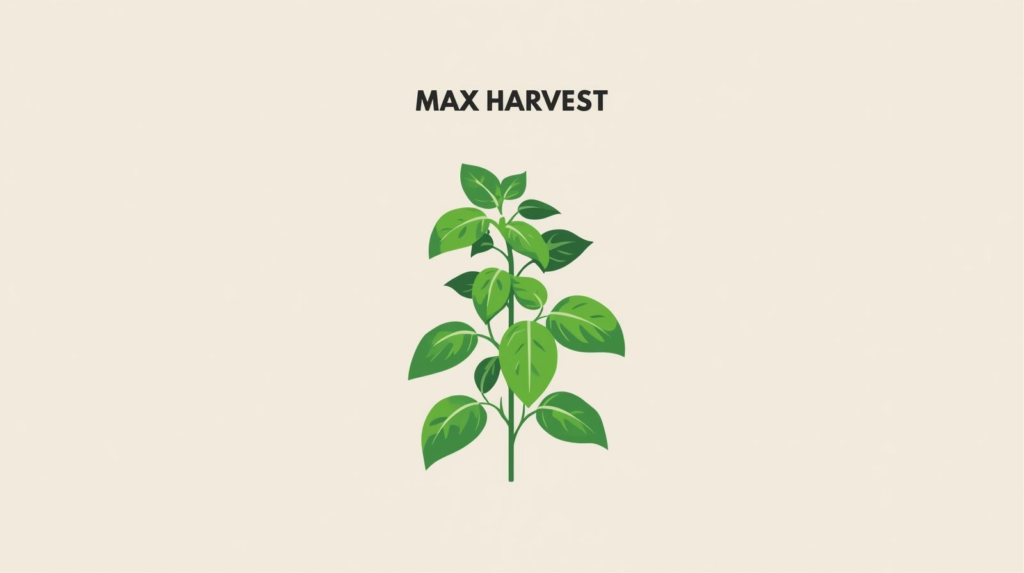
Step 4: Repeat regularly so it stays bushy
Regular pruning keeps basil productive and less leggy. A simple cadence is about every 2–3 weeks, as suggested by the UF/IFAS basil pruning guidance (What’s Happening Around Florida), or about twice a month, as recommended by the UC Master Gardeners basil harvesting article (UC Agriculture and Natural Resources). The University of Minnesota Extension basil page (University of Minnesota Extension) also emphasizes pruning periodically through the season to keep growth succulent and productive.

What to do when basil starts flowering
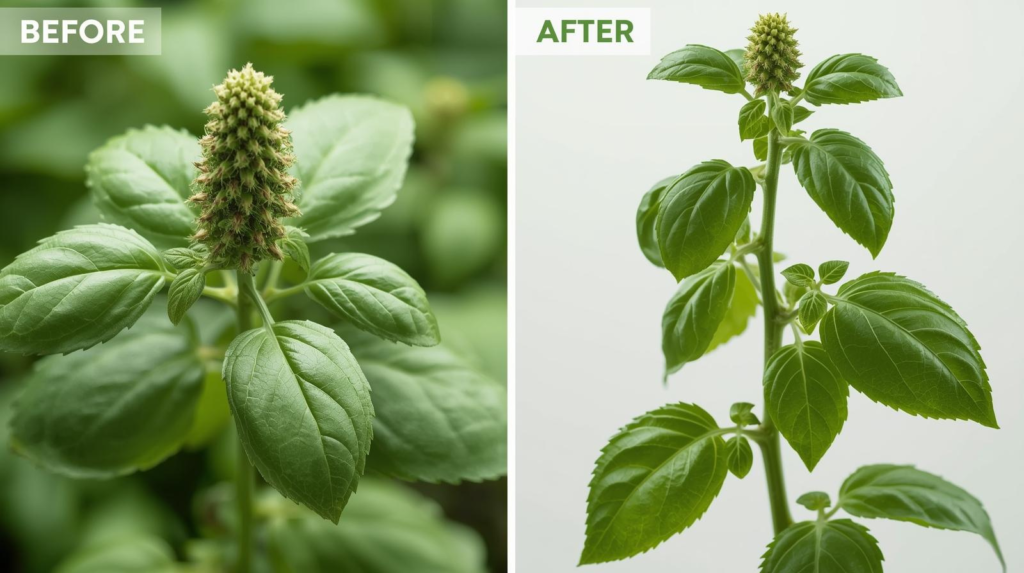
Flowering (bolting) usually means basil is shifting energy away from leaf production, and the plant can get woodier and less leafy if you let it set seed—this is described in the pruning section of theUniversity of Minnesota Extension basil page (University of Minnesota Extension). Many gardeners try to “just pinch off the flower,” but that may not fix the problem by itself. The Utah State University Extension basil guide (Utah State University Extension) notes that pinching off flowers alone doesn’t stimulate new foliage and can encourage more flowers in leaf axils, while theUC Master Gardeners basil harvest tips (UC Agriculture and Natural Resources) explains that removing only the flower spike can simply make way for more flower stalks.
A more effective “rescue cut” is to cut the flowering stem back to a lower node with good leaves, rather than only removing the flower tip—exactly the approach described by the UC Master Gardeners of Placer County (UC Agriculture and Natural Resources). After that, go back to regular node-based pruning. (UC Agriculture and Natural Resources)
Common pruning mistakes (and quick fixes)
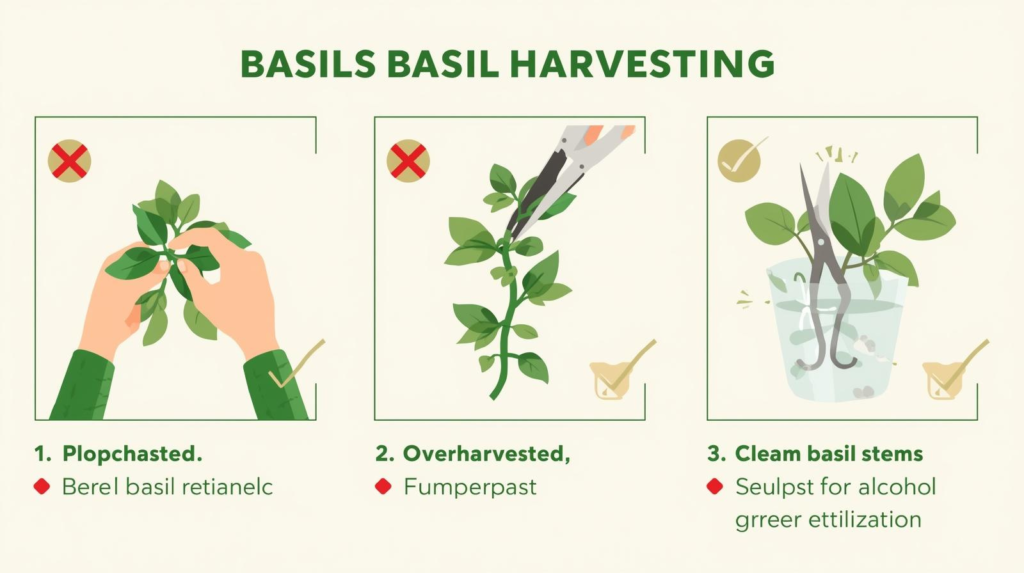
- Mistake: Plucking random bottom leaves. Fix: harvest/prune whole stems above a node so the plant branches, following the “cut above a pair of leaves” method in the University of Minnesota Extension basil harvesting guidance (University of Minnesota Extension) and the node-cut method in the Utah State University Extension basil guide (Utah State University Extension).
- Mistake: Taking too much at once. Fix: leave 2–4 leaves per stem per the Utah State University Extension basil guide (Utah State University Extension), and keep big harvests to about one-third max per the University of Kentucky basil publication (MGCafe Publications) and the UF/IFAS basil pruning guidance (What’s Happening Around Florida).
- Mistake: Using dirty/dull scissors. Fix: use sharp snips and disinfect when needed using methods like 70% isopropyl alcohol, as outlined by the Iowa State University Extension tool-sanitizing FAQ (Yard and Garden) and the University of Maryland Extension pruning tools guide (University of Maryland Extension).
Summary
To prune basil correctly, start when the plant has at least 6–8 leaves or is 6–10 inches tall. Cut just above a node so basil branches. Prune regularly (about every 2–3 weeks or twice/month, and avoid removing more than about one-third at once. If it flowers, don’t just pinch the tip—cut the flowering stem back to a lower node, and keep pruning.
Related Articles
https://homeandgardenworld.com/advice/how-to-grow-cilantro
https://homeandgardenworld.com/advice/how-to-prune-hydrangeas