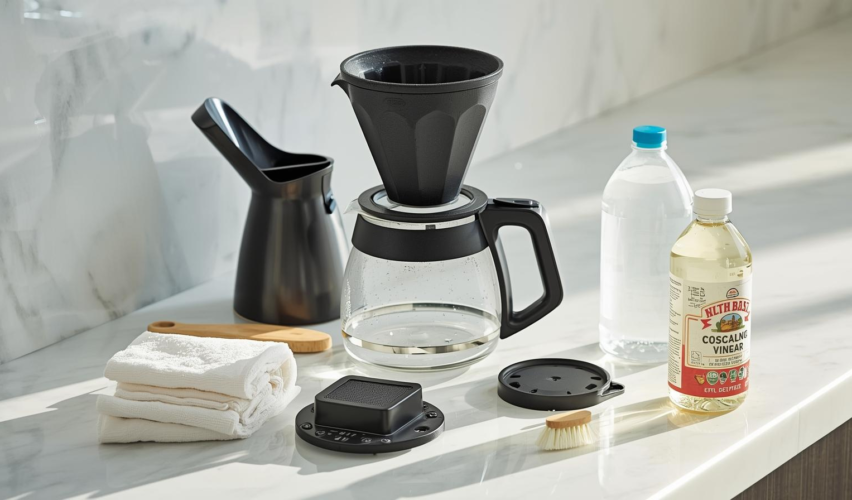
A clean coffee maker does two important things: it prevents coffee oils and residue from tainting flavor, and it removes mineral scale (limescale) that can slow brewing and stress the heater—especially if you have hard water, which the U.S. Geological Survey defines largely by dissolved calcium and magnesium. (USGS definition of water hardness (USGS);KitchenAid on descaling and mineral buildup (KitchenAid);NSF on coffee reservoirs as a germ-prone spot and the need for regular cleaning (NSF))
Cleaning vs. descaling (you usually need both)
Cleaning removes coffee residue (oils, grounds, splashes) from parts you can reach, while descaling flushes the internal water pathway to dissolve mineral deposits from water. Manufacturers explicitly separate these tasks in maintenance guides, and many recommend regular cycles based on usage. (KitchenAid: clean + descale overview (KitchenAid);Mr. Coffee cleaning interval guidance (Calphalon);NSF cleaning frequency guidance (NSF))
What you’ll need
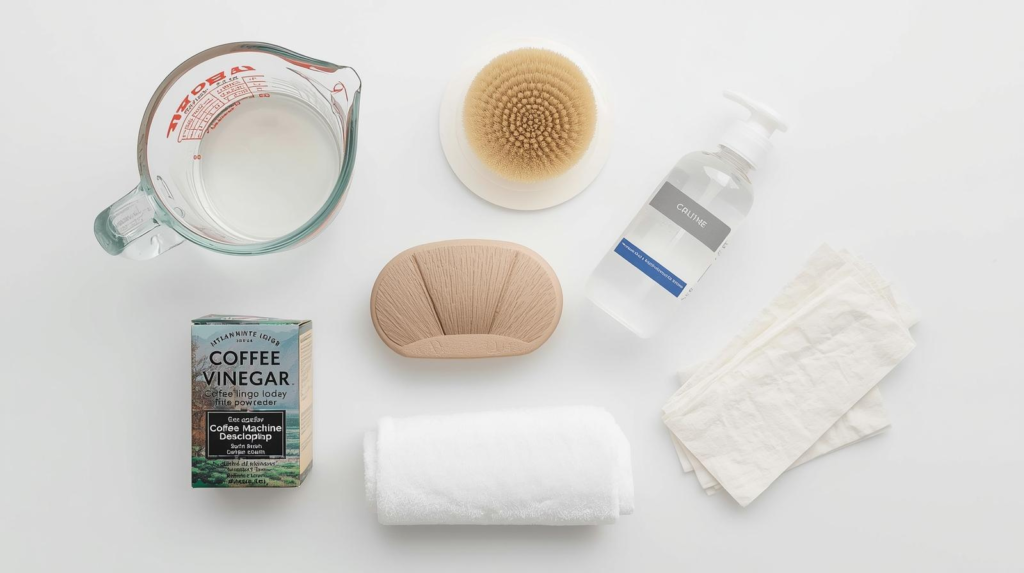
- Dish soap + warm water (for removable parts)
- A soft brush or toothbrush (for crevices)
- Microfiber cloth
- One of these descaling options:
- Manufacturer-approved descaler (best if your manual calls for it)
- White vinegar, only if your manufacturer allows it (some brands advise against vinegar for certain machines) (Bosch warning about avoiding aggressive cleaners like vinegar (Bosch Home); KitchenAid vinegar method (KitchenAid))
Step 1: After every brew (2 minutes)
- Discard grounds and the filter; don’t leave wet grounds sitting in the basket.
- Wash the carafe and brew basket with warm soapy water; rinse well.
- Leave the lid/water reservoir open to air-dry (helps reduce musty smells in a constantly damp environment). This “dry it out” habit is commonly recommended in hygiene-focused cleaning guidance for reservoirs. (NSF reservoir hygiene notes (NSF); Mr. Coffee cleaning tips (Calphalon))
Step 2: Weekly (or every few uses): Wash removable parts thoroughly
- Remove and wash: brew basket, carafe lid, permanent filter, drip tray (if you have one), and any detachable water tank parts.
- Wipe the exterior and the warming plate (when cool).
- If your machine has a spray head/shower area, gently scrub visible buildup with a soft brush.
This is the step that prevents “mystery funk” and visible grime from becoming a bigger problem. (NSF cleaning guidance for coffee machines (NSF))
Step 3: Descale the inside (monthly-ish, or when performance drops)
A good rule of thumb is every 40–80 brew cycles or at least monthly, but hard water and heavy use can mean you’ll need it more often. (Mr. Coffee: every 40–80 brews (Calphalon);NSF: 40–80 cycles / monthly (NSF);USGS: what “hard water” is (USGS))
Signs it’s time:
- Brew takes longer or sputters
- Coffee tastes “flat” or bitter even with fresh beans
- You see chalky white flakes (scale) or the machine’s “clean” light comes on
Step 4: How to descale a standard drip coffee maker (the safest “universal” method)
Always check your manual first, because vinegar ratios and steps vary by brand—e.g., KitchenAid commonly suggests a 1:1 vinegar/water approach, while Cuisinart describes a 3:1 water-to-vinegar mix for some models. (KitchenAid vinegar ratio and rinse cycles (KitchenAid);Cuisinart self-clean instructions (3:1 water:vinegar) (cuisinart.com))
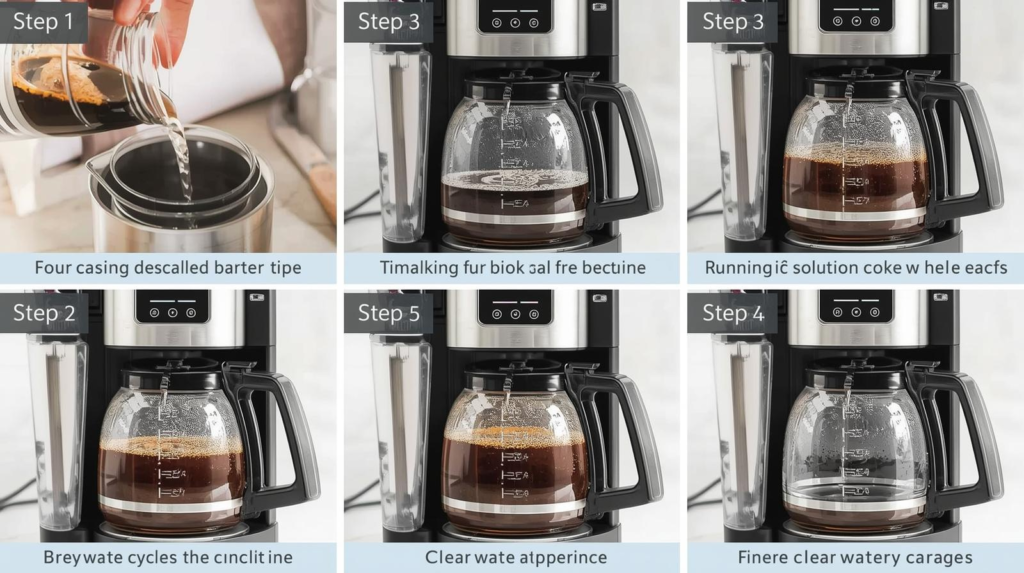
Option A: Use a manufacturer descaling solution (best if your brand discourages vinegar)
- Remove grounds and any filter.
- Mix and add descaler per the product/brand instructions.
- Run the machine’s clean cycle (or a brew cycle).
- Run 2 full rinse cycles with fresh water (many manufacturers explicitly require multiple rinse cycles). (Braun: flush with two complete brew cycles (braunhousehold.com))
Option B: Use vinegar (only if allowed by your manufacturer)
- Fill the reservoir with your brand’s recommended vinegar mix (common guidance includes 50/50 in many how-to and manufacturer-style instructions, but follow your manual). (KitchenAid vinegar method (KitchenAid); Better Homes & Gardens 50/50 method and soak window (Better Homes & Gardens))
- Start a brew/clean cycle. If your machine allows pausing, stop halfway and let it sit 20–30 minutes to work on deposits. (Hamilton Beach pause-and-soak method (Hamilton Beach); BHG soak guidance (Better Homes & Gardens))
- Finish the cycle.
- Run 2–3 full tanks of fresh water until you can’t smell vinegar. (KitchenAid: 2–3 rinse cycles (KitchenAid); NSF: run 2–3 cycles until odor is gone (NSF))
If you have a Keurig or other single-serve pod brewer
Single-serve machines collect moisture in small parts (pod holder, drip tray, reservoir), so the routine is: wash removable parts regularly + descale on schedule.
- Follow your model’s descale steps (Keurig typically has you empty the reservoir, remove any water filter, run the descale process, then rinse). (Keurig official descaling instructions (Keurig))
- Keep the reservoir and drip tray clean and dry between uses to reduce moldy smells (reservoir hygiene concerns are highlighted by NSF). (NSF “germiest home items” coffee reservoir notes (NSF))
If you have a Nespresso or espresso-style machine
Many espresso/pod-espresso makers strongly prefer their own descaling solution and set a schedule based on use; for example, Nespresso documentation commonly recommends descaling every 3 months or ~300 capsules (model-dependent). (Nespresso descaling guide PDF example (Nespresso);Nespresso guidance that cadence varies by use/hardness (Nespresso))
Tip: If your brand warns against vinegar, take that seriously—using the wrong agent can damage seals or leave lingering taste. (Bosch warning about vinegar (Bosch Home))
Carafe stains and funky smells (quick fixes)
- Brown film in a glass carafe: a short soak with warm water and a little vinegar, then wash normally, is a common approach in mainstream cleaning guides. (Better Homes & Gardens cleaning method (Better Homes & Gardens))
- Persistent vinegar smell after descaling: keep running clean-water cycles until the odor is gone—NSF explicitly notes 2–3 rinse cycles may be needed. (NSF rinse guidance (NSF))
Prevention: reduce scale before it starts
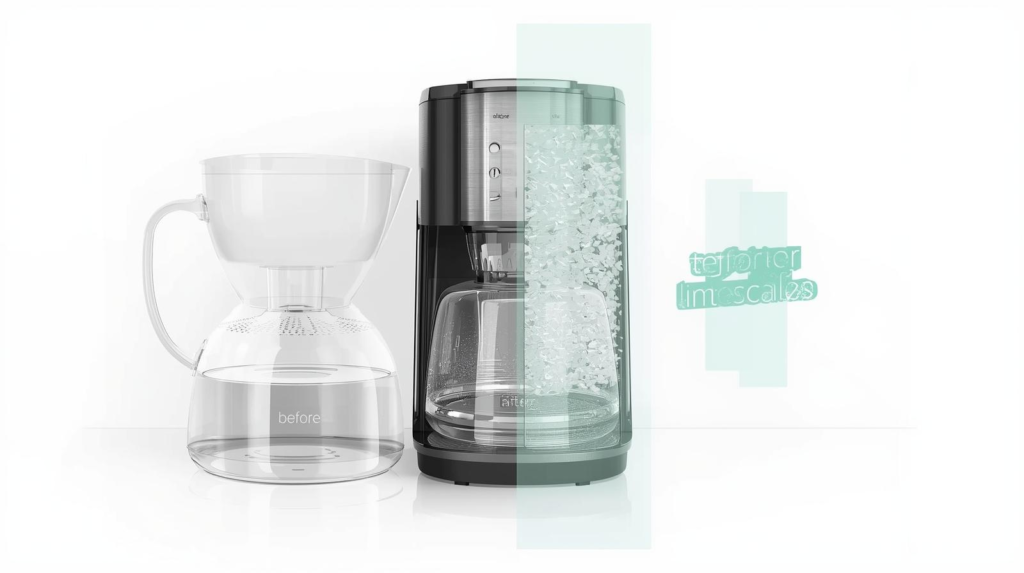
If your water is hard (higher calcium/magnesium), scale is more likely—so using filtered water can reduce buildup and extend time between descaling cycles. (USGS on what hard water is (USGS);KitchenAid notes descaling addresses mineral buildup (KitchenAid))
Summary
Clean removable parts often, and descale regularly. Use your manufacturer’s recommended method (descaler or vinegar, depending on the machine), let the solution work briefly if instructed, then rinse with multiple full water cycles. If you want, tell me your coffee maker brand/model (or just “drip,” “Keurig,” or “Nespresso”), and I’ll tailor the exact steps to your machine’s official instructions.
Related Articles
https://homeandgardenworld.com/kitchen/how-to-clean-a-ninja-coffee-maker
https://homeandgardenworld.com/advice/how-to-use-a-french-press
https://homeandgardenworld.com/kitchen/how-to-clean-a-microwave