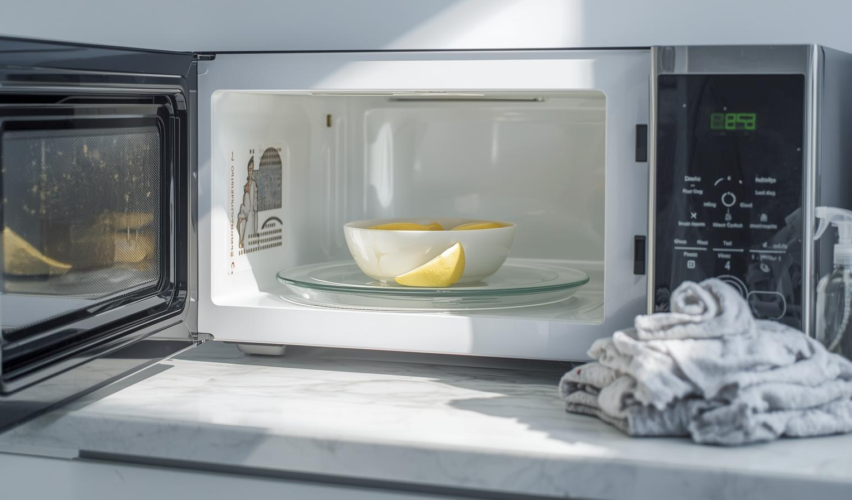
Microwaves get dirty for two main reasons: food splatters bake onto the walls, and grease collects on the door and handle. Most of the time, regular cleaning with soap/detergent is enough, and disinfecting is only necessary in higher-risk situations (like bodily fluids or illness), per CDC guidance on cleaning vs. disinfecting at home and CDC guidance for facilities.
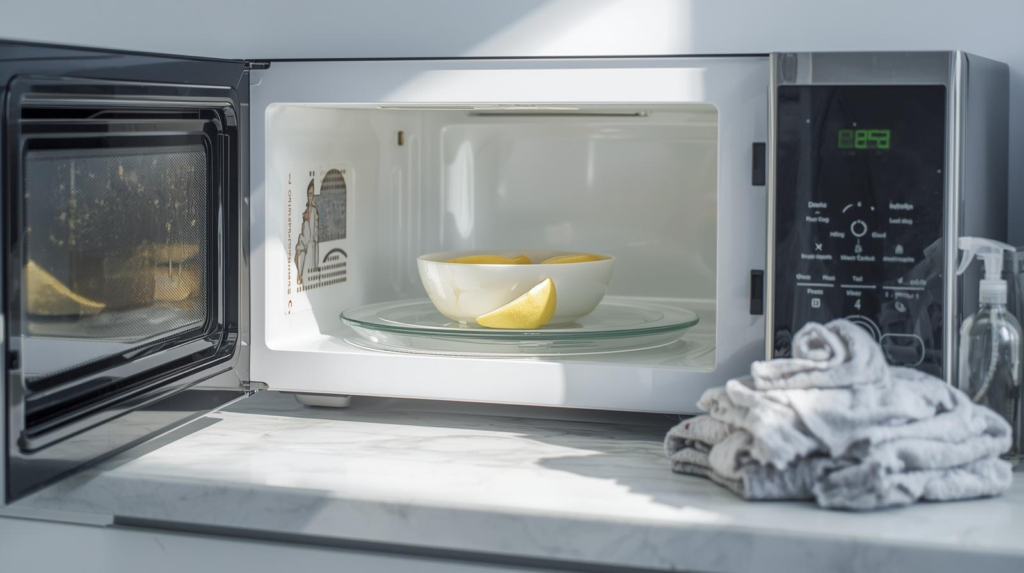
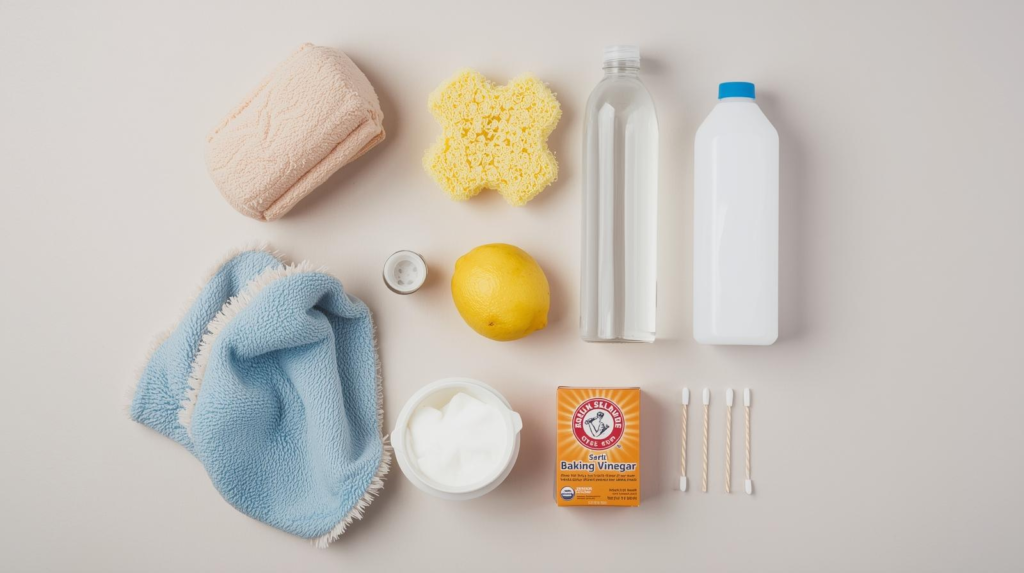
What you’ll need
- Microfiber cloths or soft sponge
- Mild dish soap + warm water (safe default)
- Microwave-safe bowl or measuring cup
- White vinegar or lemon (for steam-loosening grime)
- Baking soda (for stubborn spots/odors)
- Optional: cotton swabs (for crevices), gloves
Many manufacturer cleaning instructions emphasize mild, non-abrasive cleaners and soft cloths—for example GE’s microwave cleaning recommendations and GE’s stainless-steel interior guidance.
The 10-minute deep clean (works for most messes)
1) Steam to loosen baked-on gunk
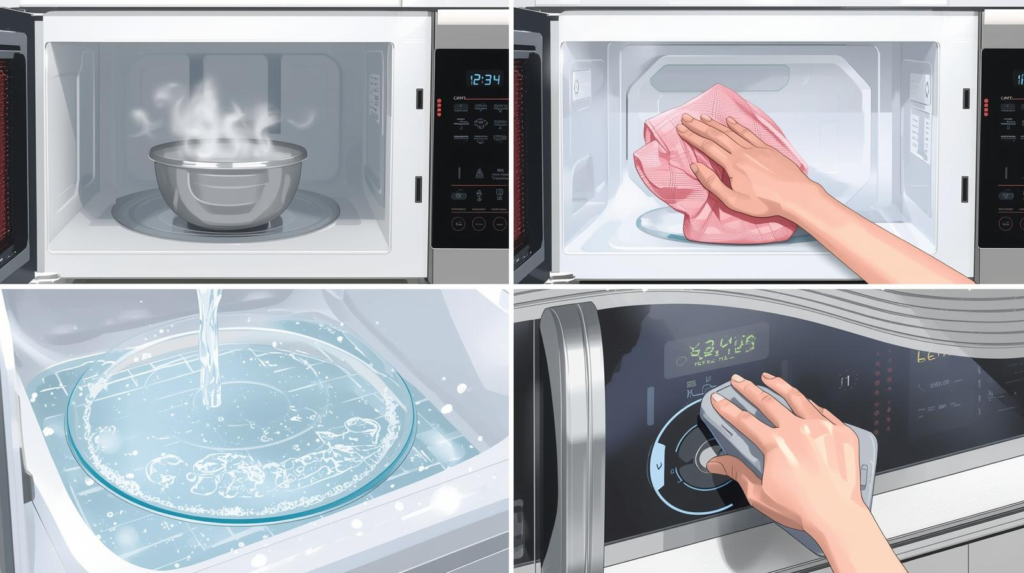
Steam softens grime so you wipe instead of scrub. A widely recommended method is heating 1 cup of water for 3–4 minutes, optionally with a tablespoon of vinegar, as described in Whirlpool’s microwave cleaning steps, with similar “steam then wipe” instructions from Samsung’s microwave cleaning guide and Whirlpool’s own Steam Clean feature instructions (for models that have it).
How to do it
- Fill a microwave-safe bowl with 1 cup (about 240 mL) water.
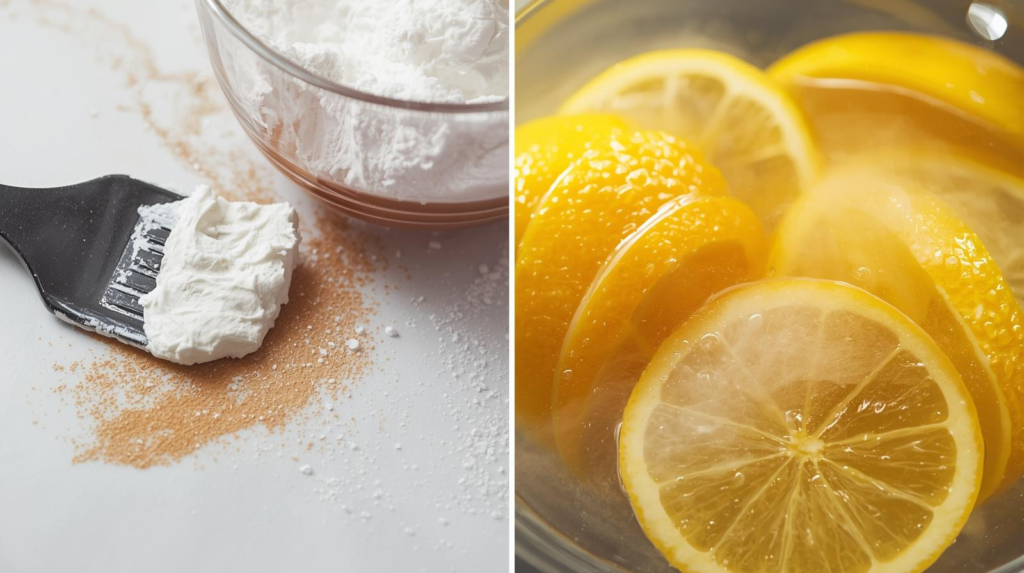
- Add 1 Tbsp white vinegar or a few lemon slices (optional).
- Microwave 3–5 minutes until steamy, then keep the door closed 2 minutes.
Tip: Watch the bowl—superheating can happen in very smooth containers. Use a microwave-safe vessel and handle carefully.
2) Wipe the interior (walls, ceiling, floor)
Wipe with a soft cloth or sponge. Manufacturer guidance commonly recommends warm, soapy water and warns against abrasives—see GE’s interior cleaning recommendations and the “Care and Cleaning” section in a GE microwave owner’s manual.
If you used vinegar/lemon steam, you can often wipe with plain water first, then finish with a lightly soapy cloth and a final wipe with clean water.
3) Remove and wash the turntable and ring
Take out the glass turntable and wash it in warm, sudsy water (many are also dishwasher-safe—check your manual). GE’s manual cautions not to drop the turntable and notes washing in warm, sudsy water or dishwasher depending on model, in the GE microwave owner’s manual, and Samsung also recommends removing the turntable and wiping underneath.
4) Clean the door, seal, and window (don’t skip this)
The door edge and seal area collect grease and crumbs that cause odors and prevent a clean close. GE specifically advises using mild, non-abrasive detergents on the door seal area and rinsing well in its microwave care guidance, consistent with GE support cleaning recommendations.
5) Clean the control panel the safe way
Avoid spraying anything directly onto buttons and vents. GE’s official instructions say to wipe the control panel with a damp cloth and dry immediately, and to avoid cleaning sprays, large amounts of soap/water, abrasives, or sharp objects on the panel in the GE owner’s manual and GE support guidance.
Stubborn spots and smells (quick fixes)
For stuck-on splatters
Make a paste of baking soda + a little water, apply to the spot, let sit 5–10 minutes, then wipe gently. GE notes that occasional wiping with a baking soda and water solution keeps the inside fresh in the GE microwave manual care section, and it still fits the “mild cleaner, soft cloth” guidance in GE cleaning recommendations.
For lingering odors
Run another short steam cycle (water + lemon or water + vinegar), wipe dry, and leave the door open to air out. The steam-loosen-and-wipe approach is directly recommended in Whirlpool’s cleaning steps and mirrored by Samsung’s steam cleaning method.
What not to use (to avoid damage)
- Abrasive scrubbers or sharp tools (can scratch coatings): cautioned against in GE interior cleaning guidance and the GE owner’s manual.
- Commercial oven cleaner: GE explicitly says never to use it on a microwave in the GE owner’s manual.
- Spraying cleaners onto the control panel: GE warns against this in both GE support guidance and the GE owner’s manual.
Do you need to disinfect a microwave?
Usually, no—cleaning removes most germs, and disinfecting is situational, according to CDC home guidance and CDC facility guidance.
If you do disinfect (e.g., after raw meat juice on the handle, or illness in the home):
- Clean first, then disinfect (CDC’s order of operations) using CDC guidance.
- Follow the label contact time—EPA notes the surface must stay wet for the full contact time in EPA disinfectant guidance.
- If a product is intended for food-contact surfaces, some require a post-rinse with potable water—EPA’s List N labeling categories explain “post-rinse required” vs “no rinse” in EPA’s List N guidance, and the FDA also states disinfectants on food-contact surfaces should be rinsed unless the label says otherwise in the FDA Food Code supplement.
Practical shortcut: Disinfect high-touch exterior spots (handle, buttons) more often than the interior, and keep interior cleaning focused on food residue removal.

Summary
Steam first, wipe second: heat water (optionally with vinegar/lemon) to loosen grime, then clean with a soft cloth and mild soap. Wash the turntable, clean the door seal, and wipe the control panel gently without spraying. Avoid abrasives and oven cleaner, and disinfect only when there’s a clear reason—always following product label directions.
Related Articles
https://homeandgardenworld.com/kitchen/how-to-clean-a-refrigerator
https://homeandgardenworld.com/advice/how-to-clean-a-coffee-maker
https://homeandgardenworld.com/kitchen/how-to-clean-kitchen-cabinets