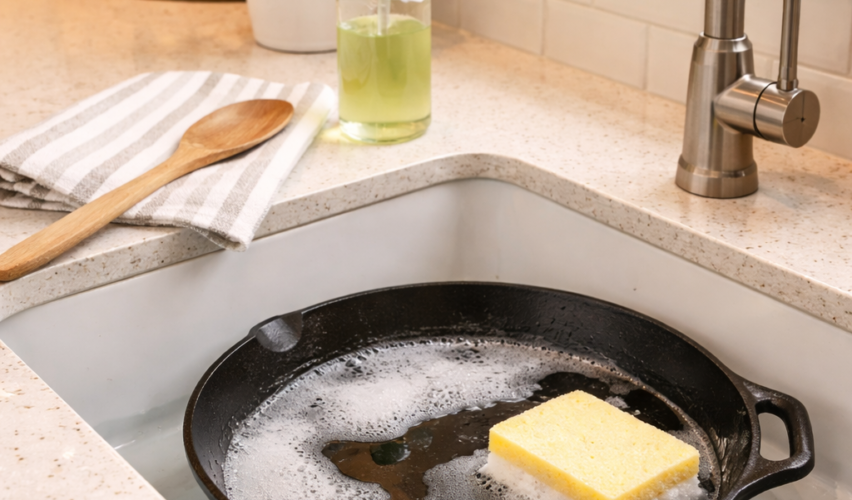
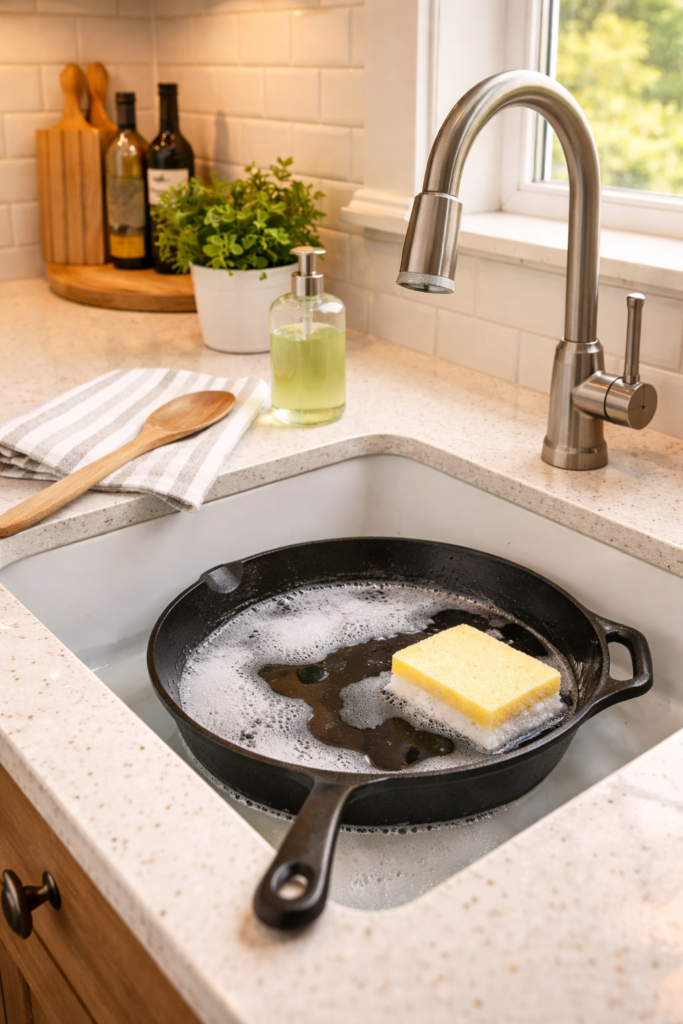
Cast iron is protected by seasoning—a hard, slick layer formed when oil is heated and bonds to the metal. Good cleaning is less about “never touch it” and more about removing food + drying thoroughly + restoring a whisper-thin oil film. That practical approach is consistent across the Lodge Cast Iron cleaning guide,Lodge’s step-by-step cleaning instructions, and detailed cookware guidance fromSerious Eats.
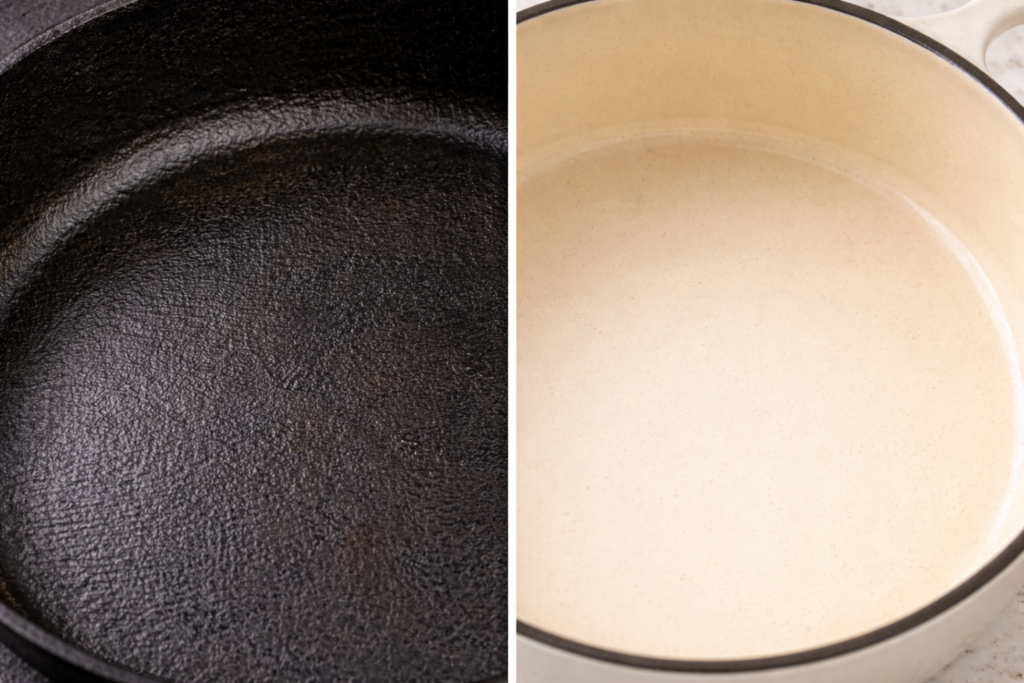
Before you start: seasoned vs. enameled cast iron
This guide is for traditional (seasoned) cast iron. If you have enameled cast iron (like many Dutch ovens), follow the brand’s gentler soap-and-sponge approach to avoid scratching enamel, such as Le Creuset’s enameled cast iron cleaning guidance, and avoid abrasive tools that can dull or damage the coating, as also noted in Serious Eats’ Dutch oven cleaning advice.
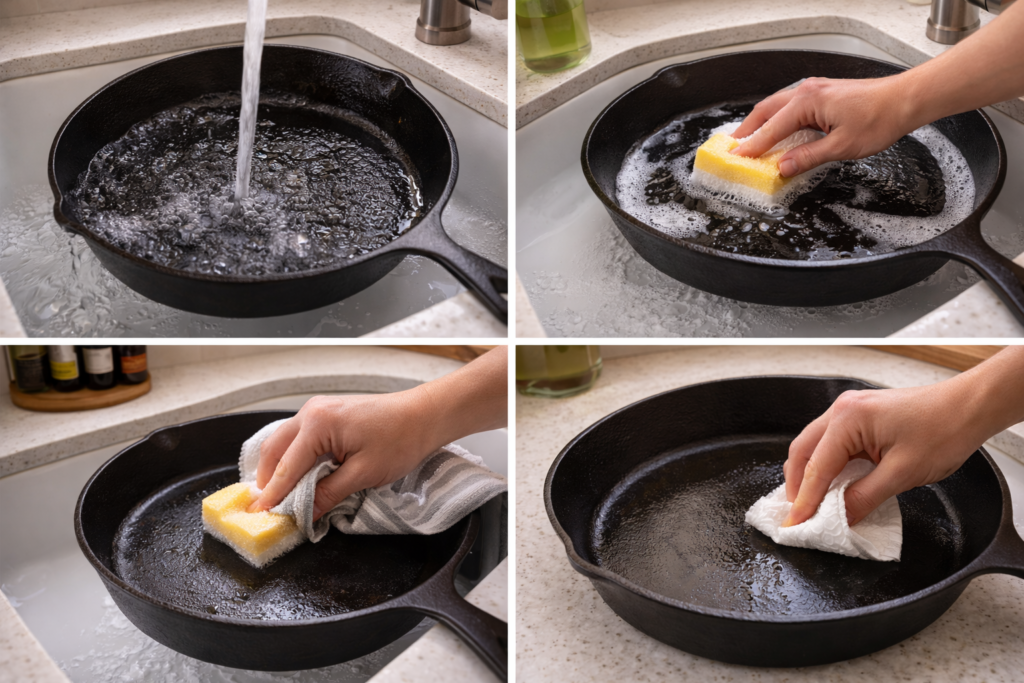
The everyday cast iron cleaning routine (5 minutes)
- Cool slightly, then wipe out debris.
Cleaning sooner is easier because residue hasn’t fully hardened, a point emphasized in cast iron maintenance advice like Serious Eats’ cast iron care guide and consistent with manufacturer routines like Lodge’s cleaning basics. - Wash with warm water and a small amount of mild soap (yes, soap is OK).
Modern guidance agrees that a little mild dish soap won’t “strip” properly polymerized seasoning—see Lodge’s official cleaning instructions, the myth-busting explanation in Serious Eats, and expert commentary summarized by outlets like EatingWell. - Scrub gently (avoid harsh abrasives unless you’re fixing rust).
A non-scratch sponge, brush, or chainmail scrubber is typically enough; abrasive scouring should be reserved for problems like rust or heavy buildup, as suggested by Lodge’s rust-focused cleaning steps and maintenance advice in Serious Eats. - Rinse, then dry completely.
Moisture is the enemy—drying thoroughly is a core recommendation in Lodge’s care routine and is reinforced by technique-driven guidance like Serious Eats. - Wipe on a very thin coat of oil, then heat briefly.
After drying, rubbing on a thin layer of oil helps protect against rust and supports seasoning maintenance—see Lodge’s seasoning instructions (thin oil layer) and practical maintenance guidance in Lodge cleaning & care and Serious Eats.
Tip: If you’re worried about hidden moisture, set the pan on a burner for a minute after towel-drying (a common recommendation in seasoning workflows like Serious Eats’ cast iron seasoning steps and Lodge’s reseasoning process).
How to remove stuck-on food (without wrecking the surface)
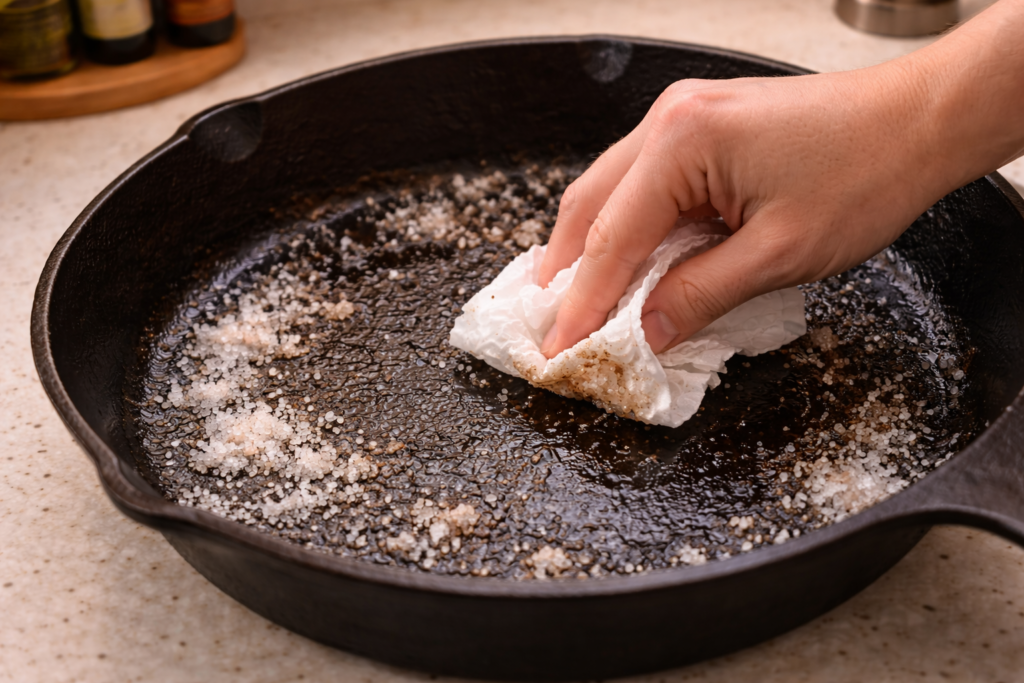
If food is stubborn, try the “salt scrub” method:
- Add a few tablespoons of coarse salt, optionally with a splash of water.
- Scrub with a folded paper towel or brush.
- Rinse, dry, then oil lightly.
This abrasive-but-seasoning-friendly trick is described in Serious Eats’ cast iron cleaning guide and aligns with common cast iron maintenance advice from mainstream home guides like Better Homes & Gardens, while still ending with the manufacturer-recommended dry-and-oil routine in Lodge’s care guidance.
What NOT to do (the fast way to rust)
- Don’t soak cast iron for long periods. Extended water contact encourages rust, which is why brands and maintenance guides emphasize quick wash + thorough dry, including Lodge’s cleaning steps and practical coverage like Better Homes & Gardens.
- Don’t put it in the dishwasher. The combination of long wash cycles, harsh detergents, and trapped moisture is widely warned against in cast iron care guidance like Lodge’s cleaning & care and maintenance explainers such as Serious Eats.
- Don’t store it damp. Thorough drying is a repeated best practice in Lodge’s routine and is also consistent with general kitchen hygiene guidance about drying cleaned items and surfaces from authorities like FoodSafety.gov’s cleaning recommendations and USDA’s “clean then sanitize” guidance.
How to remove rust (and rescue a “ruined” pan)
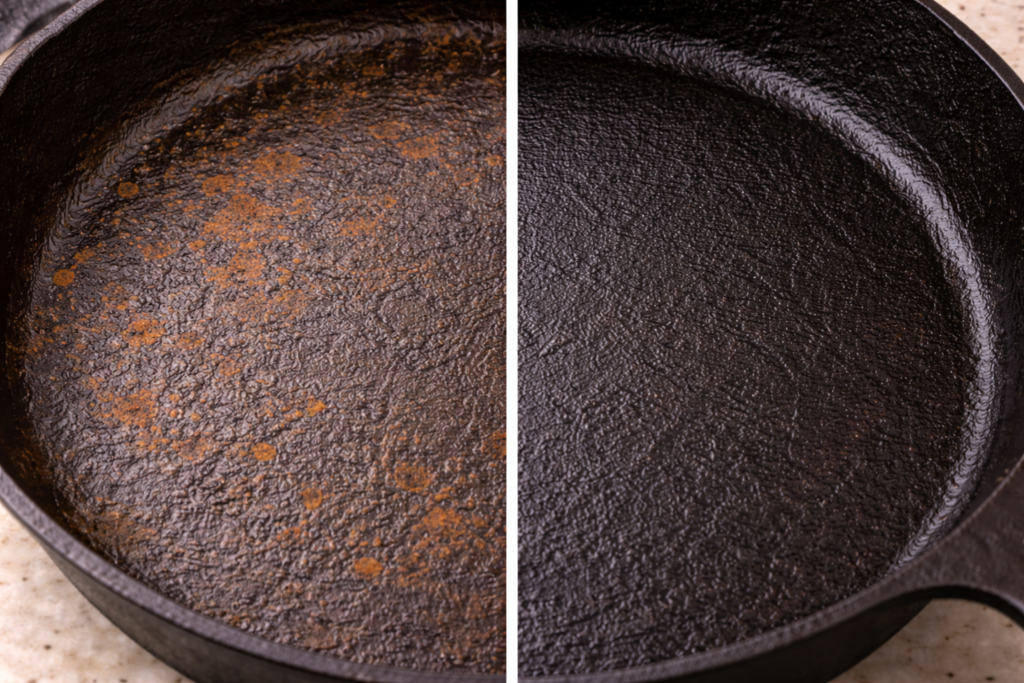
Light surface rust is fixable:
- Scrub off rust with a rust eraser, chainmail, or (if needed) fine steel wool.
- Wash with warm, soapy water, then rinse.
- Dry completely (towel + brief heat).
- Reseason (thin oil + oven bake).
This is essentially the workflow described by Lodge’s rust and cleaning instructions and supported by restoration guidance like The Kitchn’s rust removal steps, with the reseasoning portion matching Lodge’s how-to-season process.
Quick reseasoning refresher (if the pan looks dull or sticky)
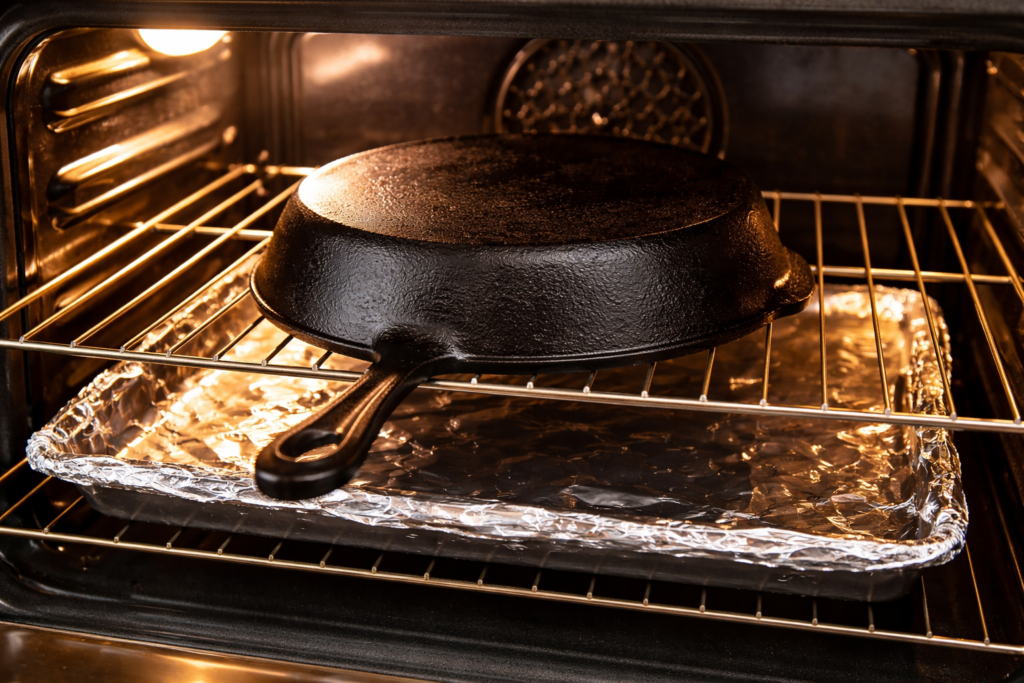
If your skillet looks patchy, smells metallic, or feels sticky, do a full reseason:
- Wash and dry.
- Rub on a very thin layer of oil all over (inside and out).
- Bake upside down for about an hour, then cool.
The key detail is thin oil (too much oil can turn gummy), emphasized in Lodge’s seasoning instructions, with the overall process described in many cast iron seasoning explainers like Serious Eats’ seasoning guide and reinforced by routine care guidance in Lodge cleaning & care.
Summary
Clean cast iron like this: wash (mild soap is fine), scrub gently, dry completely, wipe on a whisper-thin oil layer, and heat briefly. Avoid soaking, dishwashers, and damp storage. If rust appears, scrub it off and reseason—cast iron is tougher and more recoverable than most cookware.
Related Articles
https://homeandgardenworld.com/kitchen/how-to-clean-a-burnt-pot
https://homeandgardenworld.com/kitchen/how-to-clean-kitchen-cabinets
https://homeandgardenworld.com/kitchen/how-to-clean-wooden-spoons